




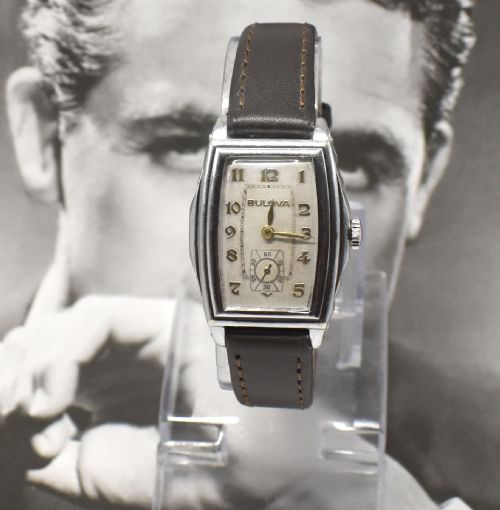


1930s Mechanical Wristwatch
These 1930s mechanical wristwatches offer precision engineering and distinctive period design, appealing to collectors seeking reliable vintage timepieces with architectural flair.
1930s Mechanical Wristwatch
A 1930s mechanical wristwatch embodies the design ethos of the interwar period, shifting away from pocket watches towards wrist-worn instruments. Buyers encountering this selection find both gentlemen's utility pieces and ladies' cocktail models influenced heavily by the Art Deco movement.
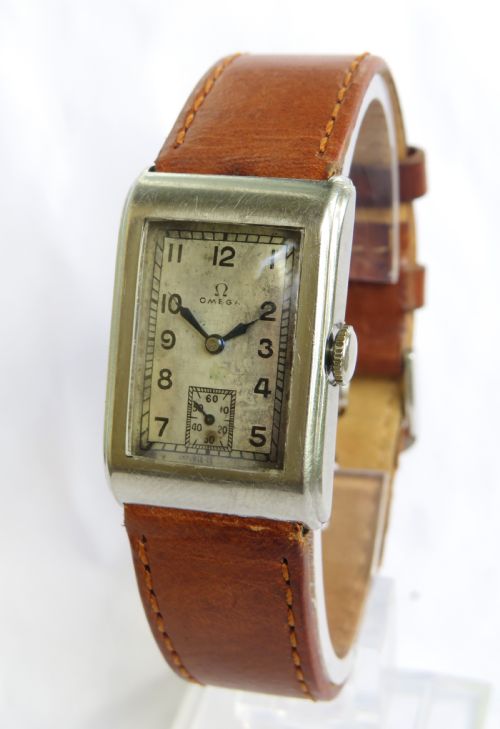
The objects take various geometric forms, including rectangular tank cases, square dials and curved tonneau shapes. These wristwatch designs reflect a technical evolution where makers prioritised legibility alongside compact mechanical movements.
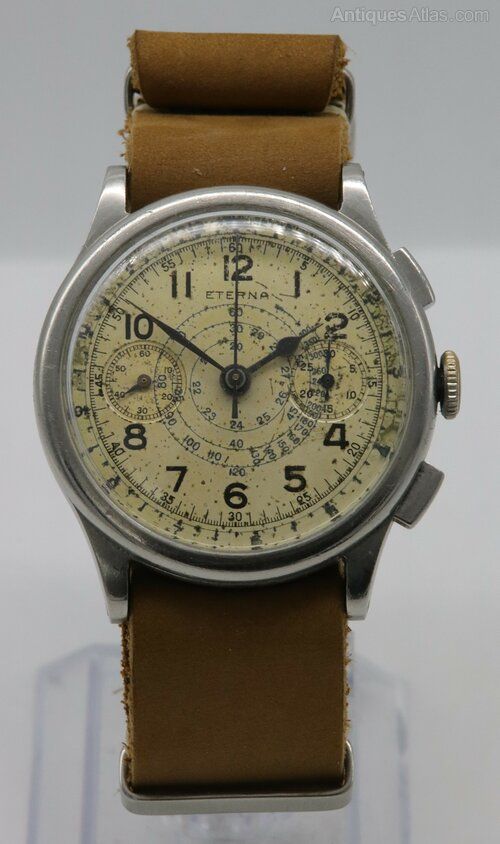
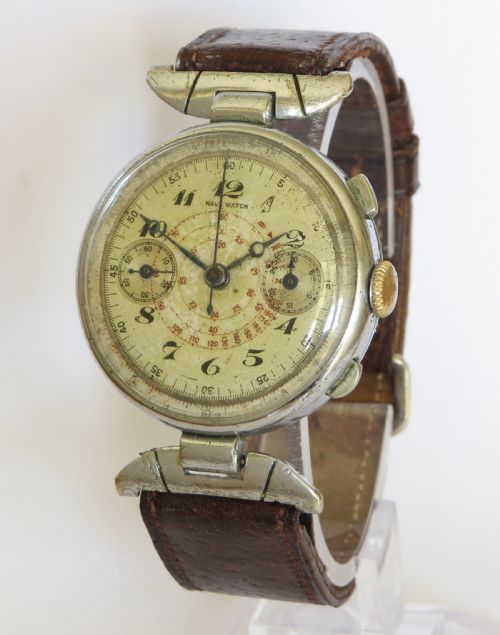
Originating largely from Swiss workshops alongside American manufacturers, these watches capture a transition in personal accessories. The inventory spans robust aviator chronographs and elegant dress pieces intended for formal evening wear.
Materials and construction
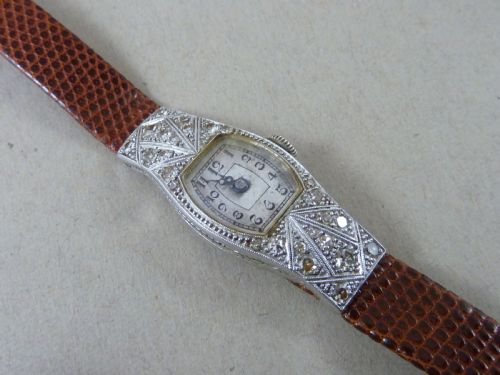
Cases combine precious metals such as 18k white gold, platinum and rolled gold with utilitarian stainless steel and chrome. Gem-set ladies' cocktail variations integrate diamonds into white gold housings, while movements rely on precision brass gear trains housed beneath glass crystals.
Dials frequently feature enamel work alongside applied numerals, paired with leather straps or integrated metal bracelets. Mechanical calibres depend on manual winding systems, utilising jewelled lever escapements to maintain accurate timekeeping without battery power.
The selection includes both stainless steel aviator chronographs and diamond-set 18k white gold ladies' cocktail watches.
Markers of distinction
Quality in a 1930s mechanical wristwatch rests upon the sophistication of the movement and the integrity of the case construction. Finer examples utilise high-jewel Swiss calibres from established makers, offering superior chronographic or curved movement architecture.
Execution of the Art Deco case design dictates overall desirability, with intricate diamond-set bezels or heavy gold fill marking superior tiers. Preservation of original dial details and crisp case geometry separate standard utility models from exceptional collector pieces.
Eterna·Omega·Hahn Landeron·Zenith·Bucherer·Elgin·Tissot·Bulova·Le coultre
The 1930s Mechanical Wristwatch Glossary
- Chronograph
- A watch with a stopwatch function alongside standard timekeeping. These mechanisms use independent sweep hands controlled via pushers on the case.
- Tank watch
- A rectangular wristwatch style inspired by military tanks seen from above. The straight vertical brancards enclose the dial seamlessly.
- Cocklet watch
- A small, often highly ornate ladies' timepiece designed primarily for evening wear. These pieces frequently double as decorative bracelets adorned with diamonds.
- Curvex
- A curved wristwatch movement and case design conforming to the shape of the wrist. This technique allowed manufacturers to produce sleek profiles during the thirties.
- Hermetic
- A waterproof or dustproof case design intended to protect the internal movement from environmental moisture. Early versions often utilised screw-down systems or outer shells.
1930s Mechanical Wristwatch: Frequently Asked Questions
How do I wind a 1930s watch?
Turn the crown gently in a clockwise direction until slight resistance is felt. Avoid overwinding, as this can damage the mainspring inside.
Most manual wind pieces require daily attention to maintain power reserve and consistent operation.
Are these watches suitable for daily wear?
These vintage items demand careful handling due to their age and delicate internal mechanisms. Modern water resistance standards do not apply to interwar timepieces.
Limit exposure to moisture and heavy impacts to preserve the movement and original case condition.
What defines an Art Deco watch?
Geometric symmetry, streamlined forms and stylized numerals characterise the design language. Cases often feature stepped edges and angular lugs.
Materials like white gold and platinum highlight the architectural aesthetic popular during the decade.
How do tank watches differ from standard models?
Tank models feature rectangular cases where the vertical sides extend into the strap attachments. This geometric layout creates a distinct silhouette compared to traditional round watches.
The style emerged from military influences of the early twentieth century and dominated interwar fashion.