
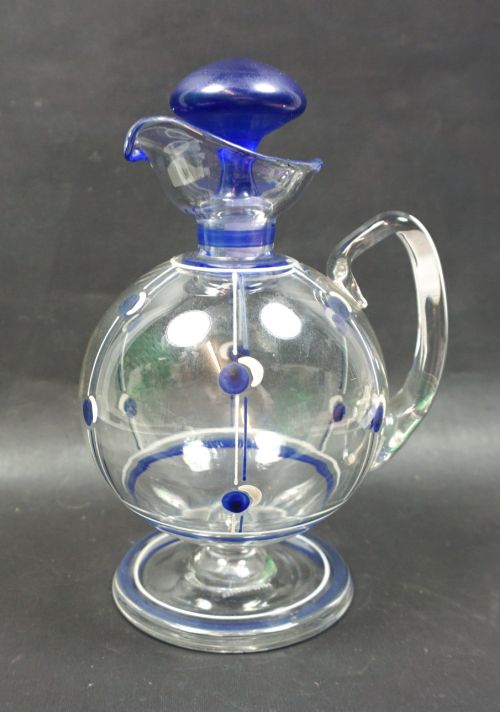
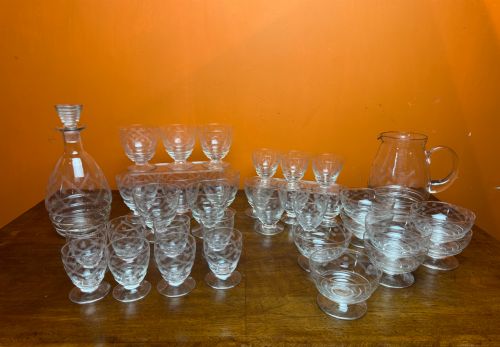


1930s Glass Decanter
These 1930s glass decanter pieces deliver striking geometric lines and bold period spirit to any modern table.
1930s Glass Decanter
A 1930s glass decanter embodies the clean lines and geometric boldness characteristic of the Art Deco style. These vessels frequently appear as complete sets accompanied by matching glasses and a serving tray.
Originating largely from Bohemia and Czechoslovakia alongside French and English workshops, these pieces showcase the distinctive aesthetic of the period. Buyers most frequently encounter colourful lead crystal and enamelled designs intended for spirits, wine, and liqueurs.
The selection ranges from standalone claret jugs and whisky noggins to elaborate tantalus mountings in chrome and oak. Such barware highlights the social habits of the era, focusing heavily on home cocktail culture.
Materials and construction methods
Makers utilised clear, amber, green, and black glass, shaping lead crystal and cut glass through heavy moulding and wheel-cutting techniques. Enamel decoration was frequently applied by hand to achieve vibrant geometric patterns.
Metal mounts incorporate sterling silver, chrome, and polished steel to frame the glass bodies securely. These durable materials served both decorative and structural purposes, particularly in tantalus frames and spirit noggins.
1930s Glass Decanter Retail Price Guide 2026
Typical asking prices for 1930s glass decanter among the pieces listed under this phrase on Sellingantiques today, from the lower quarter to the upper quarter. They describe what is for sale here now, not the wider market.
One cockerel-shaped cocktail shaker stands ready to crow over your evening gin.
Qualities that separate standard items from superior works
Superior execution is evident in the precision of the hand-applied enamel work and the crispness of the glass cutting. Pieces bearing specific attributed designs or maker attributions display a higher degree of artistic ambition.
The integration of metal mounts, such as solid sterling silver collars or robust chrome framing, dictates the relative weight and finish of the object. Complete sets retaining all original matching glasses demonstrate greater integrity than isolated vessels.
Karl Palda·Val Saint Lambert·Jacques Adnet·Mosey
The 1930s Glass Decanter Glossary
- Tantalus
- A locked wooden or metal frame holding decanters securely while displaying their contents. This mechanism prevented unauthorised access to the spirits inside.
- Lead crystal
- A heavy glass variety containing metal oxide that increases brilliance and weight. It permits sharper cutting and deeper refractive qualities.
- Claret jug
- A specialised pouring vessel traditionally used for serving red wine. These often feature hinged metal lids and handle mounts.
- Whisky noggin
- A small vessel designed for holding a single measure of whisky. They frequently include integrated silver spouts and matching handles.
- Enamel
- A durable vitreous substance fused to the glass surface through heat. It provides the bright opaque colours characteristic of the style.
1930s Glass Decanter: Frequently Asked Questions
What is a 1930s glass decanter?
A 1930s glass decanter is a drinking vessel produced during the Art Deco era, designed for holding and serving wine, whisky, or liqueurs. They often feature geometric cutting, coloured glass, or hand-applied enamel decoration.
Many survive today as part of larger matching sets that include small glasses and trays. Their distinctive aesthetic makes them central pieces for period barware collections.
How do I identify a Czech piece?
Czech and Bohemian pieces from this era frequently exhibit bold amber, green, or black glass combined with geometric enamel motifs. Workshops in this region specialised in vibrant colour contrasts and modernist cuts.
Signature regional traits include heavy lead crystal bodies and matching sets that pair decanters with small shot glasses. These items represent a major portion of the surviving market.
Were these decanters used daily?
These vessels were manufactured for domestic entertainment during the height of the cocktail era. Households utilised them for serving guests during evening gatherings and dinner parties.
Because they were intended for active use, many sets were designed with matching trays to contain spills. Their durable lead crystal and sturdy mounts helped them withstand regular handling.
How should I display my decanter?
Displaying these items benefits from placing them on mirrored trays or surfaces that catch the light through the coloured glass. Ensuring they sit safely away from heavy foot traffic protects the fragile stoppers and rims.
Keeping them grouped with their original matching glasses preserves the intended visual impact of the set. Natural light helps accentuate the enamel work and cut crystal facets.