


1930s French Chairs
These 1930s French chairs bring substantial presence and comfort to a room, offering robust leather club forms and sleek revival designs.
1930s French Chairs
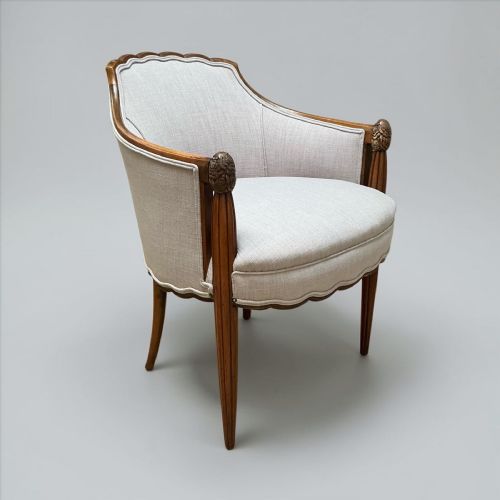
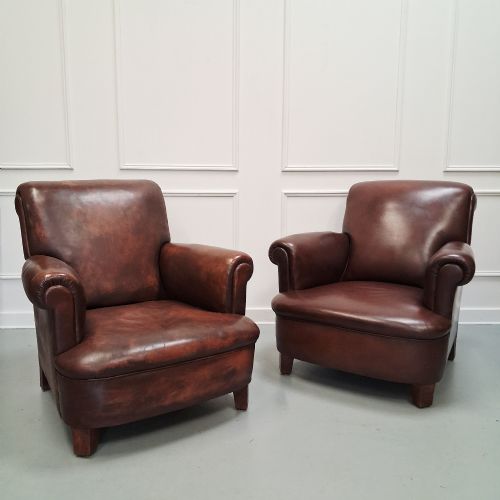
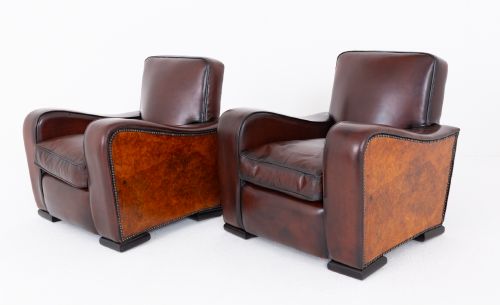
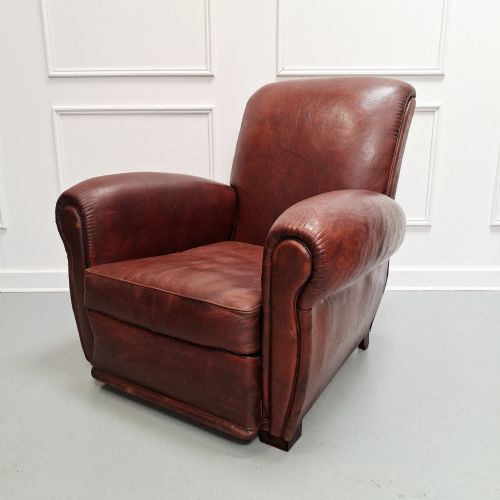
These pieces encompass sturdy armchairs, club chairs, and bridge chairs originating from the early decades of the twentieth century. The selection leans heavily toward comfortable leather club forms and architectural seating designed during the height of the modernist period.
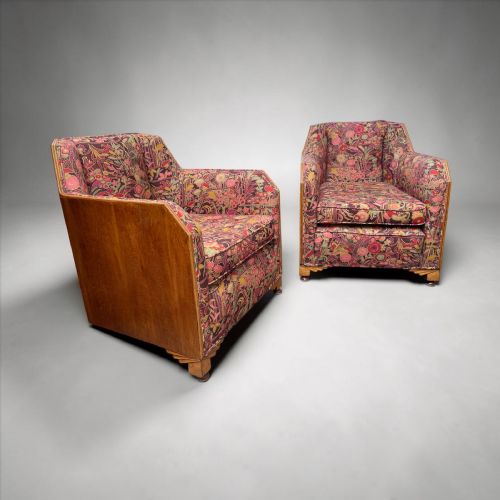
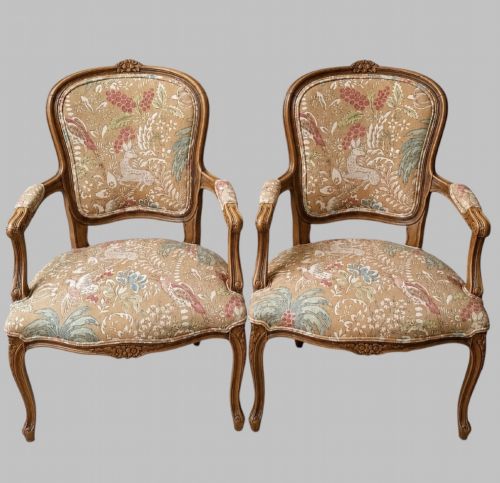
Art Deco styling dominates the available range, alongside distinct revival pieces taking inspiration from Louis XV and Neo-Rococo aesthetics. Buyers frequently encounter matched pairs designed for library or salon settings, alongside larger suites of furniture.
How they were made
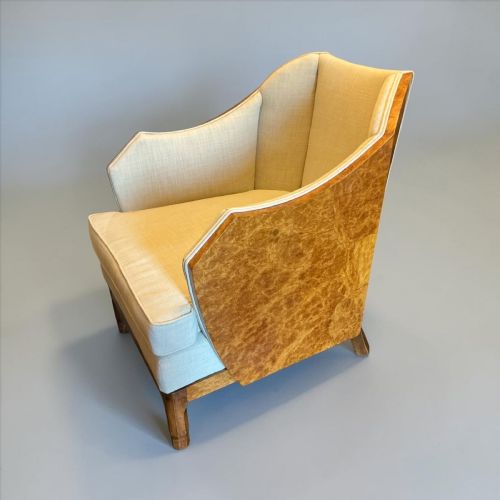
Cabinetmakers and upholsterers constructed these frames using domestic and exotic timbers such as walnut, burr walnut, beech, hardwood, and calamander. Many of the most striking frames combine rich wood veneers with solid timber foundations.
Working surfaces and seating areas are finished in supple leather, suede, or various woven fabrics, occasionally accented with brass fittings or wrought iron elements.
Swans make an unexpected anatomical contribution to the seating repertoire through sculpted wooden head armrests.
What varies in quality
The sophistication of the timber grain and the choice of facing veneers set superior examples apart from standard builds. Selecting burr walnut, macassar, or ebony elevates the visual weight of the frame significantly.
The execution of the upholstery work and the depth of the leather grain dictate the overall standard of the seating. Pieces that retain distinctive silhouette details, such as swan head arms or ski slope wooden supports, demonstrate higher design ambition.
The 1930s French Chairs Glossary
- Art Deco
- A design movement of the 1920s and 1930s characterised by sleek geometric shapes, streamlined forms, and modern industrial materials. It shifted European furniture away from heavy ornamentation towards clean, functional elegance.
- Club chair
- A deep, low-slung armchair with upholstered armrests, traditionally wrapped in thick leather. This form prioritises heavy physical comfort and substantial proportions.
- Bridge chair
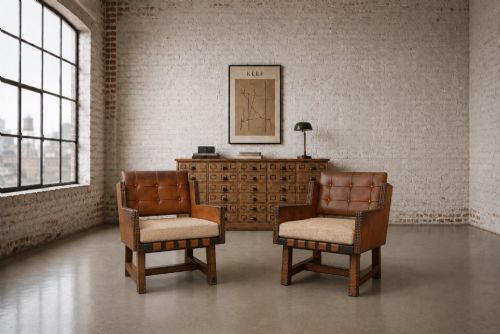
- A compact, light armchair designed for card games or casual sitting rooms. These frames typically feature open wooden arms and smaller footprints than standard club chairs.
- Calamander
- A dense, heavily figured exotic hardwood with dark brown and light fawn stripes. Cabinetmakers utilised this material for high-status Art Deco veneer work.
- Neo-Rococo
- A nineteenth-century revival style that re-emerged in twentieth-century production, featuring asymmetrical scrolls, curved lines, and floral motifs. It contrasts sharply with contemporary modernist geometry.
1930s French Chairs: Frequently Asked Questions
What defines a club chair?
A club chair is a deep, low-slung seat featuring wide armrests and heavy padding designed for total relaxation. These substantial pieces usually incorporate thick leather upholstery.
Originating in French clubs and smoking rooms, they became a staple of 1930s interior design for their sheer comfort and robust presence.
How do bridge chairs differ?
Bridge chairs are smaller, lighter armchairs originally intended for card games around a table. They occupy less floor space than standard club chairs and often feature open wooden arms.
Their compact scale makes them versatile seating options for modern rooms that require flexible furniture arrangements.
What woods appear on these chairs?
Makers utilised a variety of hardwoods, predominantly walnut, beech, and timber frames enhanced by decorative veneers. Exotic selections like calamander, macassar, and ebony also appear on specialised Art Deco suites.
These rich timbers provide striking contrasts against leather or fabric upholstery.
How do I spot an Art Deco piece?
Art Deco seating relies on clean lines, geometric silhouettes, and streamlined contours rather than excessive carving. Look for symmetrical forms and smooth transitions between wood frames and upholstered sections.
They often eschew historical revival motifs in favour of modern architectural styling.