




1930s Fitted Wardrobe
A 1930s fitted wardrobe offers clever internal storage enclosed in striking burr walnut or maple, bringing genuine period elegance to modern bedrooms.
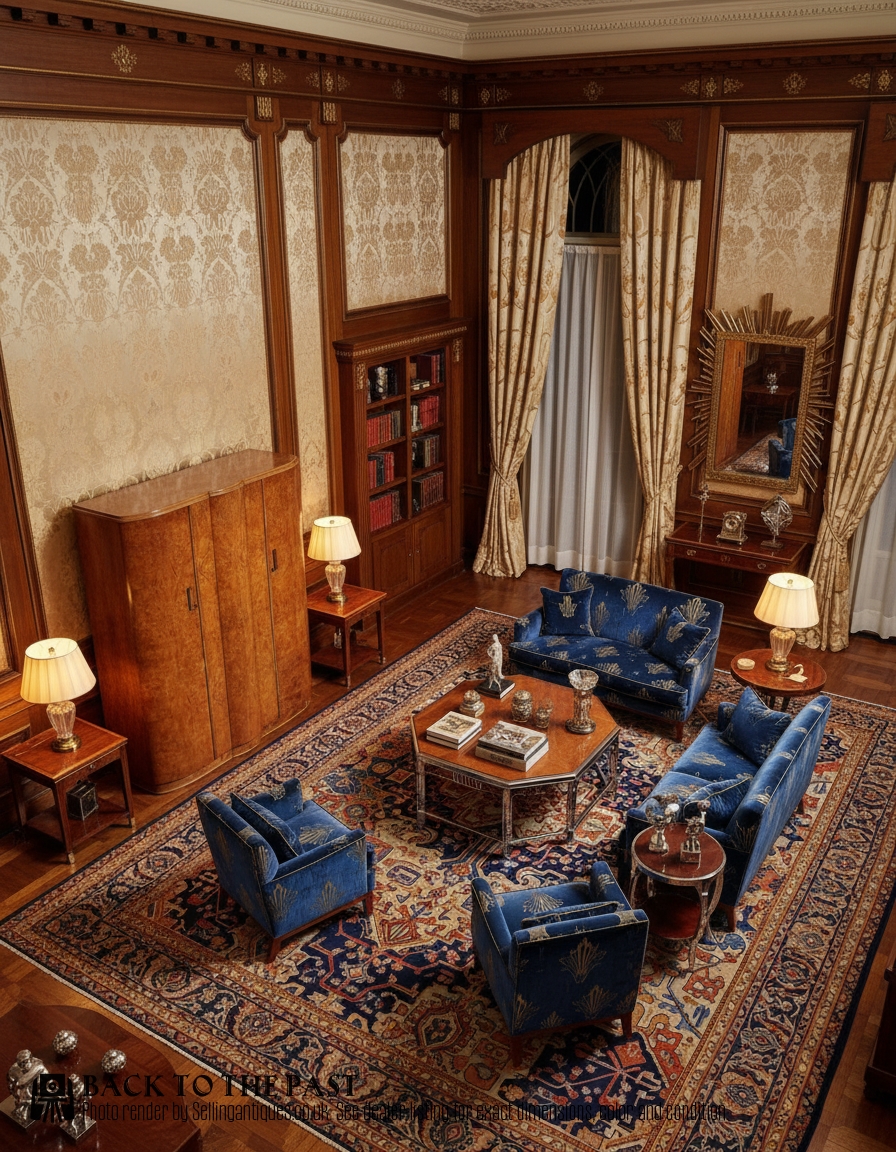
1930s Fitted Wardrobe
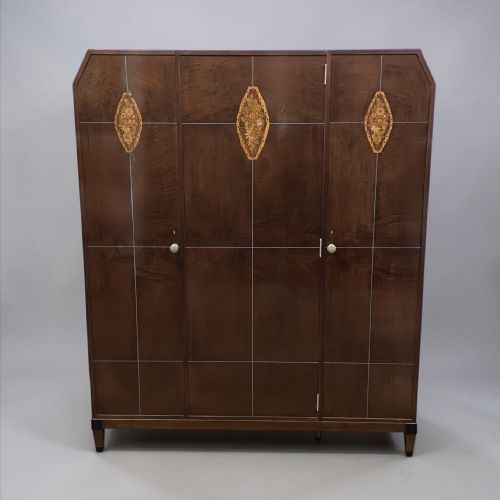
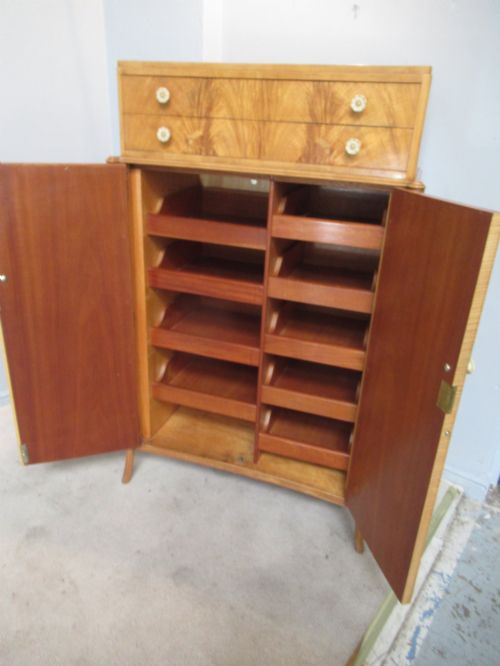
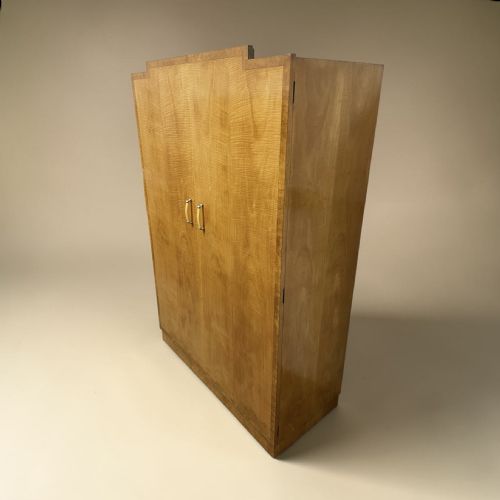
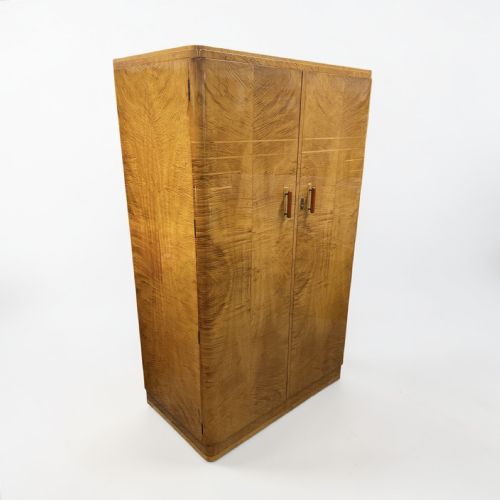
A 1930s fitted wardrobe is a substantial piece of bedroom furniture designed with internal compartments, hanging space, and shelves rather than a simple empty cavity. These pieces belong to the Art Deco style, defined by clean architectural lines and rich wood veneers.
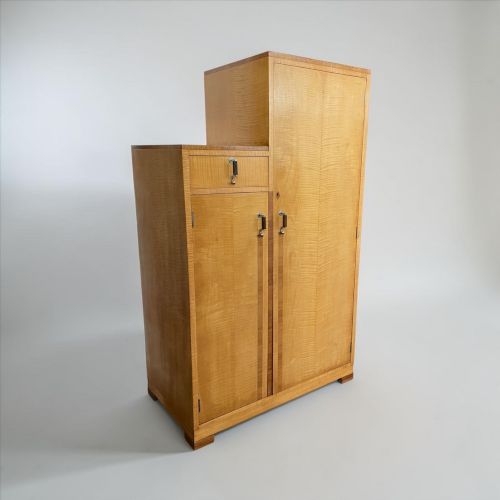
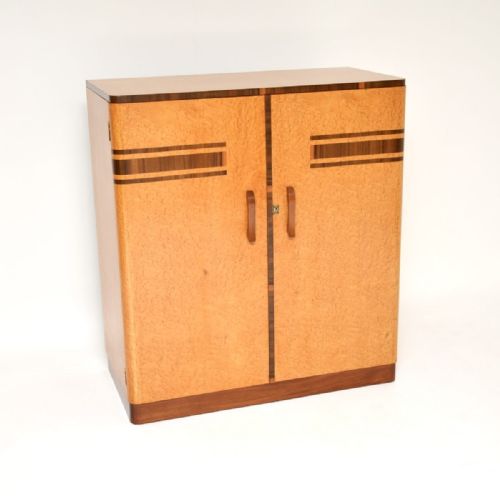
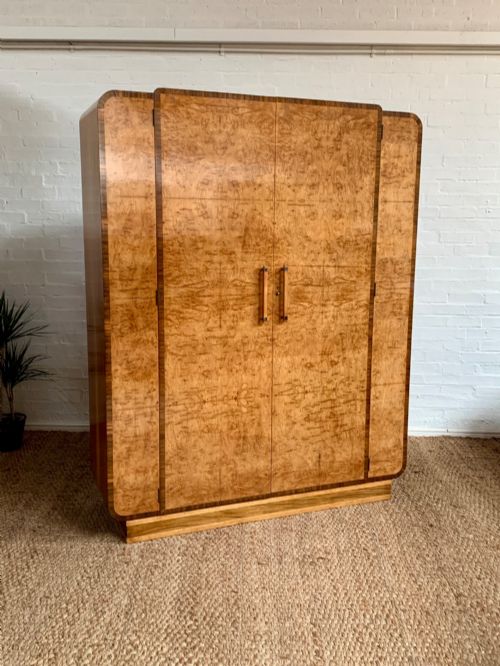
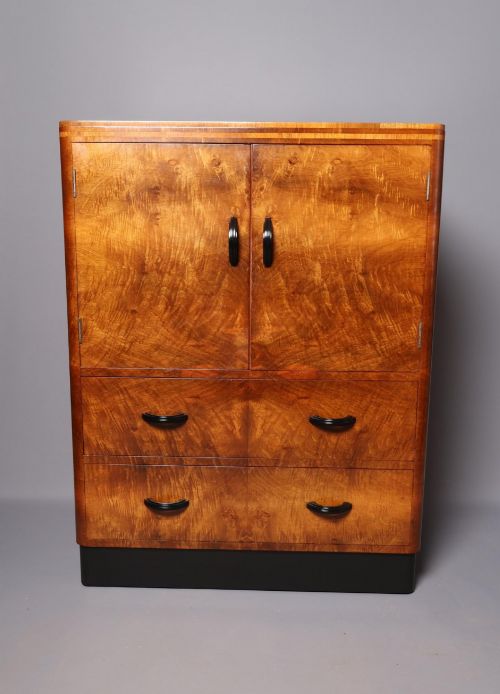
The versions most commonly found here are double and triple wardrobes, alongside compactums and tallboys that combine drawers and cupboards in a single unit. They originate primarily from the 1930 period, with occasional pieces stretching into 1940.
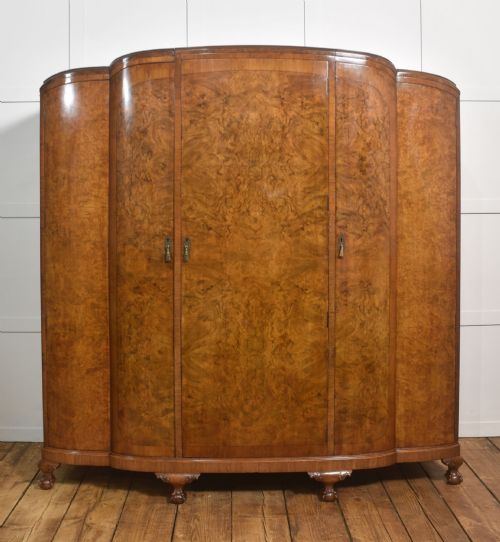
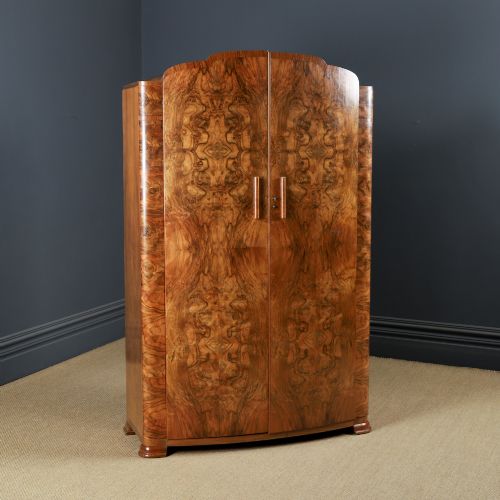
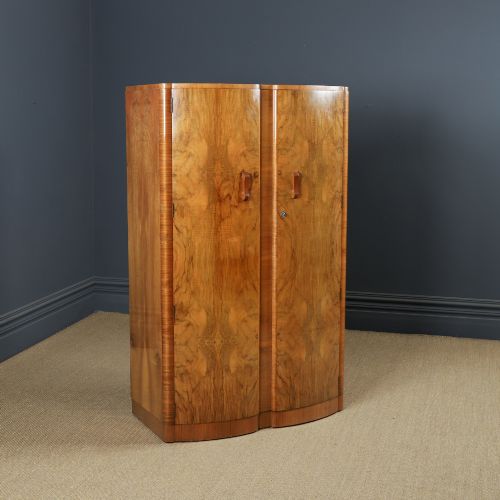
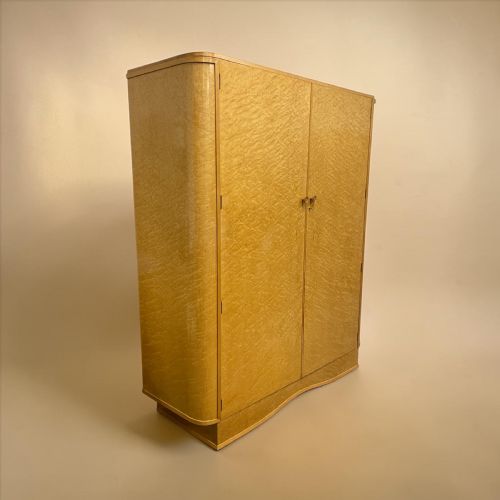
Makers utilised distinctive woods such as walnut, burr walnut, pale mahogany, and birds eye maple to create dramatic grain patterns across the front doors. Many examples feature bow front designs and fitted interiors tailored for an organised gentleman or lady.
How they were made
Cabinet makers applied fine veneers of walnut, burr walnut, and maple over sturdy secondary timbers to create sweeping grain patterns across large flat surfaces. This technique allowed workshops to display expensive and decorative timbers efficiently without risking the warping inherent in solid boards of equal size.
Hardware played an important functional and decorative role, with makers incorporating brass fittings and Bakelite details to accent the rich wood tones. Interiors often included maple linings and specialised compartments designed for specific garments.
1930s Fitted Wardrobe Retail Price Guide 2026
Typical asking prices for 1930s fitted wardrobe among the pieces listed under this phrase on Sellingantiques today, from the lower quarter to the upper quarter. They describe what is for sale here now, not the wider market.
Original Bakelite handles and fitted tie racks occasionally survive inside, whispering secrets of 1930s morning routines.
What varies in quality
The visual impact of a 1930s fitted wardrobe depends heavily on the selection and matching of the wood veneers across the doors. Symmetrical burr walnut figuring demands careful craftsmanship to ensure the grain flows naturally across multiple panels.
Internal configuration and secondary timber selection separate standard production from superior workshop output. Pieces designed by notable makers often incorporate finer maple interiors and more complex internal compartments alongside robust brass and Bakelite hardware.
Harry and Lou Epstein
The 1930s Fitted Wardrobe Glossary
- Compactum
- A large storage cabinet combining hanging space, drawers, and shelving within a single multi-door carcass. This form became particularly popular during the 1930s for efficient bedroom storage.
- Burr Walnut
- A figured wood veneer harvested from the knot growths of walnut trees, displaying swirling and mottled patterns. Cabinet makers prized this material for creating decorative focal points on wardrobe doors.
- Art Deco
- A design style spanning the interwar period characterised by sleek geometric shapes, streamlined forms, and modern industrial materials. It strongly influences the clean lines of 1930s cabinetry.
- Veneer
- A thin layer of decorative wood applied to a stable core timber to provide a luxurious surface finish. The technique allowed makers to utilise expensive timbers effectively on large furniture panels.
- Bakelite
- An early synthetic plastic utilised for handles, escutcheons, and decorative trim during the period. Its deep dark tones complement the warm grain of walnut furniture.
1930s Fitted Wardrobe: Frequently Asked Questions
What is a compactum wardrobe?
A compactum is a multi-compartment wardrobe that integrates hanging space with internal drawers and shelving. It offers a complete bedroom storage solution within one unified piece of furniture.
These pieces often feature specialised internal fittings designed to keep clothing, accessories, and shoes neatly organised behind matching veneered doors.
How do I identify Art Deco furniture?
Art Deco furniture relies on clean geometric silhouettes, symmetrical wood grain patterns, and minimal superfluous ornament. The overall aesthetic emphasises streamlined forms rather than ornate historical carving.
Look for architectural door shapes, bow front designs, and the use of contrasting veneers like birds eye maple against dark walnut.
Are these wardrobes practical for modern rooms?
These wardrobes provide substantial internal volume with dedicated hanging and drawer space suited to contemporary clothing storage. Their fitted interiors help maximise bedroom organisation without requiring built-in joinery.
Careful measurement of ceiling height and doorway clearance is necessary before placement, as these solid period pieces are exceptionally heavy.
What woods were used in the 1930s?
Cabinet makers predominantly utilised walnut, burr walnut, pale mahogany, and maple for external surfaces and internal linings. These timbers were chosen for their rich colour and decorative grain potential.
Accents of brass and Bakelite frequently completed the material palette, adding metallic and synthetic contrast to the warm wooden tones.