


1930s English Desk Clock
A 1930s english desk clock brings geometric modernist character to a room through distinctive period materials.
1930s English Desk Clock
When someone searches for a 1930s english desk clock, they find compact timepieces designed in the Art Deco style. These objects frequently take the form of mantel clocks or small desk pieces used in domestic and office settings.
The pieces appearing on this page originate from the nineteen thirties. Makers adopted geometric layouts and clean silhouettes that reflect modernist British design trends of the period.
Most examples function as mechanical wind-up timepieces or utilise eight-day movements. Electric versions and multi-instrument combinations featuring barometers also occur within this group.
Materials and construction methods
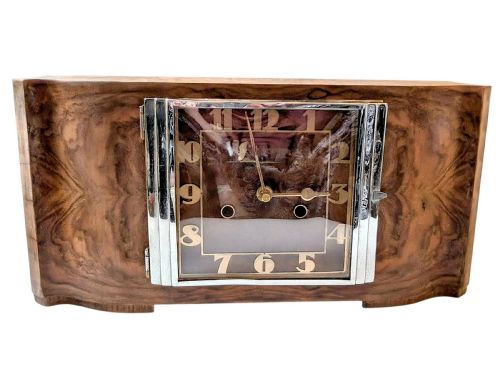
Makers built these clocks using a varied palette of materials that defined the Art Deco aesthetic. Walnut, burr walnut, and ebonised wood provide wooden frames with rich grain patterns.
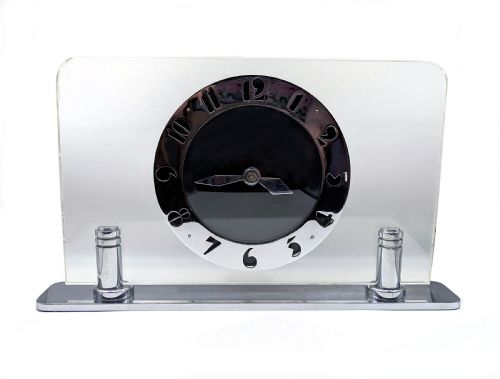
Metal components appear frequently in chrome, brass, and plain metal finishes. Glass elements include peach mirror glass, blue glass, and green glass panels that frame the dial.
Specialised firms incorporated natural stone such as onyx into heavier desk and mantel designs. Movements were mechanical with eight-day capabilities or powered by early electric systems.
Listings show items from the nineteen thirties exclusively in the Art Deco style, constructed from glass, chrome, metal, brass, ebonised wood, burr walnut, mirror glass, and onyx.
Distinctions in construction and finish
The standard of a 1930s english desk clock depends upon the complexity of its housing and the integrity of its materials. Rich wood veneers like burr walnut and heavy cast brass or chrome elements indicate elevated production values.
Pieces incorporating coloured mirror glass or layered geometric wooden elements display more intricate craftsmanship than plain single-material housings. The presence of named manufacturing firms adds further distinction to individual clocks.
Smiths Clockmakers·Smiths Clock Company·A.L. Davenport·GEC
The 1930s English Desk Clock Glossary
- Art Deco
- A design style prevalent in the nineteen thirties characterised by sleek geometric shapes, stylised motifs, and modern industrial materials.
- Eight day movement
- A mechanical clock movement that requires winding only once every eight days before running down.
- Mirror glass
- Reflective glass panels, sometimes tinted in shades like peach or blue, used as decorative casing surfaces on clocks.
- Onyx
- A banded variety of chalcedony stone utilised for heavy, polished clock bodies and desk sets.
- Mantel clock
- A domestic clock designed to sit upon the shelf or mantelpiece above a fireplace.
1930s English Desk Clock: Frequently Asked Questions
What powers these clocks?
These clocks are powered by mechanical movements that require manual winding or by early electric systems. Many examples feature eight-day movements which need attention less frequently.
Makers selected these mechanisms to suit the domestic and office requirements of the nineteen thirties.
How do I identify the period?
The period is identified through distinct Art Deco design traits, such as geometric wooden cases and stylised numbering on the dial. Materials like chrome, onyx, and peach mirror glass are characteristic of nineteen thirties production.
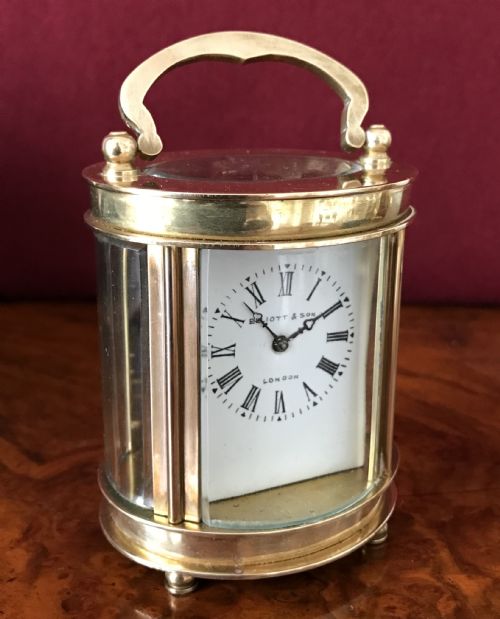
Makers active during this decade often stamped their names directly onto the clock face or housing.
Where were they placed?
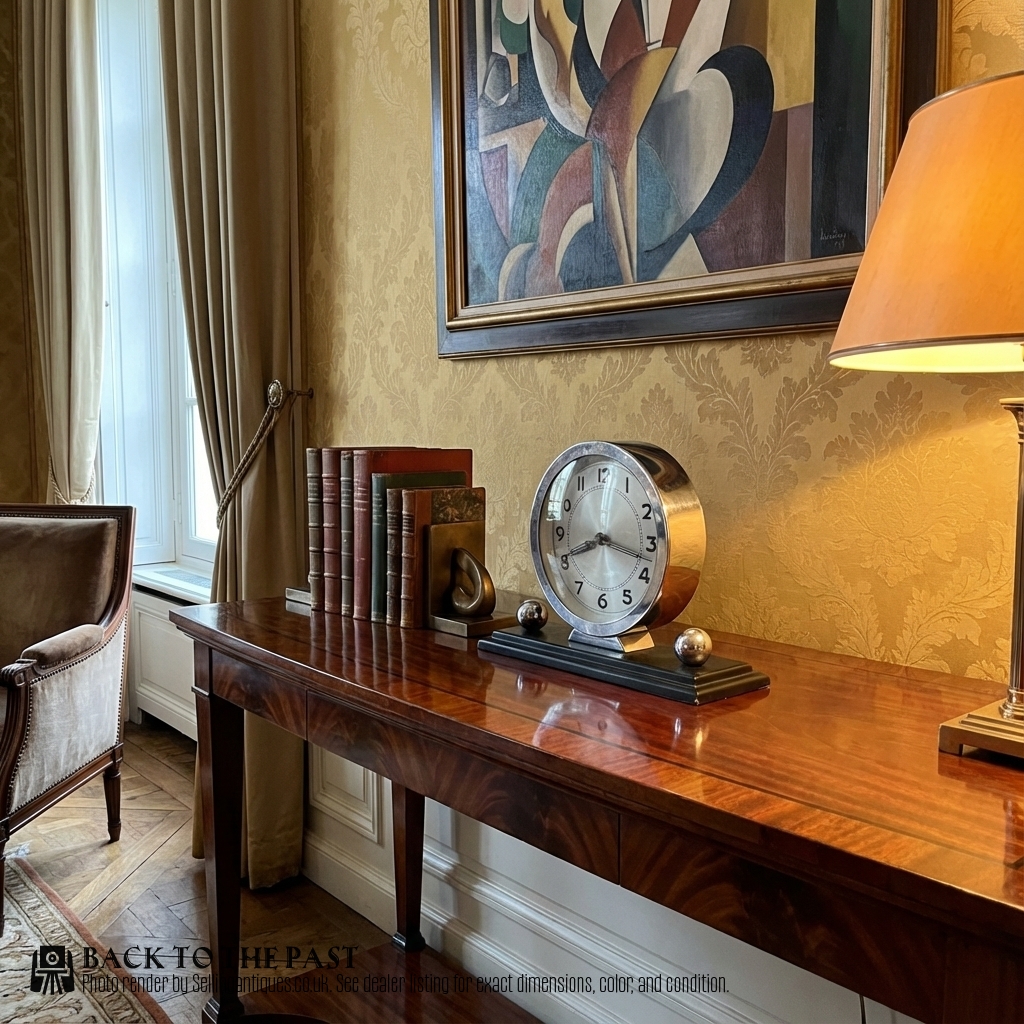
These timepieces were designed for desks, mantelpieces, and tabletops in domestic rooms or professional offices. Their compact proportions allowed them to sit comfortably on narrow ledges or working surfaces.
Some larger versions served as decorative focal points on living room mantelpieces.
Are multiple instruments combined?
Certain examples combine a clock face with additional weather instruments housed in the same stone or wooden body. Barometers and thermometers frequently accompany the clock dial in these desk sets.
Such combinations were popular for office desks and studies during the nineteen thirties.