
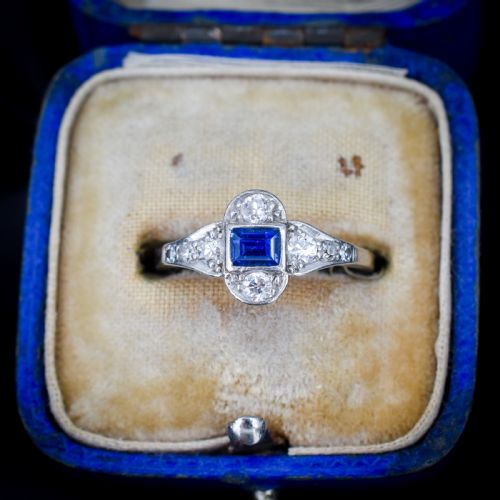


1930s Emerald Platinum Ring
A 1930s emerald platinum ring is a masterclass in geometric elegance, prized for intense green stones held in crisp white metal settings.
1930s Emerald Platinum Ring
A 1930s emerald platinum ring embodies the geometric precision and architectural lines of the Art Deco period. These pieces typically showcase vibrant green beryl alongside sparkling diamond accents, structured as dress, cocktail, cluster, solitaire, or trilogy configurations.
Most examples found on this page hail from the nineteen thirties, though related pieces from the nineteen twenties also appear. The predominant material combination pairs durable white precious metal with rich emeralds and brilliant cut stones.
These rings function primarily as statement pieces or sophisticated dress jewellery. Their surviving forms reflect the distinct taste of an era that favoured clean angles and high contrast.
Materials and construction techniques
Platinum serves as the foundational white metal for these rings, offering the necessary tensile strength to support intricate stone settings without bulk. Goldsmiths utilised this robust metal to create fine wirework, millegrain edges, and secure claw mounts that frame the central emeralds.
Diamonds frequently accompany the emeralds in cluster, trilogy, and cocktail arrangements, adding brilliant sparkle to contrast with the deep green centre stones. Certain variations incorporate alternative gems such as sapphires, rubies, or aquamarines within the same architectural framework.
Listings feature platinum paired with emerald, diamond, gold, sapphire, ruby, and aquamarine across the nineteen twenties and thirties.
Distinctions in quality and finish
Quality in these rings is measured by the clarity and origin of the emerald, with Colombian stones often commanding particular attention alongside Zambian varieties. The saturation of the green hue and the presence of minor oil treatments significantly influence the character of each stone.
The sophistication of the platinum work determines the overall refinement of the piece. Fine millegrain detailing, balanced stone proportions, and precise geometric arrangement separate standard production from exceptional examples of the era.
The 1930s Emerald Platinum Ring Glossary
- Art Deco
- A design style characterised by sleek geometric shapes, stylised motifs, and streamlined forms that dominated the nineteen twenties and nineteen thirties. This aesthetic prioritised symmetry and industrial modernity.
- Millegrain
- A decorative jewellery technique involving a row of tiny raised metal beads along the edges of a setting. This finish softens harsh metal lines and adds a delicate texture.
- Solitaire
- A ring featuring a single prominent gemstone mounted on a metal band. This design focuses attention entirely on the central stone.
- Trilogy ring
- A jewellery piece set with three stones, traditionally representing the past, present, and future. These settings often combine a central emerald flanked by two diamonds.
- Cocktail ring
- A large, showy ring designed to draw attention during social gatherings. These pieces frequently combine substantial emeralds with numerous supporting diamond accents.
1930s Emerald Platinum Ring: Frequently Asked Questions
How do I care for a platinum emerald ring?
Emeralds are softer than diamonds and require gentle cleaning with warm soapy water and a soft cloth, avoiding harsh ultrasonic cleaners.
Platinum is durable and resists tarnish, but the prongs holding the stones should be checked periodically by a professional jeweller.
Are these rings suitable for daily wear?
These pieces can be worn regularly provided care is taken to avoid heavy impacts that might damage the emerald.
Removing the ring during manual tasks preserves the delicate platinum settings and millegrain details.
What defines Art Deco ring design?
Art Deco design relies on straight lines, symmetry, and architectural geometry rather than the flowing organic curves of earlier periods.
Settings often feature step cut stones and stark colour contrasts between platinum and gemstones.
How are emerald treatments described?
Many natural emeralds undergo minor oil treatments to enhance their clarity and fill microscopic surface fissures.
Laboratory reports often specify the presence and extent of these traditional enhancement methods.