


1930s Diamond Band
A 1930s diamond band brings geometric elegance and remarkable old-cut brilliance to the hand, offering a tangible piece of Art Deco design.
1930s Diamond Band
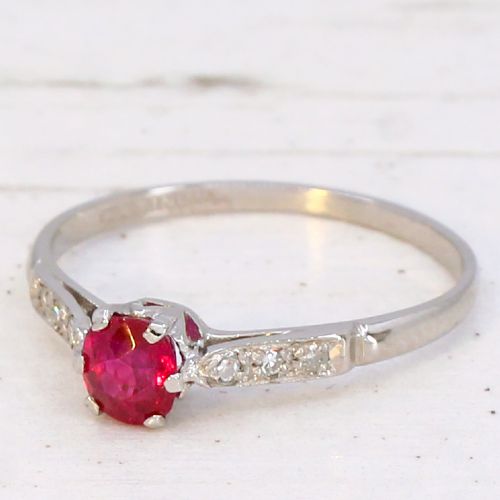
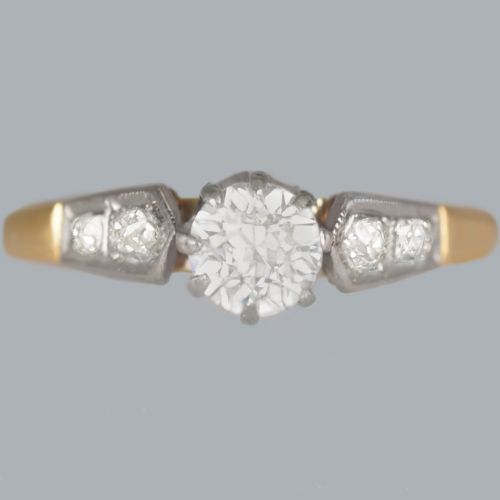
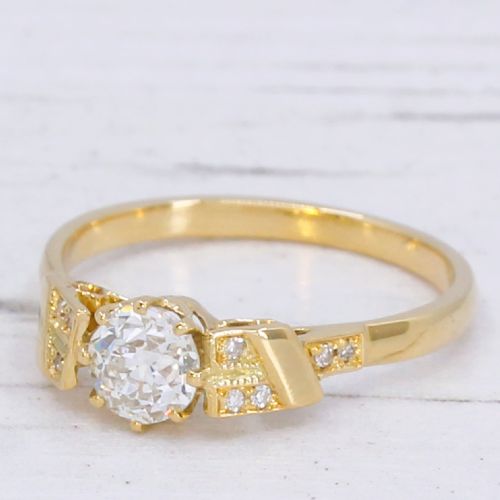
The version most commonly met on this page is the platinum or 18ct gold band set with old-cut diamonds, often featuring geometric arrangements or full eternity channels. Alongside plain metal bands, many incorporate rubies, sapphires or emeralds.
Originating predominantly from the 1930 period, with influences touching the 1920s and 1940s, these bands reflect the shift towards streamlined geometric forms in jewellery design.
How they were made
Goldsmiths utilised platinum and various carats of gold, including 18ct yellow and white gold, to construct the foundational bands and settings. Platinum was frequently chosen for its strength in delicate configurations, holding stones securely while minimising visible metal.
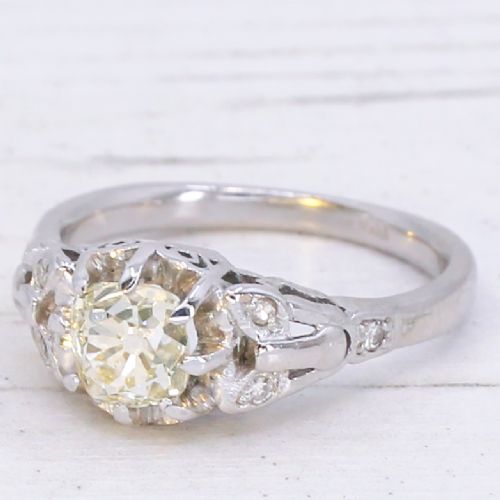
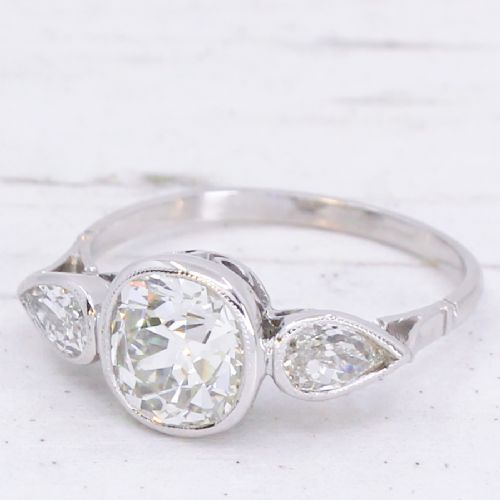
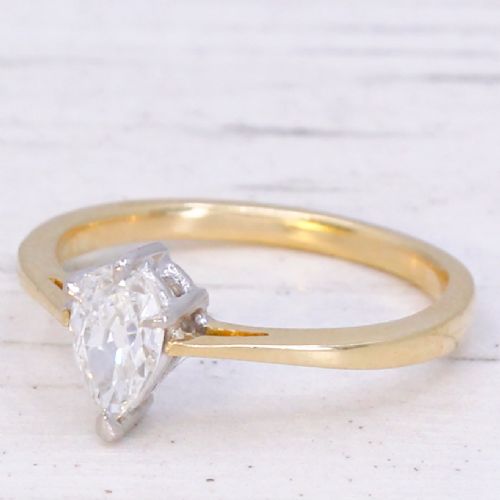
Diamonds were cut by hand, resulting in old European cuts, old cushion cuts, old pear cuts and old mine cuts that display characteristic open culets and softer facet patterns. Stones were then mounted in channel settings for eternity rings or grain and claw settings for solitaires and multi-stone rings.
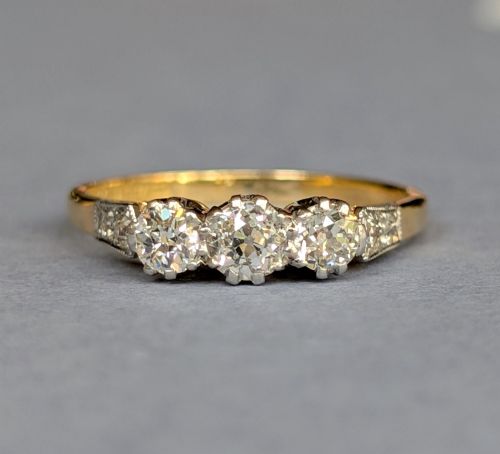
The selection includes full eternity rings, solitaire engagement rings, and five-stone rings anchored in the 1930 period.
What varies in quality
The standard of a 1930s diamond band rests upon the calibre of the central stones and the precision of the metalwork. Hand-cut diamonds with balanced proportions and lively light return elevate a piece above standard examples.
The intricacy of the Art Deco geometric hand-piercing and the structural integrity of the platinum or gold band determine the overall refinement of the construction.
The 1930s Diamond Band Glossary
- Art Deco
- A design style from the 1920s and 1930s characterised by geometric symmetry, clean lines and stylised motifs. This aesthetic heavily influences the settings and band shapes found in this era.
- Old European Cut
- A round diamond cut popular before the modern brilliant cut, featuring a small table, high crown and large open culet. These stones catch candlelight warmly.
- Eternity Ring
- A metal band set continuously with gemstones around the entire circumference, symbolising endless connection. Half-eternity versions feature stones set only across the top half.
- Trilogy Ring
- A ring featuring three principal stones, often interpreted to represent the past, present and future. They frequently combine diamonds with rubies or sapphires.
- Platinum
- A dense, durable white metal prized in the 1930s for secure stone setting. It develops a soft patina over decades of wear.
1930s Diamond Band: Frequently Asked Questions
What defines a 1930s diamond band?
A 1930s diamond band is defined by its Art Deco geometric design elements and the use of hand-cut diamonds set in platinum or gold. These pieces reflect the prevailing aesthetic of the 1930 era.
They appear as full eternity rings, multi-stone bands, and engagement rings featuring old European or old pear cut stones.
How do I wear an eternity ring?
An eternity ring is traditionally worn alongside a wedding band and engagement ring on the left ring finger. Because stones span the band, daily wear requires attention to potential impacts against hard surfaces.
Platinum and 18ct gold bands provide durable foundations for these continuous stone settings.
Can these rings be resized?
Resizing depends entirely on the construction of the specific band. Full eternity rings with stones set all the way around cannot be altered without disrupting the channel.
Trilogy, solitaire, and half-eternity rings with solid metal shanks on the lower half offer more straightforward adjustment possibilities by a skilled jeweller.
How do I identify Art Deco style?
Art Deco style is recognised through strict geometric symmetry, stepped motifs, and rectilinear or curved architectural patterns. In these rings, the platinum settings often frame the diamonds in sharp linear arrangements.
Accents like calibré-cut rubies or sapphires further distinguish this period from earlier Victorian or Edwardian designs.