



1930s Compactum Cabinet
A 1930s compactum cabinet brings serious Art Deco design and intelligent clothes storage together in one piece.
1930s Compactum Cabinet
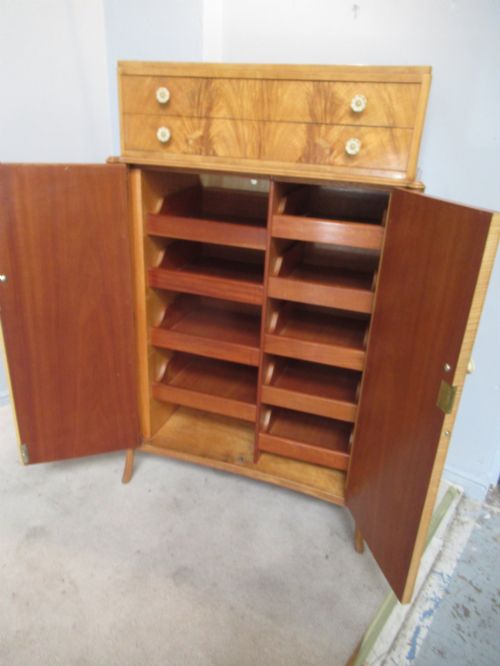
The 1930s compactum cabinet sits firmly in the Art Deco period, combining hanging space, drawers, and shelving within a single footprint. These items serve buyers who want period character alongside practical storage solutions for clothing.
Most examples appearing here date from the 1930s, with occasional pieces from 1940. Forms vary from dedicated compactum wardrobes to tallboys and combination cabinets that integrate chests of drawers directly into the structure.
Makers and workshops of the era favoured substantial timber frames configured to maximise internal capacity. The resulting furniture commands attention in a bedroom through sheer utility and clean geometric lines.
How they were made
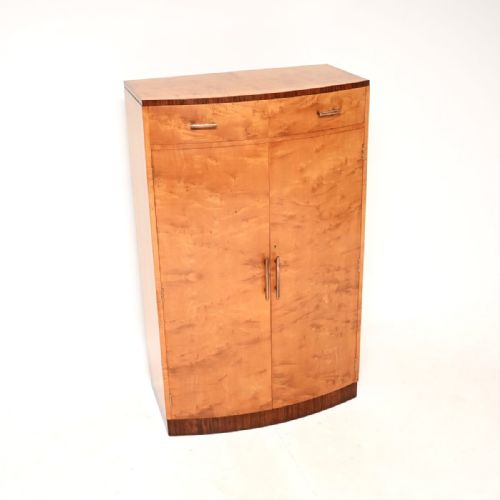
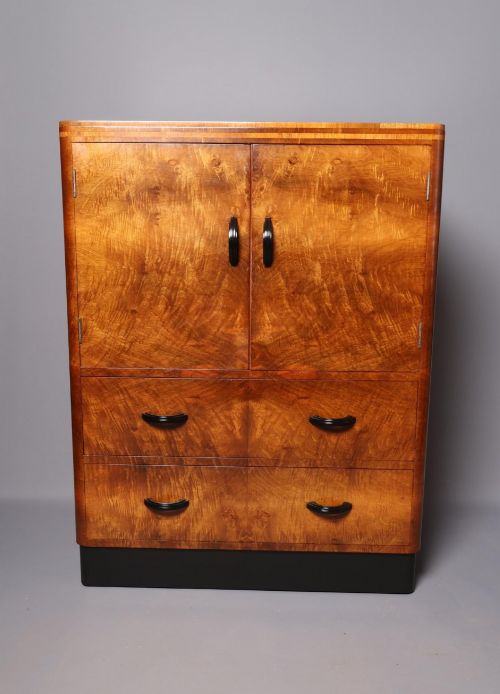
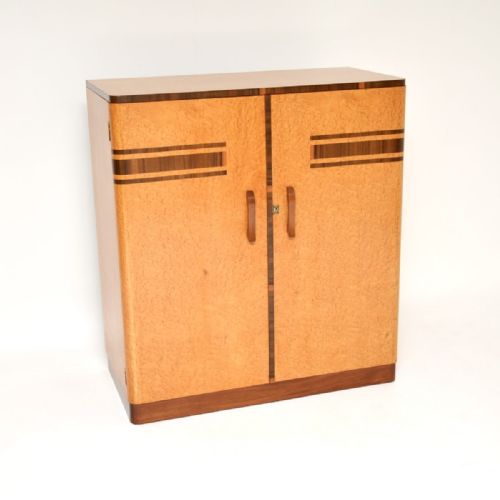
Cabinet makers relied on walnut, burr walnut, mahogany, maple, and birds eye maple as primary timbers, often laid down as decorative veneer over sturdy structural woods. Contrast between light and dark grain patterns defines the visual impact of these surfaces.
Details such as brass handles and Bakelite fittings complete the construction, anchoring the items firmly in their decade of origin. These hardware choices highlight the industrial and decorative shifts of the period.
Listings feature items from the 1930s and 1940s, executed in walnut, burr walnut, mahogany, maple, and birds eye maple.
What varies in quality
The choice of veneer sets the tier of a piece, with striking burr walnut or figured birds eye maple marking out the more ambitious commissions. Plain mahogany and standard maple constructions tend towards a simpler aesthetic.
Proportion and internal configuration dictate the success of the design, separating standard production items from workshop pieces bearing attribution, such as those by Heal's. Clean symmetry and well-planned interior compartments distinguish the finest examples.
Heal's
The 1930s Compactum Cabinet Glossary
- Compactum
- A multi-functional wardrobe or cabinet combining hanging space, shelves, and drawers in one unit. This form emerged to solve bedroom storage needs efficiently.
- Veneer
- A thin layer of decorative timber applied over a secondary wood base. Cabinet makers used burr and figured varieties to create striking grain patterns.
- Bakelite
- An early synthetic plastic utilised for handles and decorative trims. It introduced modern industrial materials to traditional cabinet making.
- Tallboy
- A tall chest of drawers or a combination of drawers and wardrobe compartments. The elevated height offers maximum storage while occupying minimal floor space.
- Burr Walnut
- Timber taken from the warted growths on walnut trees, yielding highly figured patterns. This material was favoured for high-end Art Deco furniture facades.
1930s Compactum Cabinet: Frequently Asked Questions
What is a compactum cabinet?
A compactum cabinet is a multi-functional piece of furniture that combines wardrobe hanging space, shelving, and internal drawers within a single unified carcase.
Designed to hold an entire wardrobe in one footprint, these cabinets became popular during the interwar years for their space-saving efficiency.
How do I identify Art Deco style?
Art Deco pieces rely on clean geometric lines, symmetrical wood grain patterns, and contrasting timber veneers like walnut and birds eye maple.
Details such as brass hardware and Bakelite fittings further anchor these cabinets to the design language of the 1930s.
What is the difference between a tallboy and a compactum?
A tallboy primarily focuses on vertical drawer storage, sometimes incorporating a small cupboard section at the top.
A compactum offers a more comprehensive combination of full-length wardrobe hanging space alongside internal drawers and shelves.
Where should I place a compactum cabinet?
These large cabinets suit bedrooms and dressing rooms where substantial storage capacity is required without cluttering the floor plan.
Ensure adequate clearance for doors to open fully, as many models feature wide panel layouts.
What woods were used in the 1930s?
Cabinet makers predominantly worked with walnut, burr walnut, mahogany, maple, and birds eye maple during this era.
These timbers were frequently utilised as decorative veneers over sturdy core woods to create striking visual contrast.