







1930s Cocktail Accessories
These 1930s cocktail accessories bring the sharp geometry and playful novelty of the interwar drinking culture straight to your table.
1930s Cocktail Accessories
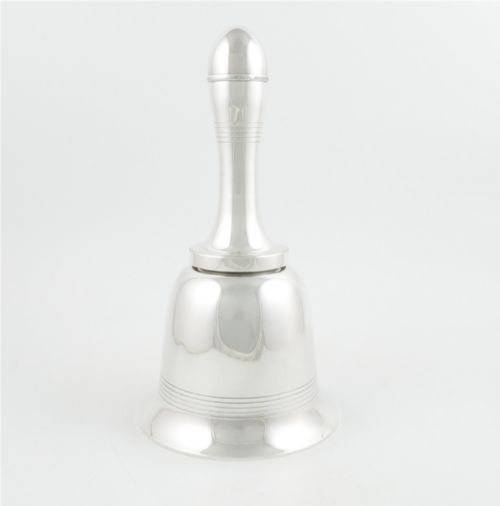
When you search for 1930s cocktail accessories, you encounter objects designed to mix, serve and ornament drinks during the height of the Art Deco period. The selection on this page draws primarily from the 1930s, alongside examples from the 1920s and 1940s, reflecting a distinct era of stylish social hosting.
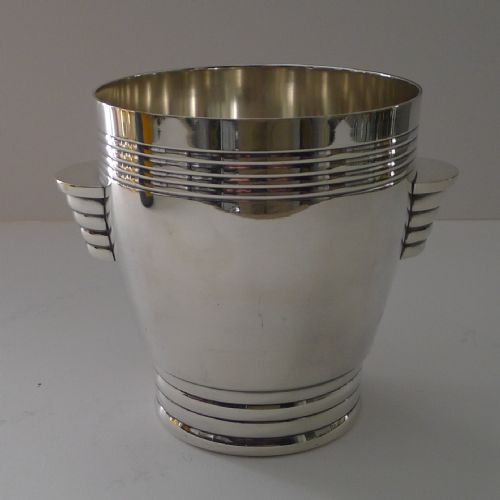
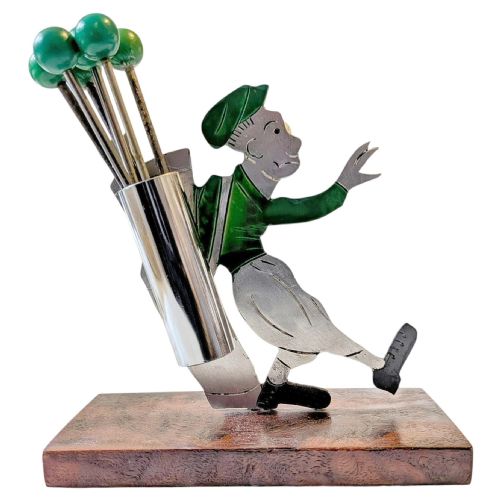
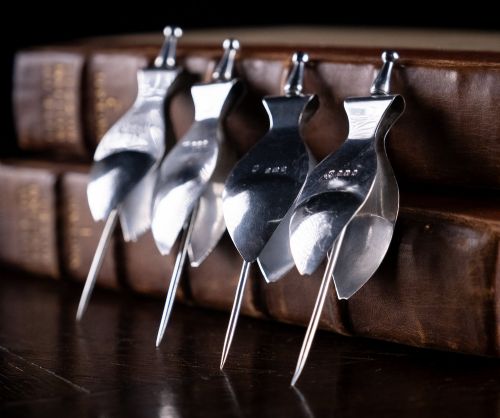
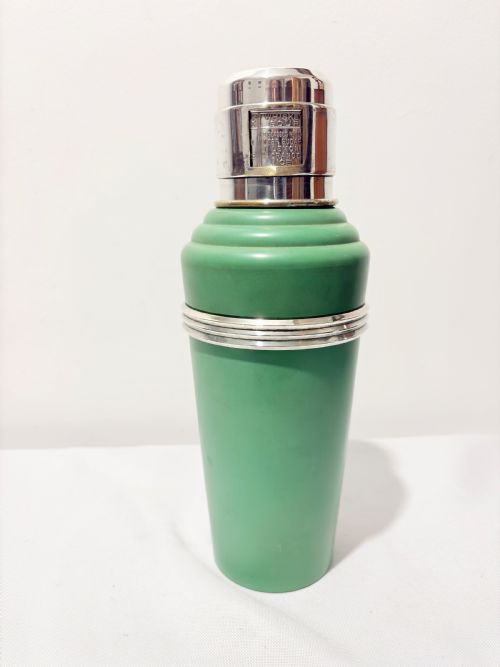
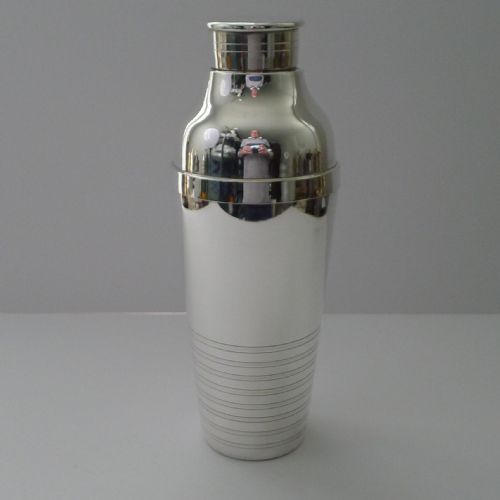
The forms span practical barware and entertaining pieces, including cocktail shakers, ice buckets, serving trays, soda syphons and cutlery. Alongside these standard vessels appear novelty items such as cocktail pick sets featuring figural holders, lemon wedge squeezers and spirit flasks.
English, French, German and Swiss makers dominate the origins of these pieces, bringing diverse interpretations to the cocktail hour. You are most likely to meet silver-plated shakers and novelty stick sets in this inventory, representing the core of interwar hospitality.
Distinctions in Quality and Execution
Quality in these accessories rests on the weight of the metal, the crispness of the casting in novelty figures and the integrity of the plating. Heavier shakers and trays demonstrate superior gauge metal that resists denting and holds a polish.
The precision of mechanics distinguishes standard barware from finer pieces, such as the smooth threading on shaker lids or the snug fit of fitted ice tongs. In novelty items, the artistic detail of enamelling or figural sculpting marks the work of established silversmiths and manufacturers.
Makers' marks provide a reliable indicator of pedigree, with stamped hallmarks or firm signatures elevating a piece above unmarked commercial output. The combination of mixed media, such as Bakelite handles paired with clean chrome, reveals deliberate design intent rather than generic assembly.
1930s Cocktail Accessories Retail Price Guide 2026
Typical asking prices for 1930s cocktail accessories among the pieces listed under this phrase on Sellingantiques today, from the lower quarter to the upper quarter. They describe what is for sale here now, not the wider market.
Listings feature silver plate, chrome, Bakelite, enamel and cut glass across shakers, ice buckets and trays dating from the 1920s to the 1940s.
Sudre·Richard Comyns·Keith Murray·Asprey·William Suckling·C S Green and Co·Mappin and Webb·Carl Deffner
The 1930s Cocktail Accessories Glossary
- Art Deco
- A design style characterised by streamlined forms, geometric patterns and modern industrial materials that dominated the interwar decades. It influenced everything from architecture to small barware accessories.
- Silver Plate
- A thin layer of silver bonded to a base metal core, such as copper or nickel silver, providing the appearance of solid silver. This technique allowed manufacturers to produce affordable yet lustrous tableware.
- Bakelite
- An early synthetic plastic valued for its durability and rich, opaque colours in interwar design. It frequently appears on handles, finials and novelty cocktail stick holders.
- Electroplated Nickel Silver
- A durable alloy of copper, nickel and zinc coated with a layer of pure silver through an electrolytic process. It served as a robust foundation for heavy-use items like cocktail shakers and trays.
- Soda Syphon
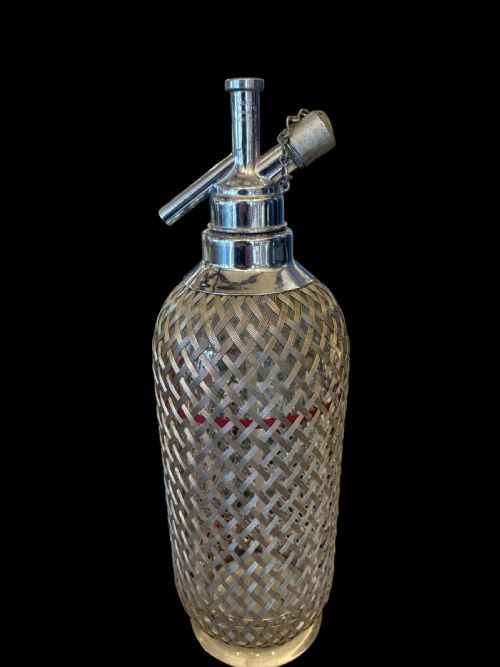
- A pressurized bottle used to dispense carbonated water directly into drinks. These glass or metal-mesh vessels sat prominently on home bars during the period.
1930s Cocktail Accessories: Frequently Asked Questions
What is a cocktail shaker's usual capacity?
Most interwar shakers hold between one and one and a half pints of liquid, designed to serve a small round of drinks. This size balanced practical handling with enough volume for multiple portions.
Larger spirit flasks and novelty shakers accommodated busier gatherings, while smaller versions suited intimate settings.
How do I clean silver plated barware?
Wash silver-plated pieces gently in warm soapy water using a soft cloth, avoiding harsh abrasives that wear away the plating. Dry them immediately to prevent water spots and tarnishing.
For stubborn tarnish, use a specialised silver polish formulated for plated surfaces, applying it with light pressure.
Were novelty cocktail picks used daily?
Novelty sets featuring figures like golfers or cartoon characters were designed for lively cocktail parties rather than everyday family dining. They added a humorous talking point to hors d'oeuvres and garnishes.
Hosts brought them out specifically when entertaining guests to inject personality into the drinks hour.
How do I identify a 1930s piece from other eras?
Look for characteristic Art Deco geometry, streamlined silhouettes and the integration of modern materials like Bakelite and chrome alongside silver plate. Makers' marks and specific manufacturer signatures also help date pieces accurately.
Designs often reflect the leisure and cocktail culture unique to the interwar decades.