


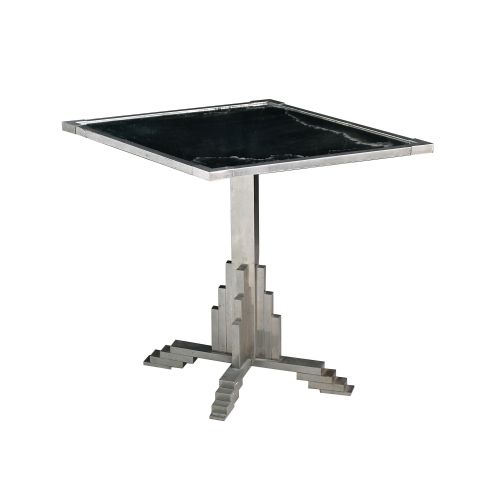


1930s Chrome Mirror
A 1930s chrome mirror delivers the sharp geometric lines and polished sheen that define mid-century interior design.
1930s Chrome Mirror
A 1930s chrome mirror brings together the bold geometric sensibility of Art Deco and the sleek industrial finish of the interwar period. These objects appear primarily as wall mirrors, vanity mirrors, and mirrored fireplace surrounds, capturing light and space within a room.
The objects seen on this page span the 1920s and 1930s, reflecting the transition from traditional forms into modernist design. Alongside wall-hanging pieces, the selection includes related accessories incorporating mirrored glass and chrome-plated metal.
American Art Deco variations sit alongside British examples, showing how international makers adopted the aesthetic. Buyers encounter both frameless circular designs and elaborate structures featuring etched glass or contrasting enamel details.
Materials and construction
Makers built these pieces using chrome-plated metal over a supportive base, combining structural rigidity with a bright, rust-resistant surface finish. Mirrored glass forms the primary visual element, often cut into specific geometric shapes or layered to create depth.
Some examples incorporate coloured glass panels, notably peach or blue mirror glass, alongside enamel accents. Etching techniques decorated the glass surfaces with stylized motifs, while paper components sometimes lined the backs of smaller objects.
1930s Chrome Mirror Retail Price Guide 2026
Typical asking prices for 1930s chrome mirror among the pieces listed under this phrase on Sellingantiques today, from the lower quarter to the upper quarter. They describe what is for sale here now, not the wider market.
Listings feature items incorporating chrome, mirrored glass, and blue or peach enamel across the 1920 and 1930 periods.
Factors of quality
Quality rests in the precision of the metal plating and the clarity of the underlying glass. Superior examples maintain an unblemished reflective surface without the clouding or dark spots that develop when moisture degrades the silver backing over time.
Construction solidity distinguishes finer pieces, particularly in how securely the glass mounts to the chrome framework. The complexity of the design, such as multi-layered mirrored glass or integrated figural elements, also marks the distinction between standard production and exceptional work.
Smiths Clock Company·Richard Hudnut
The 1930s Chrome Mirror Glossary
- Art Deco
- A design style dominant in the 1920s and 1930s characterised by streamlined forms, geometric patterns, and modern industrial materials. It influenced architecture, furniture, and decorative objects alike.
- Chrome-plated metal
- A base metal coated with a thin layer of chromium through an electrolytic process. This technique provided a brilliant, durable shine that resisted tarnishing.
- Peach mirror glass
- A tinted decorative glass popular in the interwar period, offering a warm pinkish hue. It was frequently utilised in wall mirrors and clock surrounds to soften reflected light.
- Modernist
- An aesthetic movement prioritising clean lines, functional forms, and the rejection of superfluous historical ornament. In these listings, it describes pieces that lean towards stark industrial simplicity.
- Venetian mirror
- A style of mirror featuring engraved or wheel-cut glass sections assembled around a central plate, often incorporating decorative floral or geometric motifs.
1930s Chrome Mirror: Frequently Asked Questions
How do I clean a chrome mirror safely?
Use a soft microfiber cloth with a mild soap solution to wipe down the chrome plating, avoiding abrasive pads that scratch the metal surface.
Clean the glass pane with a standard ammonia-free glass cleaner applied to the cloth rather than sprayed directly, which prevents moisture from seeping behind the mirror edges.
Where should I hang a wall mirror?
Position the piece at eye level in an entryway, living room, or above a mantelpiece to maximise natural light distribution and create an illusion of space.
Ensure the wall fixings match the weight of the specific frame and backing, as larger glass panels require secure anchor points.
How do I identify a 1930s piece?
Look for characteristic Art Deco design motifs, such as stepped geometries, sunburst patterns, and combinations of chrome with coloured glass panels.
Examine the construction methods on the reverse, where older paper backings, original mounting brackets, and heavier plate glass provide clues to the period.
Can these mirrors be used in bathrooms?
These vintage items function best in dry living spaces because humidity encourages the degradation of the original silver backing and chrome plating.
If placed in a damp environment, moisture penetration causes edge-flaking and dark spots that diminish the clarity of the glass.