


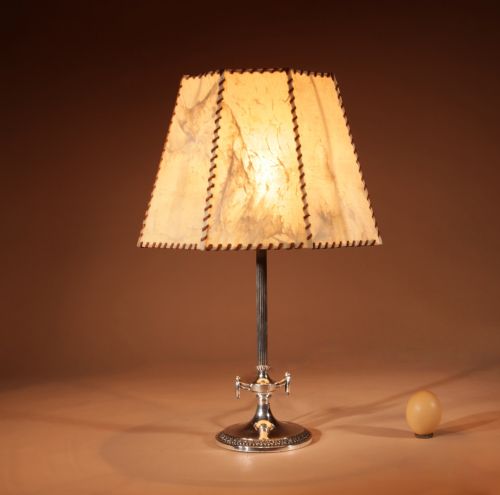


1930s Chrome Desk Light
These 1930s chrome desk light examples bring genuine Art Deco and Machine Age character to a workspace, offering industrial utility paired with striking sculptural forms.
1930s Chrome Desk Light
A 1930s chrome desk light delivers functional illumination grounded in the distinct design vocabularies of the interwar period. Buyers searching this phrase encounter table and desk lamps shaped by Art Deco aesthetics and Machine Age principles.
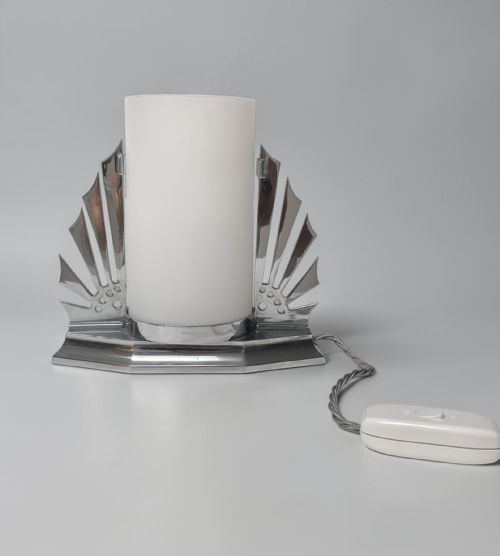
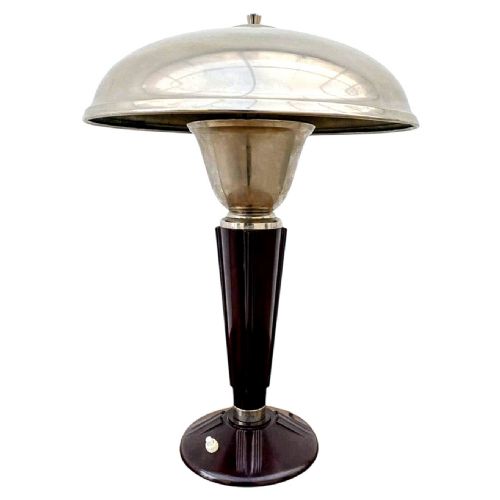
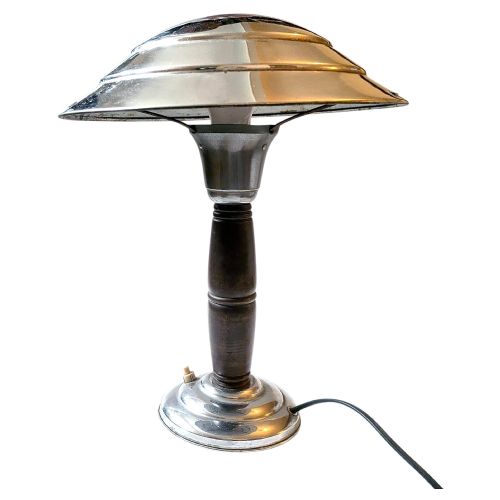
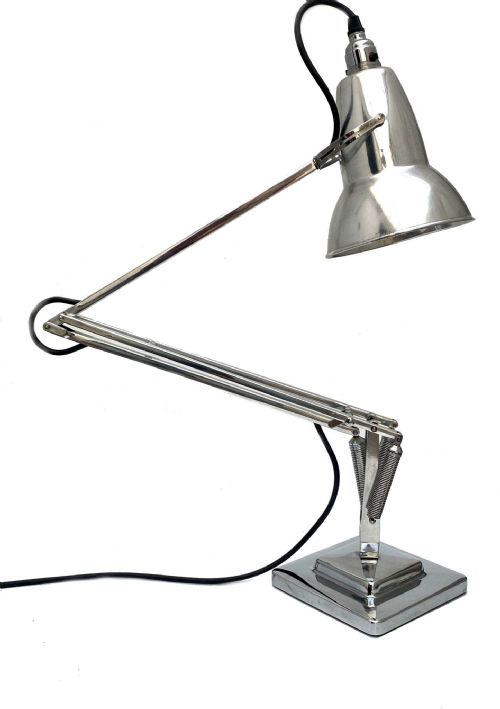
The most common versions on this page combine polished chrome frames with glass shades or bakelite components. Pieces span the 1920s to the 1940s, frequently incorporating adjustable arms or figural supports representing athletes, nudes, and cherubs.
Materials and Construction
Makers utilised electroplated chrome and nickel over metal bases to achieve a durable, reflective finish characteristic of the period. This metallic brilliance contrasts with contrasting elements like black or coloured bakelite, catalin phenolic, and wood.
Glass elements range from clear and frosted variants to striking blue and pink shades, alongside opal glass diffusers. Shades and structural supports are frequently engineered with adjustable joints, metal plating, and occasionally parchment leather.
Athletes and cherubs occasionally double as lamp stands, holding spheres aloft as if illuminating the room by sheer athletic effort.
Quality and Execution
Distinction across the range rests on the ambition of the design and the precision of the metalworking. Pieces featuring complex figural casts or articulated mechanical engineering display a higher level of workshop execution than standard utilitarian models.
The integrity of the original surface finishes and the weight of the cast metal components define the better examples. Integrated elements such as coloured glass shades or signed maker assemblies elevate specific specimens above ordinary production.
Eileen Grey·Herbert Terry·Pirouette
The 1930s Chrome Desk Light Glossary
- Chrome
- An electroplated chromium coating applied to metal bases to provide a bright, corrosion-resistant surface. This finish defines the reflective aesthetic of interwar lighting design.
- Bakelite
- An early synthetic phenol-formaldehyde plastic valued for its durability and rich dark tones. It frequently forms the switch housings, bases, or decorative accents on period desk lamps.
- Machine Age
- A design style spanning the interwar years that celebrated industrial power, clean lines, and functional efficiency. Objects from this movement often incorporate streamlined metal tubing and geometric forms.
- Opal Glass
- A translucent white glass used for lamp shades to diffuse light evenly across a workspace. It softens harsh glare while maintaining a clean, architectural profile.
1930s Chrome Desk Light: Frequently Asked Questions
How do I identify a true 1930s desk light?
Authentic pieces rely on period manufacturing techniques, including heavy metal casting, genuine chrome plating, and early plastics like bakelite rather than modern synthetics.
Examine the wiring access points, switch mechanisms, and construction joints, which typically reflect interwar industrial methods and assembly standards.
Were these lamps used for writing or drafting?
These adjustable fixtures served primarily as task lighting for offices, studies, and drafting tables where focused illumination was essential.
Articulated arms and swiveling shades allowed users to direct light precisely across paper documents and technical drawings.
How do Art Deco and Machine Age styles differ?
Art Deco lighting often incorporates decorative figural elements, geometric zig-zag patterns, and colourful glass shades to project decorative elegance.
Machine Age design strips away ornamentation to emphasise streamlined functionality, raw metal finishes, and industrial utility.
Can I use modern LED bulbs in these lamps?
Modern low-wattage LED bulbs fit standard vintage lamp holders while generating significantly less heat than traditional incandescent lamps.
Ensure that the original internal wiring meets safety standards before operating any period lighting fixture in a contemporary setting.