

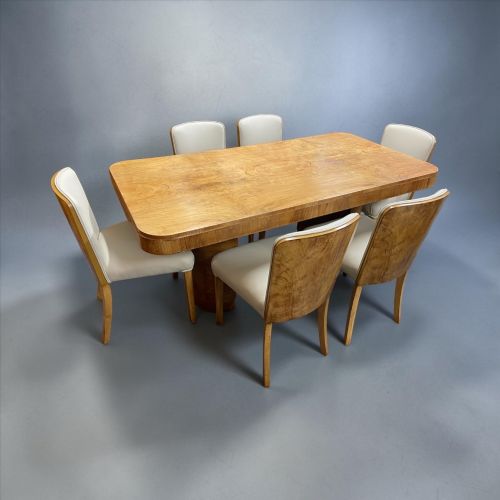
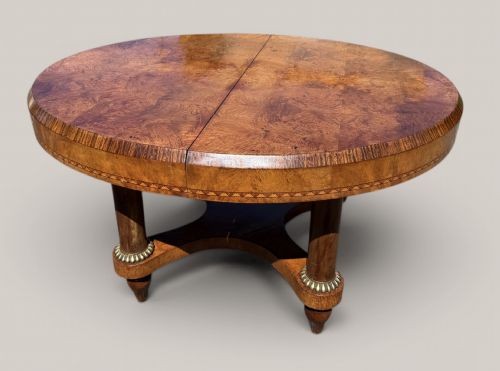


1930s Burr Walnut Dining Table
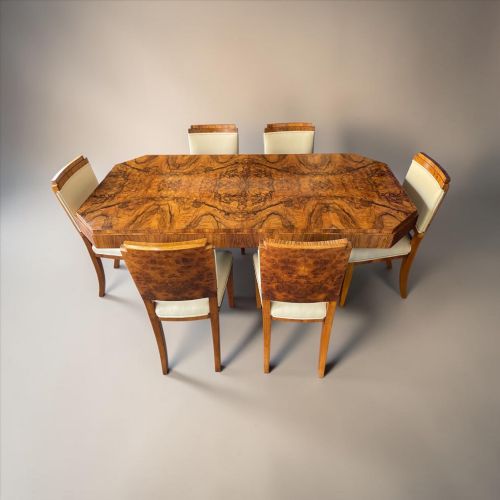
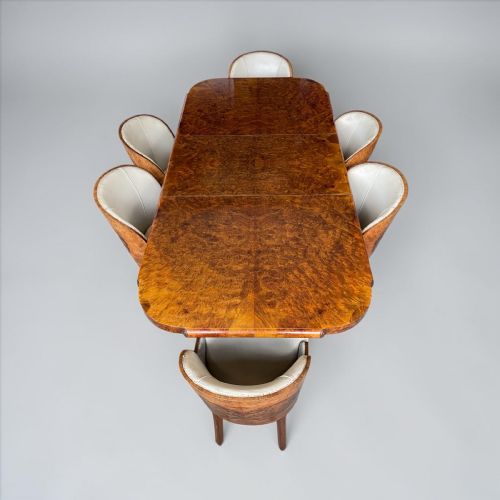
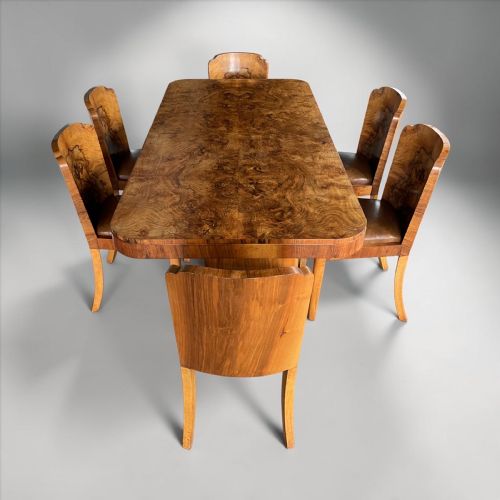
A 1930s burr walnut dining table brings dramatic grain patterns and striking modernist forms to the dining room.
1930s Burr Walnut Dining Table
A 1930s burr walnut dining table is a statement piece of furniture defined by rich, swirling wood veneers and geometric or revival silhouettes. These tables appear alongside matching dining sets and suites, often accompanied by chairs or related serving pieces.
Most examples hail from the 1930s and 1920s, leaning heavily into Art Deco design alongside occasional Queen Anne Revival influences. Forms range from large extending tables seating up to twelve people down to standard six-seater dining setups.
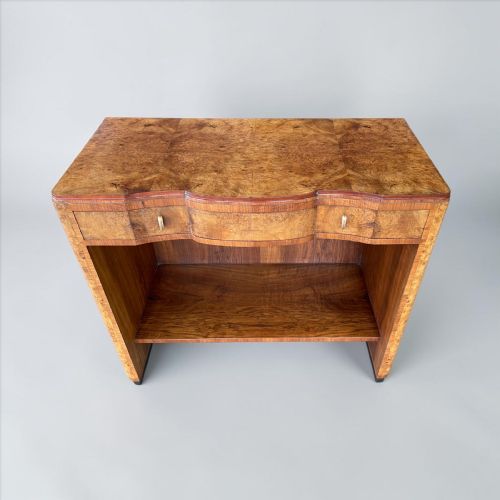
Makers such as Maurice Adams, Harry and Lou Epstein, and Hille London shaped the market for these tables, producing high-end dining suites with strong architectural presence. Buyers frequently encounter them paired with matching sideboards or credenzas.
How they were made
Cabinetmakers constructed these tables using solid timber frames overlaid with burr walnut and walnut veneers to create symmetrical grain patterns across the top. Secondary woods like maple and standard timber provide internal structure, while brass details occasionally accent the design.
The distinct aesthetic relies on skilful veneer matching, where figured burr sections are laid out in book-matched or quarter-matched quadrants. Artisans finished the wood to highlight the natural depths and twists of the grain rather than hiding it beneath heavy colour.
1930s Burr Walnut Dining Table Retail Price Guide 2026
Typical asking prices for 1930s burr walnut dining table among the pieces listed under this phrase on Sellingantiques today, from the lower quarter to the upper quarter. They describe what is for sale here now, not the wider market.
Listings feature periods spanning from the Edwardian era through the 1920s and 1930s, constructed predominantly in burr walnut, walnut veneer, maple, and timber.
What varies in quality
The distinction between ordinary and exceptional tables rests in the choice and application of the burr walnut veneer. Superior pieces display unbroken, highly figured grain patterns that wrap seamlessly around edges and aprons, executed by skilled workshops.
Attribution to notable makers such as Epstein, Maurice Adams, or Hille London elevates the standing of a table significantly. The architectural cohesion of accompanying dining sets and the crispness of the Art Deco carving or shaping also dictate desirability.
Maurice Adams·Harry and Lou Epstein·Hille London
The 1930s Burr Walnut Dining Table Glossary
- Burr walnut
- A prized wood veneer harvested from the abnormal growths on walnut trees, yielding intricate, swirling grain patterns. It forms the primary decorative surface on these tables.
- Veneer
- A thin layer of choice wood applied over a stable secondary timber base. This technique allows cabinetmakers to utilise striking grain figures without risking the warping inherent in solid timber slabs of that size.
- Art Deco
- A dominant design movement of the interwar period characterised by sleek geometric shapes, stylised motifs, and modern glamour. It defines the aesthetic of the majority of these dining tables.
- Extending table
- A dining table designed with a mechanism or removable leaves to increase surface area for guests. Many 1930s examples accommodate larger gatherings by pulling apart to insert centre leaves.
- Quarter-matching
- A veneer technique where four consecutive slices from the same log are arranged mirror-image to create a symmetrical, clover-like pattern. This method showcases the decorative potential of burr timber.
1930s Burr Walnut Dining Table: Frequently Asked Questions
How do I identify an Epstein table?
Epstein pieces from this era typically exhibit bold Art Deco styling with heavy, sculptural bases and dramatic burr walnut grain. Look for expert craftsmanship in the curves and the substantial weight characteristic of their London workshops.
While some bear paper labels or stamps, many are recognised instantly by connoisseurs through their distinct proportions and suite designs. They often appeared alongside cloud-backed chairs or matching cloud sideboards.
Will an Art Deco table fit a modern interior?
The clean geometric lines and rich warm tones of 1930s furniture blend remarkably well with contemporary minimalist decor. The striking wood grain acts as a natural focal point that warms up neutral or stark architectural spaces.
Mixing these tables with simpler modern seating or keeping the surrounding decor restrained allows the antique design to stand out properly. Their architectural forms bridge historical craftsmanship and modern aesthetics with ease.
How many people do these tables seat?
Standard dining tables from this period commonly seat six guests comfortably for everyday meals. Many examples feature extending mechanisms that allow them to expand to accommodate ten or twelve diners when entertaining.
Checking the leg placement and clearance is wise if you plan to pair an extending table with large dining chairs. The presence of original leaves often determines the maximum extended length of the table.