


1930s Burr Walnut Chest
These pieces of 1930s burr walnut chest furniture combine figured grain and clean Art Deco lines, offering generous storage with strong visual presence.
1930s Burr Walnut Chest
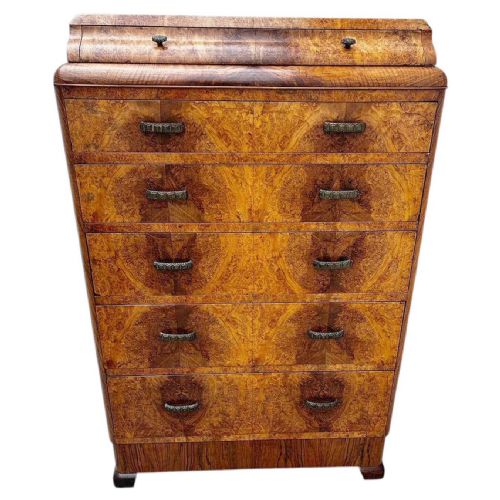
When you search for a 1930s burr walnut chest, you encounter English bedroom and entertaining furniture rooted in the Art Deco style. The core of the selection comprises chests of drawers, tallboys, and dressing chests featuring distinctive figured timber.
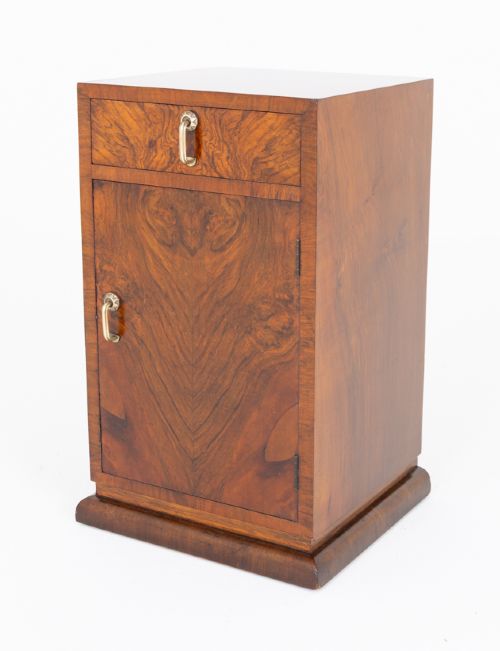
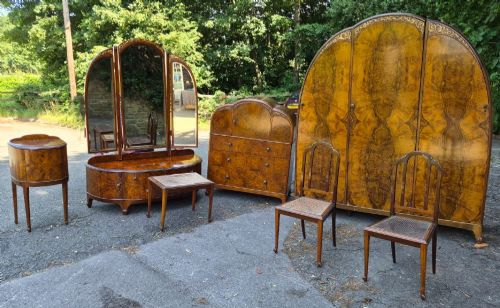
Beyond standard drawer units, the category expands to include bedside cabinets, nightstands, and drinks or cocktail chests. Pieces range from single chests of six drawers to complete seven-piece bedroom suites.
What varies in quality
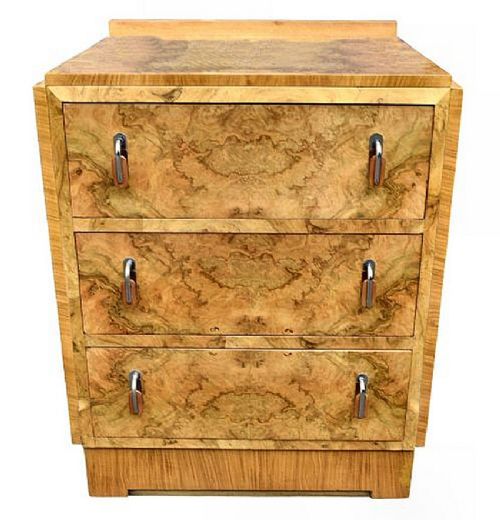
The visual impact of a 1930s burr walnut chest depends heavily on the grain matching and the symmetry of the veneer work across the facade. Superior examples display carefully chosen burr patterns that flow continuously from drawer to drawer.
Overall construction and execution separate standard utility pieces from high-end cabinet work. Fine hardware details in brass, chrome, or bakelite and substantial timber thickness distinguish the best workshops from ordinary production.
Listings feature 1930, 1920, and 1940 periods within the Art Deco style.
Frank Taylor and Co·Maurice Adams·Epstein
The 1930s Burr Walnut Chest Glossary
- Burr walnut
- A thin slice of wood veneer taken from a walnut tree growth excrescence, yielding a swirling, highly figured grain pattern. It provides the primary decorative surface on these Art Deco pieces.
- Art Deco
- A design style dominant in the 1920s and 1930s characterised by sleek geometric shapes, stylised motifs, and streamlined forms. It dictates the overall architecture of these cabinets.
- Tallboy
- A tall chest of drawers, often combining a set of lower drawers with a smaller cupboard or additional drawers above. This vertical format maximises storage while occupying a compact floor footprint.
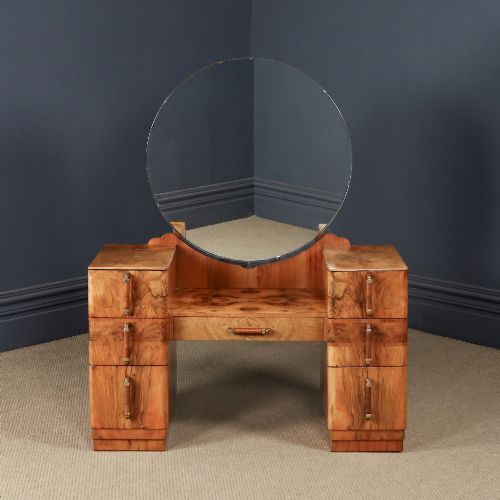
- Pedestal dressing table
- A vanity table featuring banks of drawers supporting a central desk surface, frequently paired with an adjustable mirror glass frame. They serve as companion pieces to the main chests.
- Drinks cabinet
- A specialised storage chest designed for beverages and glassware, also known as a cocktail chest. These units often feature drop-front surfaces and fitted interior compartments.
1930s Burr Walnut Chest: Frequently Asked Questions
What periods do these chests cover?
The pieces span the 1920s, 1930s, and early 1940s, capturing the height of the Art Deco period. Most items date specifically to the 1930 epoch.
Design characteristics remain firmly anchored in the interwar aesthetic, prioritising clean geometric lines and rich veneer patterns.
How do I identify a cocktail chest?
Cocktail chests and drinks cabinets are built specifically for entertaining, featuring internal compartments and drop-front surfaces for glassware and bottles. They share the same burr walnut veneers as standard drawer units.
Makers such as Epstein produced these specialised entertainment pieces alongside traditional bedroom furniture.
Are bedside cabinets sold as pairs?
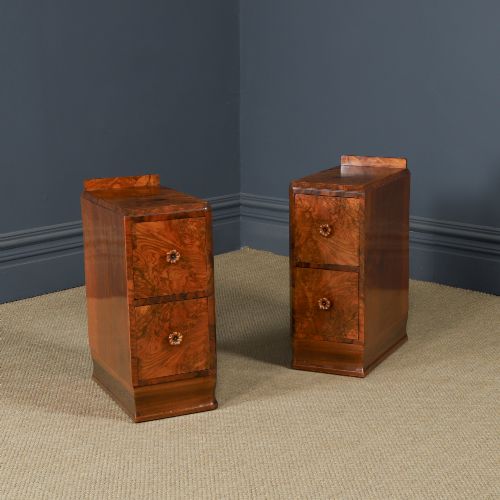
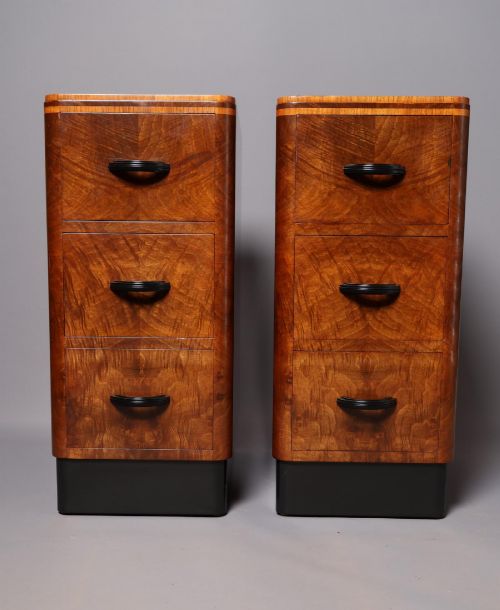
Many bedside cabinets and nightstands appear as matching pairs, while others are available individually. They incorporate one or two drawers beneath a cabinet top.
Dimensions and hardware styles vary depending on whether the piece belongs to a larger bedroom suite.
What materials accompany the walnut?
Cabinet makers integrated brass, chrome, and metal for drawer pulls and structural trim. Bakelite and mirror glass also feature prominently on dressing tables and cabinet hardware.
Some examples utilise bleached blonde walnut finishes to alter the natural dark tone of the timber.