


1930s Burr Walnut Bed
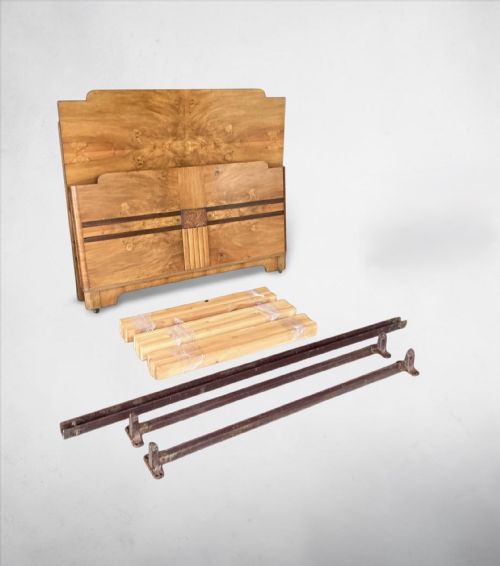
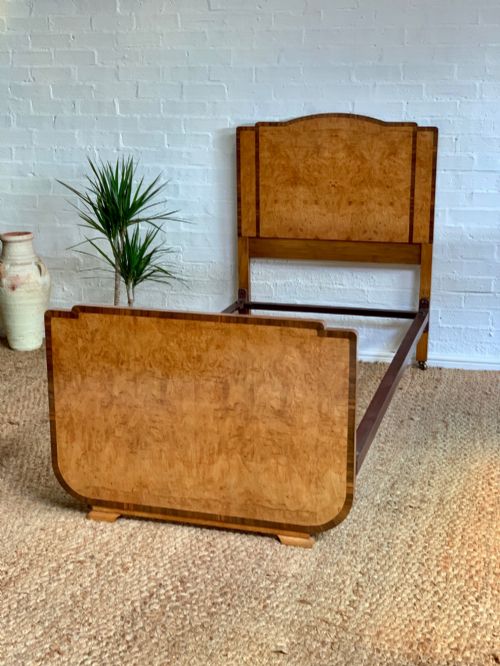
These 1930s burr walnut beds bring rich grain and architectural lines to the bedroom.
1930s Burr Walnut Bed
When you search for a 1930s burr walnut bed, you encounter distinct sleeping furniture defined by the Art Deco style. The selections span double beds, single beds, pairs of single beds, and headboards featuring attached bedside tables or cabinets.
Most examples originate from the 1930 period, alongside pieces from the 1920s. French origins appear frequently among the double beds and bedsteads, often accompanied by matching nightstands.
The forms range from simple bed frames to substantial headboards with integrated cabinetry. Buyers also encounter variations utilising blonde satinwood alongside walnut.
How they were made
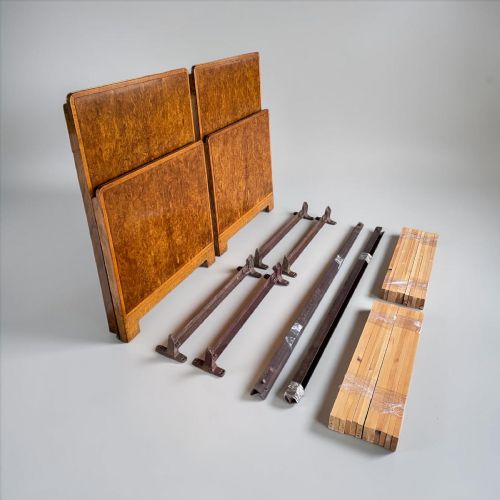
Cabinetmakers constructed these beds using timber foundations overlaid with veneer. Burr walnut, burl walnut, and figured walnut veneers provide the distinctive swirling grain patterns across the surfaces.
Internal structures incorporate iron and steel to provide necessary support for the timber frames. Selected pieces pair walnut surfaces with contrasting blonde satinwood accents.
Listings span the 1920 and 1930 periods, uniting walnut, burr walnut, iron, steel, and satinwood within Art Deco bed frames.
What varies in quality
The visual impact depends largely on the intensity and placement of the veneer figures. Heavily figured walnut and burr walnut surfaces create a more striking decorative presence than plain timber.
Comprehensiveness of the original design also differentiates the pieces. Standalone headboards with attached bedside cabinets or ensuite marble top nightstands represent a more integrated approach than simple bed frames.
Waring & Gillow England
The 1930s Burr Walnut Bed Glossary
- Burr walnut
- A prized timber veneer derived from tree growths that produce intricate, swirling grain patterns. This material defines the decorative surface of the headboards and bed frames.
- Art Deco
- The dominant design movement of the 1920s and 1930s characterised by clean geometric lines and streamlined forms. Beds from this era utilise these architectural shapes.
- Bedstead
- A complete framework of a bed supporting the mattress, distinct from a standalone headboard. These items form the central sleeping structure in the room.
- Veneer
- A thin layer of superior wood applied over a base timber foundation. This technique allows cabinetmakers to display decorative walnut grain efficiently.
1930s Burr Walnut Bed: Frequently Asked Questions
What sizes are available?
The selection includes single beds, double beds, and French king size bedsteads. Pairs of single beds also appear within the listings.
Headboard widths vary, with larger examples measuring up to six feet across.
Do beds include bedside tables?
Certain configurations incorporate bedside tables or cabinets directly attached to the headboard. Other options include ensuite marble top nightstands paired with the bedstead.
Many listings present the bed frames as standalone pieces without integrated cabinetry.
Which periods do they date from?
The vast majority of the beds date from the 1930 period. A smaller portion originates from the 1920s.
All documented examples belong to the Art Deco era.
What materials are used?
Construction relies primarily on walnut timber, featuring burr walnut, burl walnut, and figured walnut veneer. Iron and steel components provide structural support within the frames.
Selected items incorporate blonde satinwood alongside the walnut.