
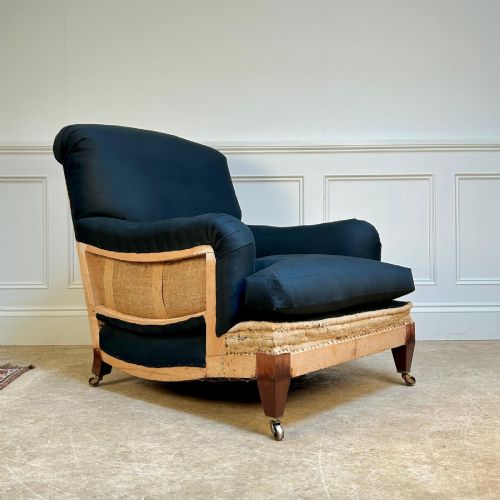
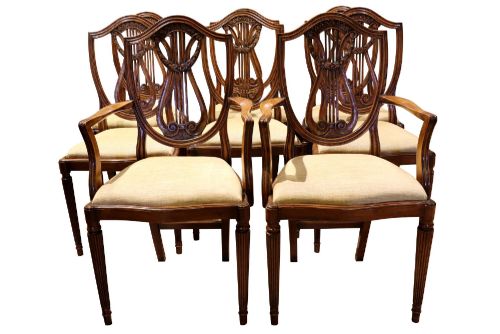
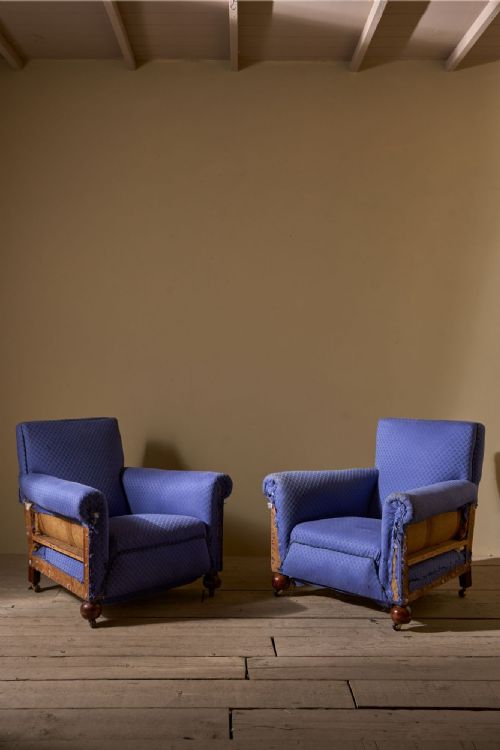
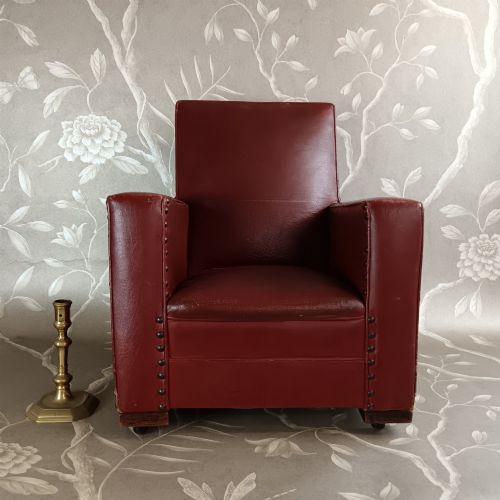
1930s Armchairs
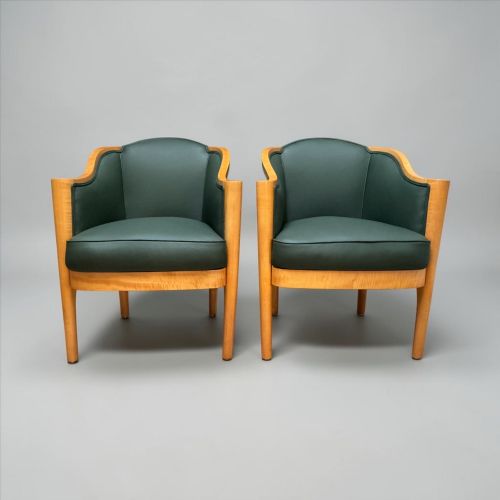
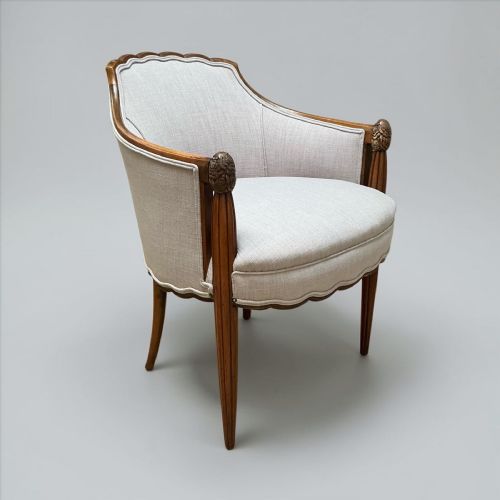
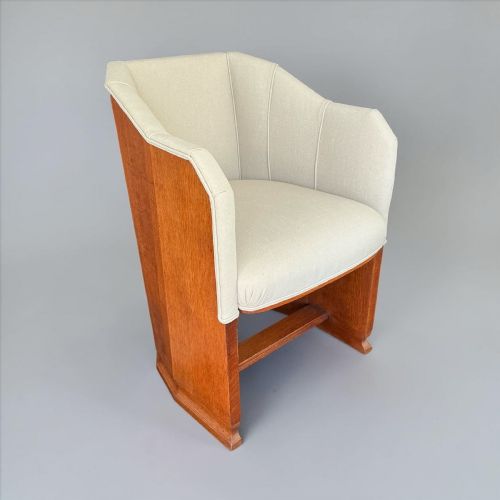
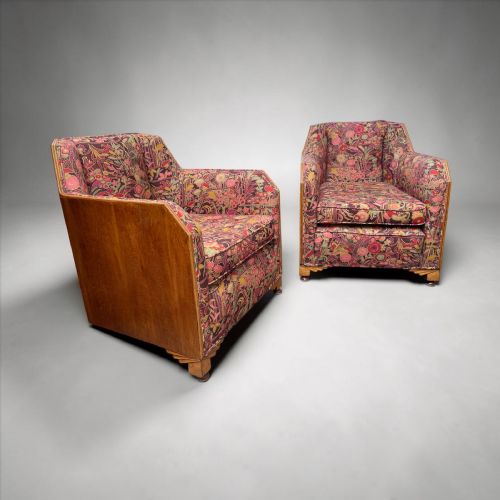
These 1930s armchairs combine the striking geometry of Art Deco with traditional comfort, offering a seating choice that anchors a room with period character.
1930s Armchairs
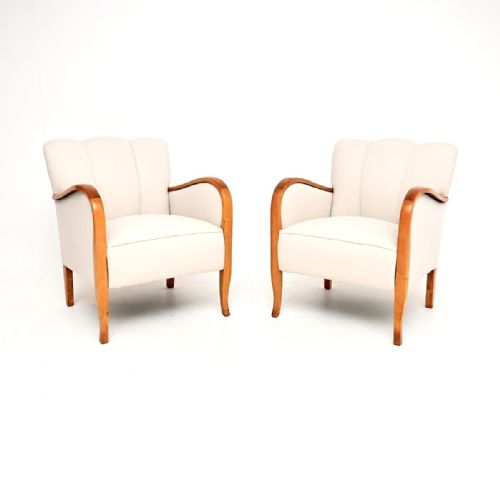
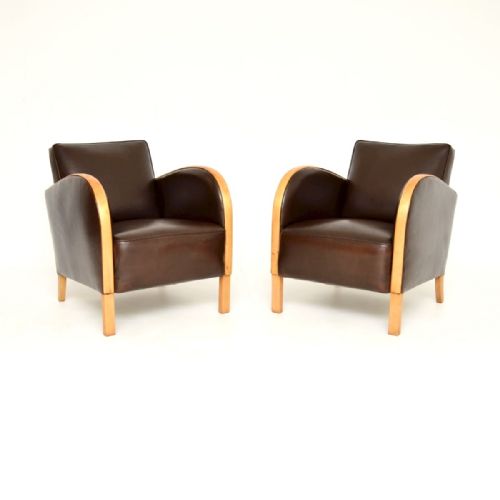
When you search for 1930s armchairs, you encounter a distinct mix of streamlined modern seating and traditional revivals shaped between the wars. The selections here lean heavily toward Art Deco forms, French club chairs, and comfortable lounge seating.
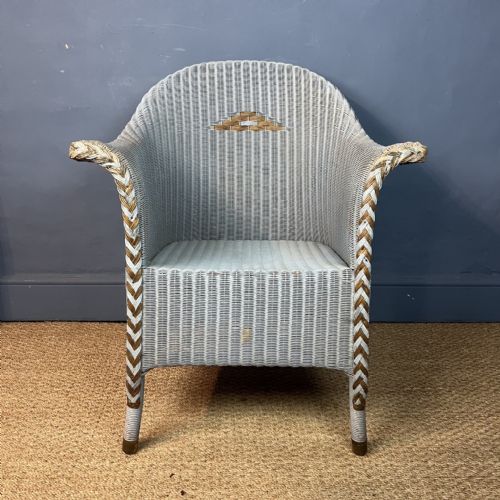
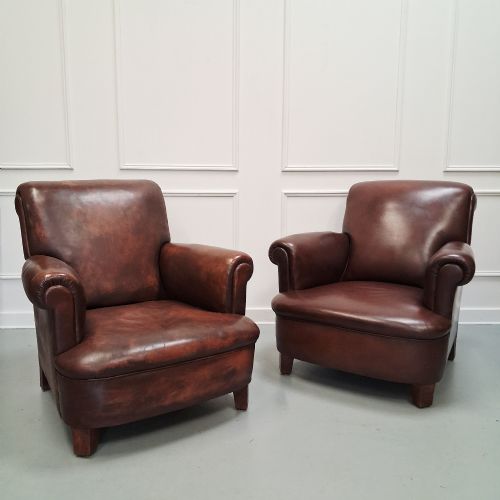
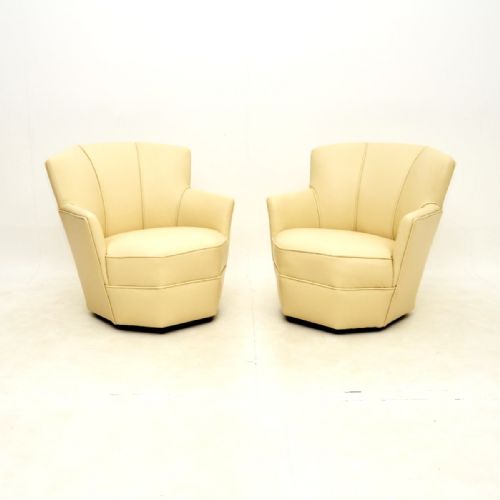
Beyond sleek club chairs upholstered in leather or suede, the grouping includes occasional chairs, wingbacks, and garden seating in wicker and cast iron. French and Swedish examples frequently appear alongside English designs.
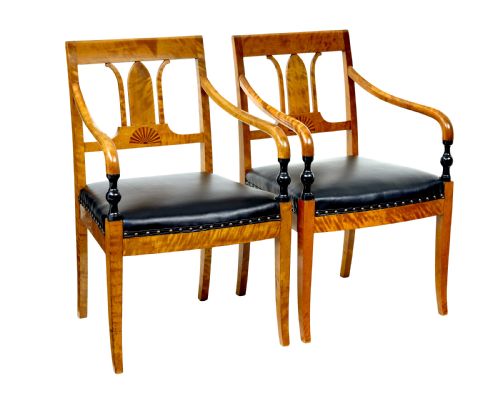
The range extends from compact occasional chairs to substantial lounge suites, incorporating revival styles like Hepplewhite and George III alongside avant-garde twentieth-century creations.
How they were made
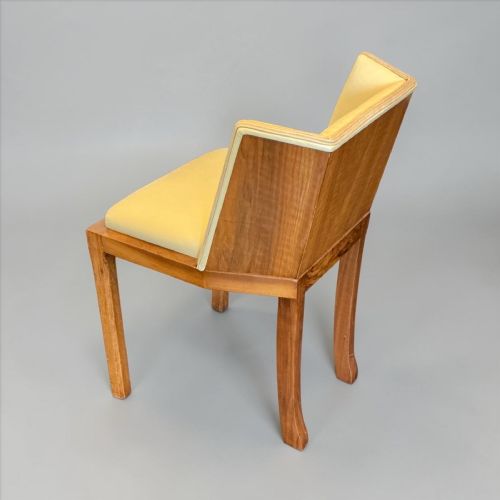
Frames rely on solid timbers such as walnut, oak, mahogany, and satin birch, providing structural integrity beneath the upholstery. Bentwood techniques and wicker weaving also appear in specific lounge and garden designs.
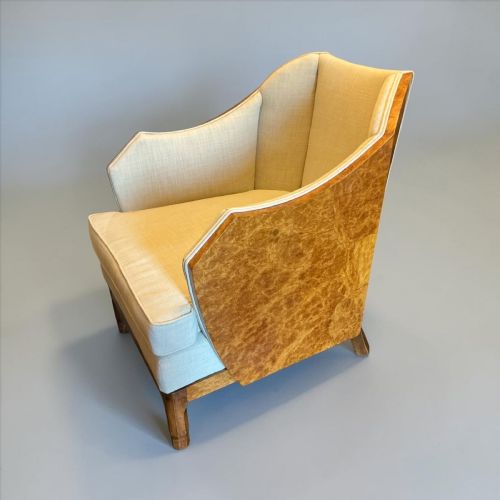
Surface treatments combine polished wood veneers with rich hides, calf suede, and patterned wool or cotton fabrics. Brass accents and woven rattan further diversify the tactile finishes of the period.
Styles span from French leather club chairs to Swedish birch armchairs and Arts and Crafts seating.
What varies in quality
Excellence in these chairs rests upon the fidelity of the timber framing and the proportion of the upholstered silhouette. Pieces utilising finely figured satin birch or rich walnut veneers stand apart from simpler hardwood constructions.
The integrity of the original construction, whether demonstrated through maker stamps or refined joinery, dictates the standing of an armchair within its respective style.
Maurice Adams·Hille·Harry and Lou Epstein·Edward Barnsley·Heals·Angraves of Leicester
The 1930s Armchairs Glossary
- Art Deco
- A design style characterised by sleek geometric shapes, streamlined forms, and opulent materials that dominated the interwar period.
- Club chair
- A deep, comfortable armchair typically upholstered in leather, designed for relaxed seating.
- Satin birch
- A pale, lustrous timber frequently utilised in Swedish furniture to highlight clean architectural lines.
- Bentwood
- Wood that has been heated and bent into curved shapes, commonly employed in modernist seating.
- Wingback
- An armchair with high panels attached to the back, designed to shield the occupant from drafts.
1930s Armchairs: Frequently Asked Questions
How do I identify a true 1930s armchair?
Authentic pieces generally display the characteristic streamlined geometry, waterfall edges, or club chair proportions typical of the interwar decades. Construction methods and material combinations align with the manufacturing standards of the period.
Examining the underlying timber frames and upholstery styles helps confirm the era. Maker stamps or labels further verify the origin of specific pieces.
Are leather club chairs comfortable for daily use?
French and English club chairs from this era are engineered for deep, supportive lounging. Their generous proportions and padded arms make them practical for everyday seating.
The quality of the internal springing and cushion stuffing determines the specific feel of each individual armchair.
How do Swedish Art Deco chairs differ from English ones?
Swedish designs often utilise pale timbers like satin birch, creating a lighter visual aesthetic. English counterparts frequently employ darker hardwoods such as walnut and mahogany.
Both regional traditions prioritize comfort but express distinct national interpretations of modernist design.
Can I mix these armchairs with modern decor?
The clean lines of interwar seating integrate naturally into contemporary minimalist interiors. Their sculptural forms function effectively as standalone statement pieces.
Pairing period wood tones with neutral modern textiles creates a balanced visual contrast in a living space.