



1930s Animal Bronzes
These 1930s animal bronzes capture the dynamic energy and sleek stylisation of the interwar period, offering collectors striking sculptural forms for the home.
1930s Animal Bronzes
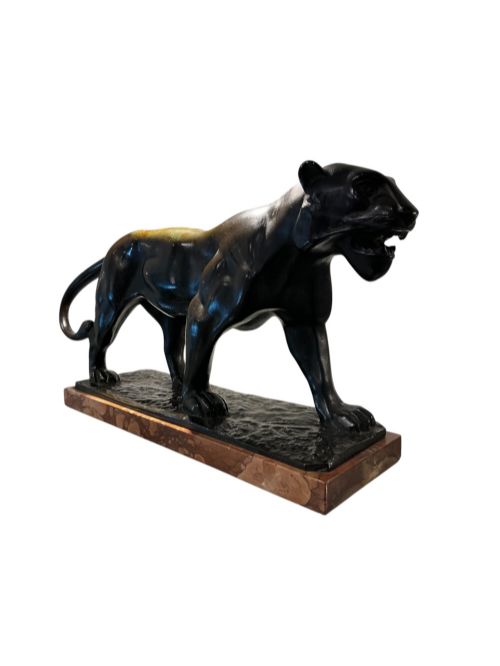
When you search for 1930s animal bronzes, you are exploring sculptural works that capture the kinetic energy and streamlined forms characteristic of the period. The selection on this page centres primarily on domestic decorative objects, ranging from freestanding animal figures to functional pieces designed for daily use.
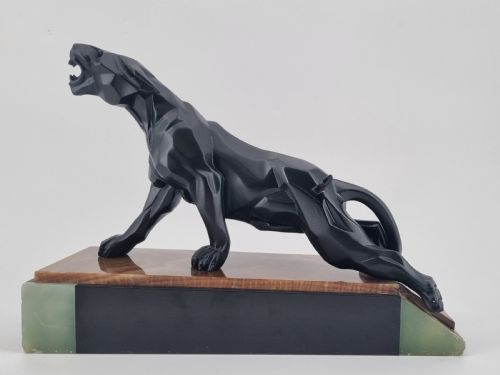
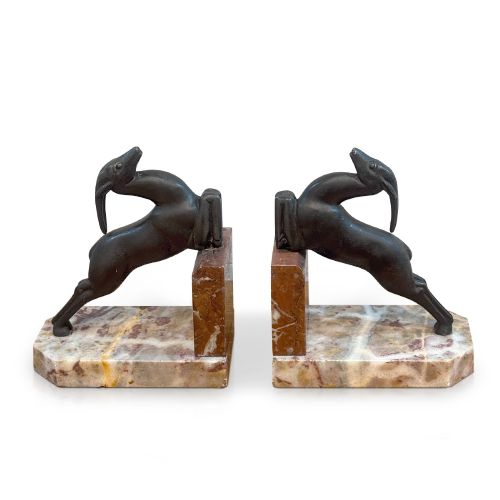
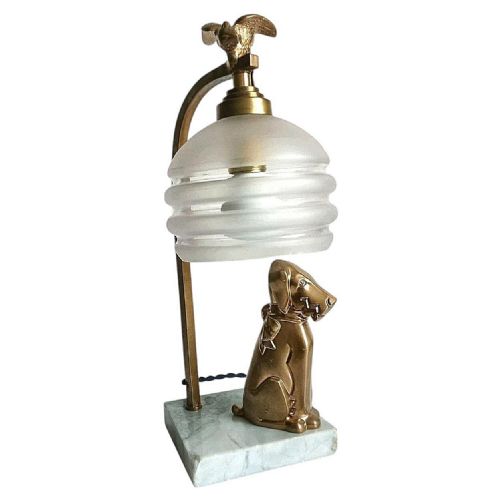
The most common formats you will encounter include substantial feline sculptures, pairs of bookends depicting dogs or woodland creatures, and integrated table lamps or night lights. These pieces frequently combine metalwork with heavy stone bases, reflecting the prevalent aesthetic tastes of twentieth-century European design workshops.
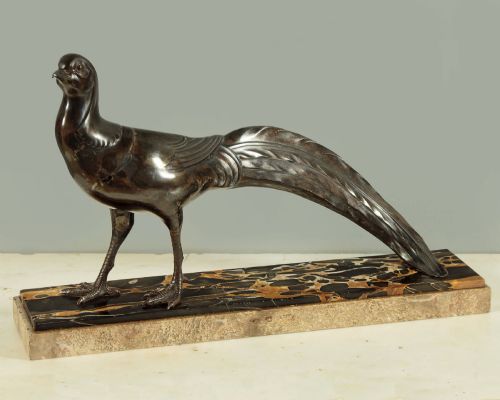
Originating predominantly from French studios alongside contributions from other European makers, these sculptures heavily favour the Art Deco style. Hounds, panthers, deer, and exotic birds appear repeatedly in the evidence, rendered either in naturalist detail or through stylised geometric abstraction.
Materials and Construction
The material palette of these sculptures relies heavily on a contrast between cast metals and dense geological supports. Genuine bronze appears alongside patinated metal, spelter, and silvered bronze, each offering different weight and surface qualities to the finished figure.
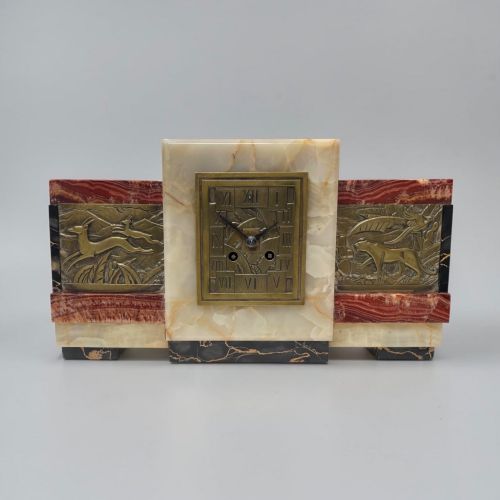
Mounting figures onto contrasting plinths is a defining characteristic of the manufacture. Black marble, onyx, and standard marble bases provide stability and visual weight, frequently shaped into stepped or streamlined platforms that echo architectural trends of the era.
1930s Animal Bronzes Retail Price Guide 2026
Typical asking prices for 1930s animal bronzes among the pieces listed under this phrase on Sellingantiques today, from the lower quarter to the upper quarter. They describe what is for sale here now, not the wider market.
Listings demonstrate that animal sculptures from this era paired metal figures with marble and onyx bases almost as frequently as standalone works.
Evaluating Quality and Execution
The distinction between average commercial production and superior work lies in the sharpness of the casting and the nuance of the surface finish. Finer sculptures display crisp anatomical detail in the musculature and plumage, whereas lesser pieces can exhibit softer edges and simplified tool marks from hurried finishing.
The integration between the animal figure and its stone base indicates the level of care taken during assembly. High-grade examples utilise well-proportioned marble or onyx mounts with secure fixings, whereas standard domestic pieces rely on simpler combinations of spelter and basic stone.
Karl Hagenauer·Michel Decoux
The 1930s Animal Bronzes Glossary
- Spelter
- A zinc alloy frequently used as a cost-effective alternative to bronze during the interwar period. It takes patination well but is softer and lighter than genuine copper alloys.
- Patinated metal
- A chemically treated surface layer applied to bronze, spelter, or brass to create specific colour tones and aged effects. This treatment protects the underlying metal while enhancing visual depth.
- Art Deco
- A dominant design style of the 1920s and 1930s characterised by streamlined shapes, geometric symmetry, and stylised representations of human and animal forms.
- Onyx
- A banded variety of chalcedony quartz often used alongside marble for decorative sculpture bases. Its translucent layers add rich textural variation to the plinth.
1930s Animal Bronzes: Frequently Asked Questions
What animals appear most often?
The listings show a strong preference for powerful fine art subjects, particularly panthers, hounds, and hunting dogs. Game birds and woodland animals like deer and squirrels also feature regularly.
These subjects allowed artists to emphasise tension, movement, and sleek silhouettes suited to modern interior schemes.
How were these pieces used?
Many were created purely as decorative sculptures for mantels, sideboards, or display cabinets. Others served practical domestic functions, including bookends, mascot figures, and illuminated night lights.
Functional designs integrated lighting elements or weighted book supports directly beneath or beside the metal animal figures.
How do I care for marble and bronze?
Bronze and patinated metal surfaces require only gentle dusting with a soft, dry cloth to prevent the accumulation of grit. Wax polishes and chemical cleaners should be avoided as they can damage historic finishes.
Marble and onyx bases benefit from occasional wiping with a damp cloth followed by immediate drying. Acidic liquids must be kept away from stone surfaces to prevent etching.
How can I tell bronze from spelter?
Bronze is heavier, colder to the touch, and rings with a distinct resonant tone when lightly tapped. It develops a stable, deep oxidation over decades rather than flaking.
Spelter is lighter and softer, often revealing a greyish or silvery metal underneath worn areas of patination. Many pieces combine metal figures with marble bases regardless of the alloy used.