



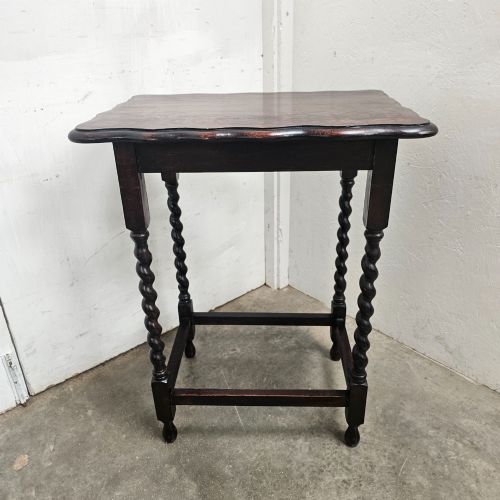


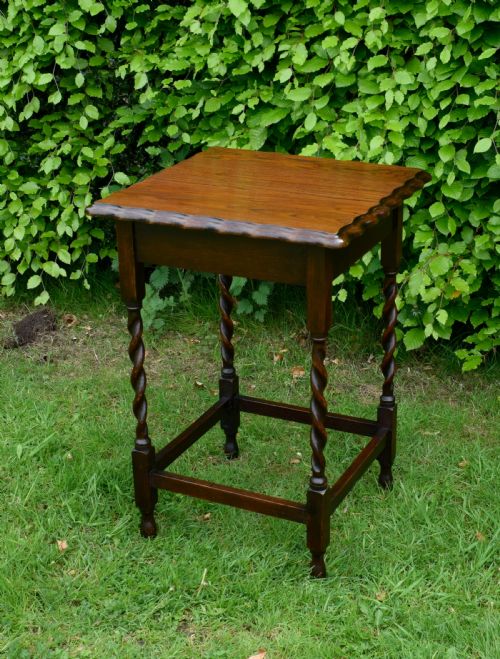


1920s Oak Lamp Table
A 1920s oak lamp table brings solid timber grain and practical surface area to a corner, built to hold a reading light beside an armchair.
1920s Oak Lamp Table
A 1920s oak lamp table is a compact surface intended for domestic placement, frequently encountered as a side table, occasional table, or multi-tiered tier stand. These pieces emerge predominantly from the 1920s, with surrounding examples spanning the 1910s and 1930s.
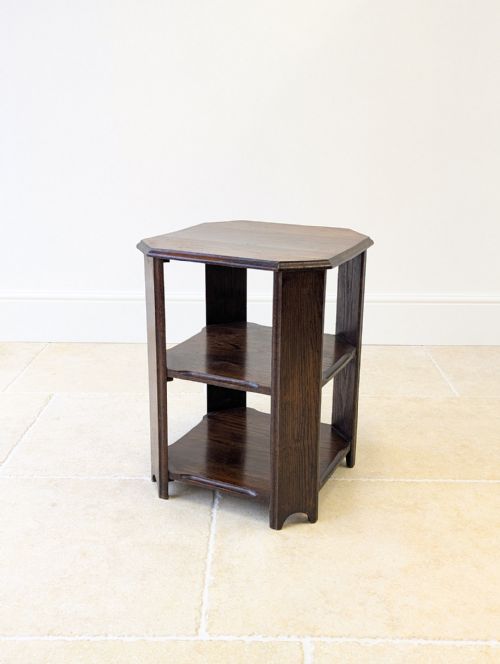
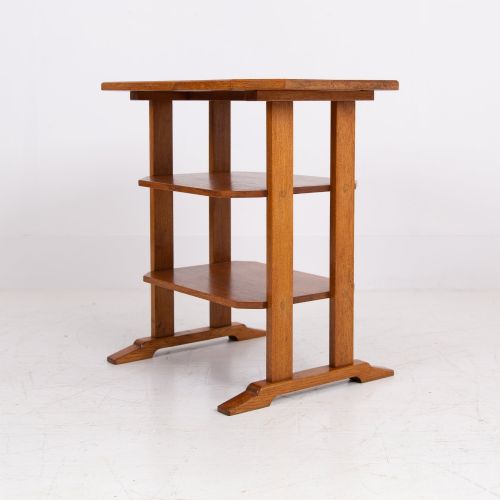
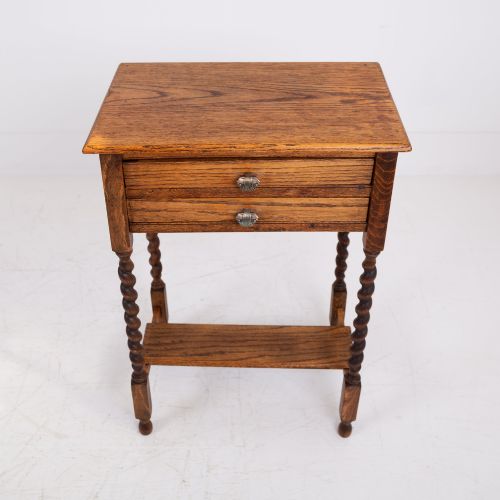
The prevailing forms on this page include rectangular shapes, oblong boards, and six-sided occasional tables, alongside variants fitted with drawers or arranged in three tiers. Buyers find items described through styles such as Jacobean Revival, Art Deco, Arts and Crafts, and Interwar designs.
Origins point toward English workshops and the Cotswold School tradition, reflecting a period when domestic furniture prioritised utility alongside distinct stylistic revivals. The typical piece functions as a low surface next to seating, constructed to serve everyday household requirements.
What varies in quality
The standard of timber selection and joinery separates basic utility items from finer examples, particularly where solid oak or selected hardwood is employed. Better pieces display careful attention to structural stability, especially in forms featuring multiple tiers or turned legs.
Stylistic execution creates distinction between simpler production and deliberate design, such as Cotswold School pieces or marked Art Deco and Jacobean Revival details. The integration of functional elements like drawers and stable leg assemblies governs the overall robustness of each table.
1920s Oak Lamp Table Retail Price Guide 2026
Typical asking prices for 1920s oak lamp table among the pieces listed under this phrase on Sellingantiques today, from the lower quarter to the upper quarter. They describe what is for sale here now, not the wider market.
Listings feature oak, solid oak, walnut, and hardwood, shaped into rectangular, oblong, and six-sided occasional tables.
The 1920s Oak Lamp Table Glossary
- Barley twist
- A turned wooden leg or column carved in a spiral resembling a twisted loaf of bread. This decorative turning appears frequently on table legs from the early twentieth century.
- Pie crust table
- A small occasional table featuring a raised, carved rim shaped in small undulations around the edge of the top. The profile resembles the crimped pastry edge of a pie.
- Cotswold School
- An influential design movement rooted in the Arts and Crafts tradition, emphasising traditional hand-working of local timber. Pieces associated with this school display honest construction and simple, functional forms.
- Jacobean Revival
- A style of furniture production that imitates the heavier, carved forms of the seventeenth century. Tables in this manner often utilise dark oak, turned supports, and rectilinear framing.
- Occasional table
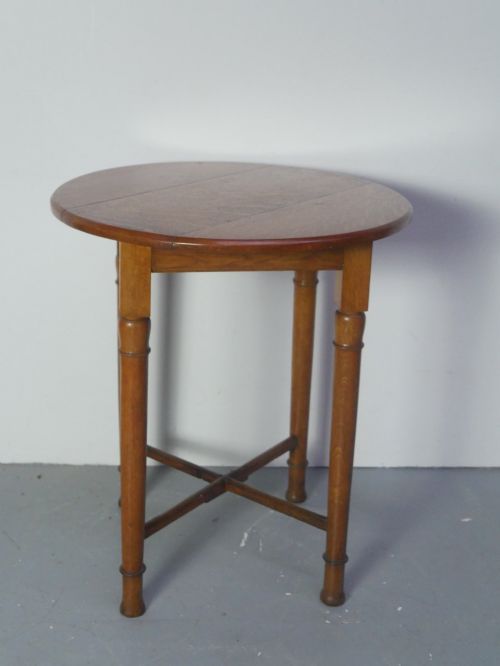
- A small, movable table designed to be placed where needed in a room rather than serving a fixed purpose. These versatile items function as lamp stands or display surfaces.
1920s Oak Lamp Table: Frequently Asked Questions
What is a 1920s oak lamp table used for?
These tables provide a compact surface for holding a reading lamp, books, or small decorative items beside a chair or sofa.
Their modest dimensions allow them to fit into corners and narrow spaces where larger furniture cannot go.
How do I identify a 1920s oak lamp table?
Look for characteristic construction methods, timber types like solid oak, and stylistic markers such as barley twist legs or Jacobean Revival details.
Dates cluster around the 1920s, with related pieces appearing from the 1910s and 1930s interwar period.
What is the difference between a side table and a lamp table?
Side tables and lamp tables both offer small surfaces, but lamp tables are specifically proportioned to hold a light source beside seating.
Many listings use these terms interchangeably for similar occasional furniture.
How do I care for a vintage oak table?
Keep wooden surfaces clean with a dry or slightly damp cloth, avoiding harsh chemical polishes that can damage the finish.
Protect the timber from direct sunlight and excessive moisture changes to maintain the condition of the oak.