
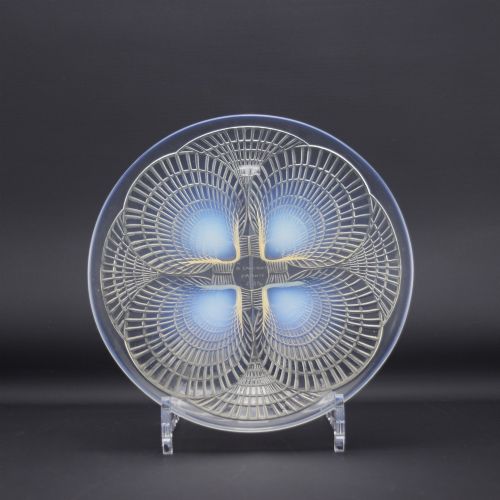


1920s French Opalescent Glass
These pieces of 1920s french opalescent glass catch the light with milky blue fires and draw collectors seeking period decorative items.
1920s French Opalescent Glass
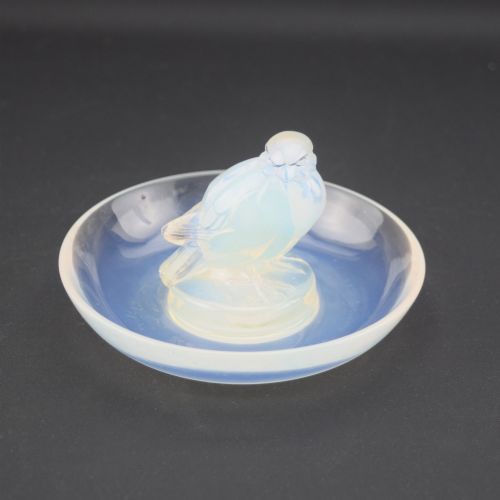
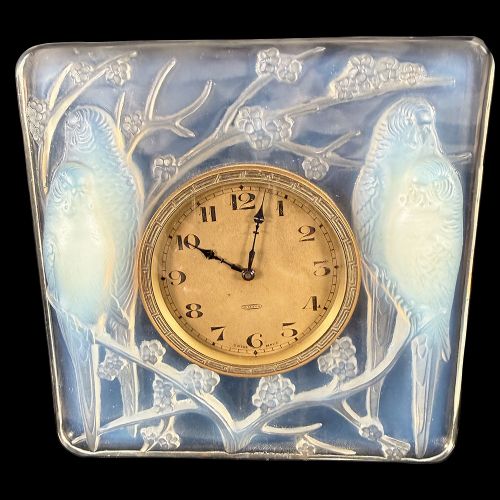
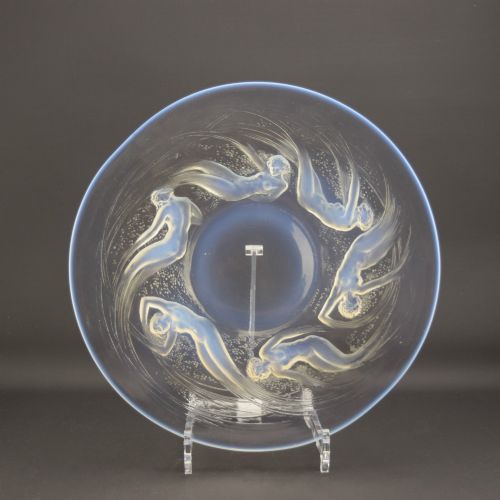
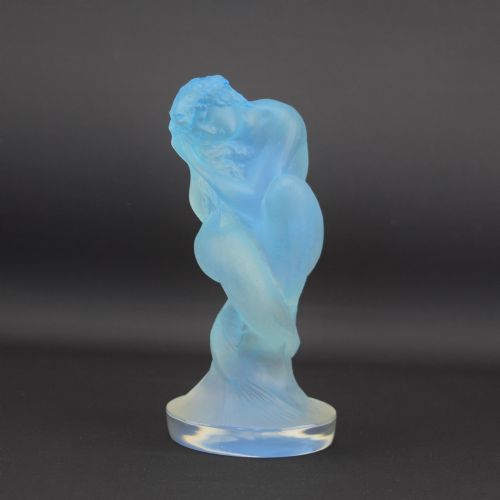
When you search for 1920s french opalescent glass, you encounter items shaped during an era of strong stylistic change. The selection here brings together decorative bowls, plates, vases, clocks, car mascots, and perfume bottles.
Art Deco styling dominates the period output, presenting motifs of fish, birds, flowers, and figures moulded into the body of each piece. These objects served domestic display or functional roles in households of the early twentieth century.
Most examples originate from the 1920 and 1930 decades, alongside occasional pieces touching the Edwardian era and 1900. The primary material manifests as moulded opalescent glass, sometimes paired with brass, metal, enamel, or blue stained glass.
Materials and Techniques
The production relies on moulded glass formulated to produce a milky, translucent quality that shifts between blue and amber tones under changing light. Artisans used press-moulding techniques to create high-relief surface details on vases, bowls, and plates.
Certain items incorporate contrasting elements such as brass mounts, metal frames, or enamel highlights on painted dials. Blue stained glass also appears in combination with the base opalescent material to add depth to specific vase designs.
Drivers in the 1920s screwed glass sirens and sparrows to their radiator caps, hoping for better luck on muddy country lanes.
The Measure of Quality
Quality rests upon the crispness of the moulded relief and the strength of the opalescent fire within the glass. Superior examples display sharp definition in intricate motifs like foliage, feathers, or figures without blurriness in the contours.
The integration of secondary materials such as metal mountings or painted enamel dials also influences the standard of a piece. Depth of colour play across the translucent body distinguishes finer items from plainer iterations.
Rene Lalique
The 1920s French Opalescent Glass Glossary
- Opalescent Glass
- Glass that diffuses light to display a milky blue or white appearance, shifting tones depending on the angle of illumination. This optical effect forms the defining characteristic of the category.
- Moulded Glass
- Glass shaped by being pressed into a metal or wooden form while hot to produce raised patterns. It allows for consistent production of highly decorated bowls, vases, and plates.
- Car Mascot
- A decorative ornament mounted upon the radiator cap of an automobile during the early twentieth century. Many glass examples double as heavy paperweights.
- Art Deco
- The dominant design style of the interwar period characterised by stylised motifs and geometric symmetry. It guides the aesthetic of the moulded patterns found across these pieces.
1920s French Opalescent Glass: Frequently Asked Questions
What is 1920s french opalescent glass?
These objects are decorative glass items produced primarily in France during the interwar years, known for their milky, light-catching quality. They encompass functional and ornamental forms like vases, bowls, clocks, and car mascots.
The glass achieves its appearance through chemical additions during melting, causing the material to scatter light and display translucent blue highlights. Art Deco designs are typical across the medium.
How were these glass objects used originally?
Households displayed these items as centrepieces, mantel ornaments, and dressing table accessories. Vases held flowers while bowls served fruit or stood empty for display.
Items like car mascots served a dual purpose as radiator ornaments and desk paperweights. Perfume bottles held scents on dressing tables before entering collections.
How do I care for opalescent glass?
Clean the glass gently with lukewarm water and mild soap using a soft cloth. Avoid harsh chemical cleaners or abrasive scourers that might damage the surface or any enamel highlights.
Display pieces away from direct sunlight or extreme temperature shifts to protect the material structure. Handle heavy bowls and vases with support under the base rather than by narrow rims.
How do I identify Art Deco period pieces?
Look for characteristic motifs such as stylised floral arrangements, geometric borders, and depictions of birds or figures in motion. The overall silhouette tends toward symmetry and strong lines typical of the era.
Inspect the weight and texture of the moulded glass to confirm period manufacturing techniques. The presence of specific maker names or design titles further anchors a piece to the 1920 timeline.