
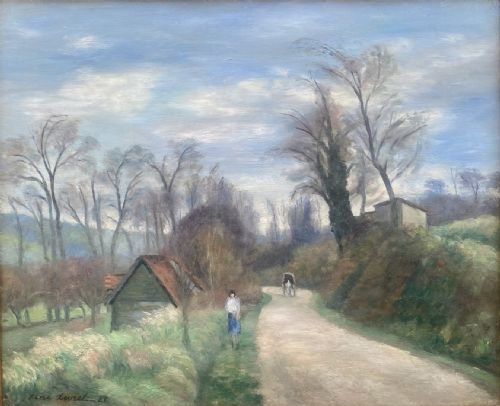


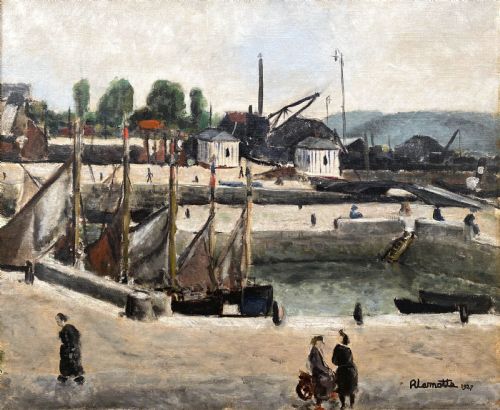


1920s French Oil Painting
These 1920s french oil painting examples capture the vibrant modernist spirit of the interwar period on canvas and panel.
1920s French Oil Painting
A 1920s French oil painting represents a dynamic period of artistic exploration, encompassing coastal landscapes, intimate portraits, and lively genre scenes created across France. Buyers searching this phrase encounter works that reflect the distinct aesthetic movements of the decade, from sunlit plein air studies of Normandy to bold modernist compositions.
The pieces on this page most frequently take the form of oils on canvas or panel, depicting subjects such as figures by the seaside, elegant portraits, and bustling provincial harbours. These works range from impressionist interpretations of light to avant-garde experiments in form.
The selection includes specific regional views from Provence, Brittany, and the Loire, alongside studio portraits and floral still lifes. Each painting serves as a direct window into the visual culture of France between the wars.
Materials and Technique
Artists of this era applied oil paint primarily to prepared canvas, wooden panel, or board, sometimes utilising encaustics or paper supports. The handling of the medium varies from loose, luminous brushstrokes in impressionist landscapes to flat, vibrant colour planes in fauve and cubist works.
Many of these paintings retain their original or period wooden frames, occasionally accented with gilt, which complement the surface textures of the oil paint. The combination of traditional canvas preparation and evolving modernist palettes defines the physical makeup of these works.
1920s French Oil Painting Retail Price Guide 2026
Typical asking prices for 1920s french oil painting among the pieces listed under this phrase on Sellingantiques today, from the lower quarter to the upper quarter. They describe what is for sale here now, not the wider market.
Several canvases happily preserve the exact atmosphere of a breezy Brittany coastline or a sunlit afternoon by the river Loire.
Distinctions in Quality
The distinction between works at different levels rests upon the surety of the brushwork, the cohesion of the composition, and the artist's command of light and colour. Stronger pieces display a confident handling of pigment that animates the subject, whether it is a coastal jetty or an interior still life.
Provenance and attribution also play a role, as signed works by documented figures carry greater historical weight than anonymous school pieces. Quality is fundamentally a measure of how successfully the painter translates the atmosphere and energy of the French landscape or interior onto the flat support.
Rene Levrel·Raymond Moritz·Louis Suire·Georges Goursat·Girieud·Jean Hippolyte Marchand·Edmond Defonte·Lamotte·Pierre Peltier
The 1920s French Oil Painting Glossary
- Plein air
- Painting outdoors to capture natural light and transient atmospheric effects directly on the panel or canvas.
- Fauvism
- An early twentieth-century style characterised by strong, non-naturalistic colours and bold brushwork.
- Canvas
- A heavy woven fabric stretched across a wooden frame to serve as a durable support for oil paint.
- Panel
- A flat wooden board used as a rigid alternative to stretched canvas for painting.
- Gilt
- A thin layer of gold leaf or gold-coloured pigment applied to ornament wooden picture frames.
1920s French Oil Painting: Frequently Asked Questions
How do I identify a 1920s French oil painting?
Look for characteristic subject matter such as coastal scenes, flapper figures, or modernist still lifes combined with modernist painting styles like fauvism and post-impressionism.
Examination of the canvas support, framing, and artist signatures often provides further contextual clues to the interwar period.
Where were these paintings typically created?
These works were produced across various French regions, including artistic hubs in Paris, coastal communes in Normandy and Brittany, and Mediterranean settings in Provence and the Cote d'Azur.
Artists frequently worked outdoors in these locations to capture local light and daily provincial life.
How should I care for an oil painting on canvas?
Keep the artwork away from direct sunlight, high humidity, and rapid temperature fluctuations to protect the canvas and the oil paint layer from cracking or fading.
Dust the surface gently with a soft, dry brush and avoid using liquid cleaners on the paint or the wooden frame.
What is the difference between canvas and panel paintings?
Canvas consists of woven fabric stretched over a wooden wooden stretcher, offering a flexible and textured surface that responds to environmental changes.
Panel paintings utilise a rigid wooden board, which provides a completely flat and stable support favoured for smaller plein air studies.