


1920s Diamond Dress Ring
A 1920s diamond dress ring brings geometric flair and exceptional sparkle to the hand through distinct period craftsmanship.
1920s Diamond Dress Ring
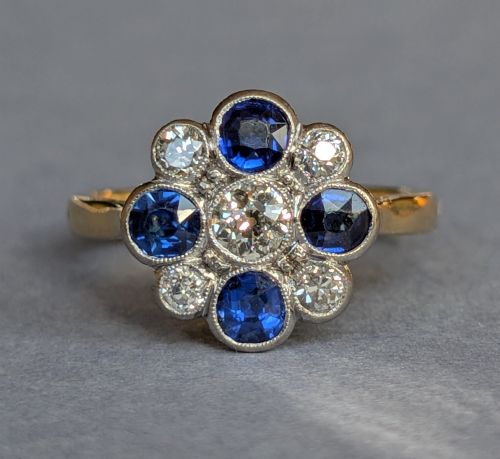
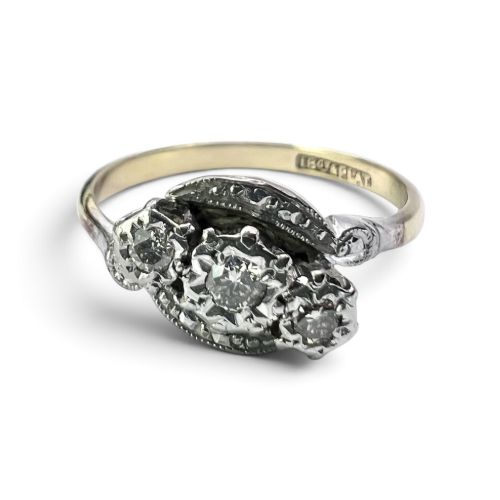
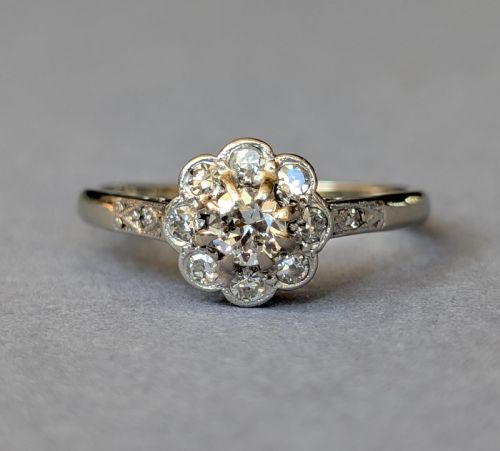
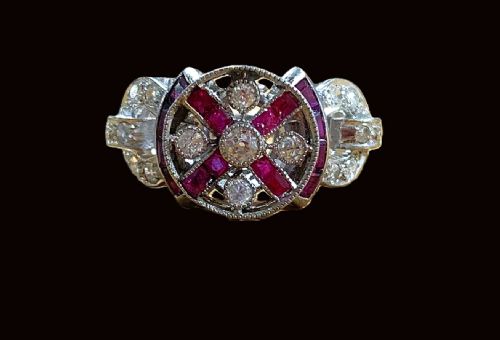
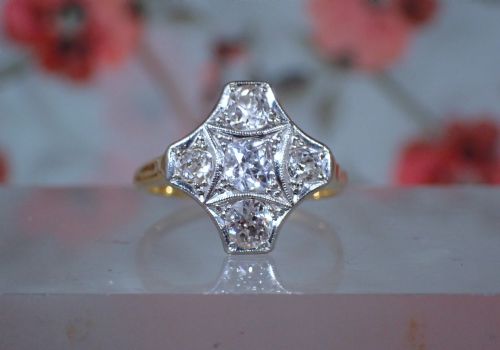
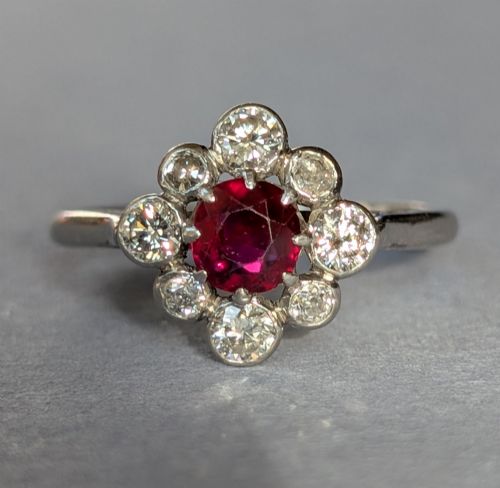
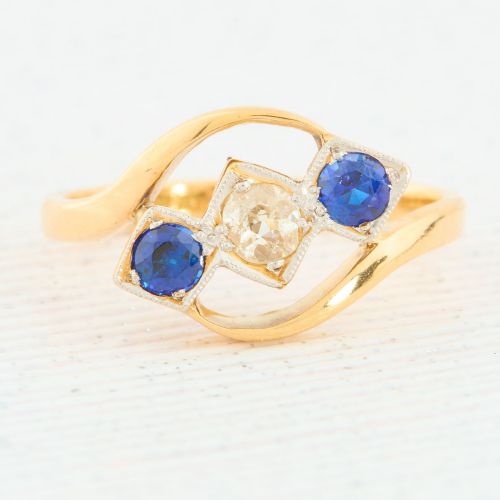
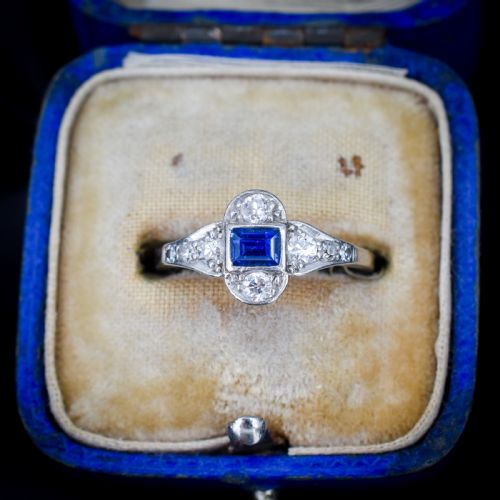
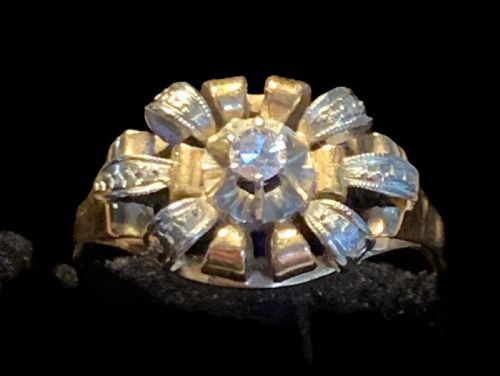
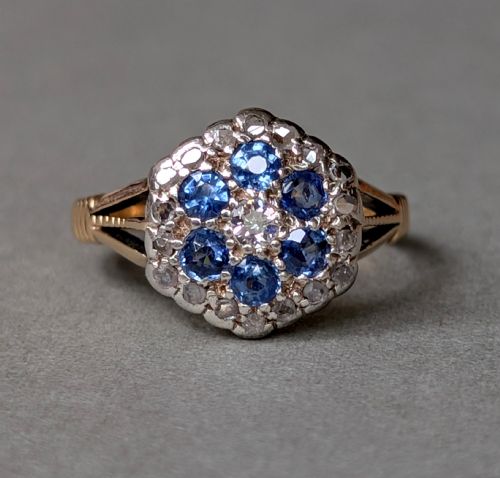
When you search for a 1920s diamond dress ring, you encounter jewels shaped by the prevailing Art Deco movement, alongside select Edwardian survivals. These pieces take various geometric and figurative forms, including cluster rings, target rings, navette shapes, and trilogy arrangements.
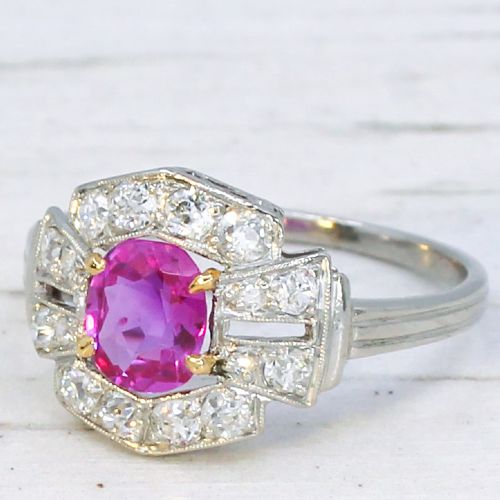
The versions most commonly met on this page combine diamonds with platinum settings or 18ct gold bands. Coloured gemstones such as sapphires, rubies, and emeralds frequently accompany the central diamonds to create striking contrast.
Materials and Construction
The construction relies heavily on platinum, which allowed jewellers to create delicate yet secure settings for diamonds and calibre cut coloured stones without adding heavy weight to the band. Yellow gold and white gold also form the structural foundations for many rings.
Cutting styles such as old cuts, transitional cuts, and baguette cuts define the character of the stones used in these mountings. Hand-finishing ensures each gemstone sits precisely within its geometric framework.
1920s Diamond Dress Ring Retail Price Guide 2026
Typical asking prices for 1920s diamond dress ring among the pieces listed under this phrase on Sellingantiques today, from the lower quarter to the upper quarter. They describe what is for sale here now, not the wider market.
A tiny French platinum hallmark might reveal a microscopic eagle's head, whispering of Parisian workshops a century ago.
Distinctions in Quality
Quality depends upon the precision of the stone setting and the integrity of the platinum or gold work. Fine examples demonstrate crisp geometric lines and well-matched calibre cut stones that sit flush within the metal.
The choice and character of the central gemstones, whether unheated Burmese sapphires or substantial old cut diamonds, determine the prominence of the piece. The overall balance between metalwork and stone arrangement separates standard examples from exceptional ones.
The 1920s Diamond Dress Ring Glossary
- Art Deco
- A design style dominant in the 1920s and 1930s characterised by geometric symmetry, clean lines, and stylised motifs. It replaced the flowing curves of earlier periods.
- Navette
- A boat-shaped ring setting that tapers to points at either end. This elongated silhouette sits prominently across the finger.
- Calibre cut
- Gemstones shaped into precise geometric units to fit tightly together without visible metal partitions. This technique creates solid blocks of colour within the design.
- Trilogy ring
- A ring featuring three main stones set in a row. It typically represents the past, present, and future.
- Target ring
- A circular cluster design featuring a central stone encircled by concentric rings of contrasting gemstones or smaller diamonds. This layout draws the eye directly to the middle of the piece.
1920s Diamond Dress Ring: Frequently Asked Questions
How do I wear a dress ring daily?
These rings suit daily wear provided you remove them during heavy manual tasks or vigorous exercise. Platinum and gold settings hold stones securely, but the delicate metalwork benefits from careful handling.
Store each piece separately in a fabric-lined box to prevent the diamonds from scratching softer materials or other jewellery items.
What defines Art Deco jewellery?
Art Deco jewellery relies on strict geometric forms, symmetry, and high contrast between white metals and brightly coloured stones. The aesthetic reflects a departure from the organic curves of the Edwardian era.
Craftsmen embraced platinum alongside yellow and white gold to construct architectural patterns that catch the light from multiple angles.
Are these rings sized easily?
Many platinum and gold rings allow for professional resizing by a skilled jeweller who understands antique metalwork. The complexity of the gallery or shoulder decoration dictates the ease of adjustment.
Consult a specialist to ensure any alteration preserves the structural integrity of the surrounding gemstone settings.
What stones accompany the diamonds?
Sapphires, rubies, and emeralds frequently appear alongside diamonds in these designs. Makers also utilised aquamarines, pink sapphires, zircons, and opals to introduce vibrant colour.
These secondary stones are often shaped into calibre cuts or baguettes to maintain the sharp geometric lines characteristic of the period.