


1920s Ceiling Fixture
A 1920s ceiling fixture brings period illumination to a room, ranging from geometric Art Deco designs to ornate revival chandeliers.
1920s Ceiling Fixture
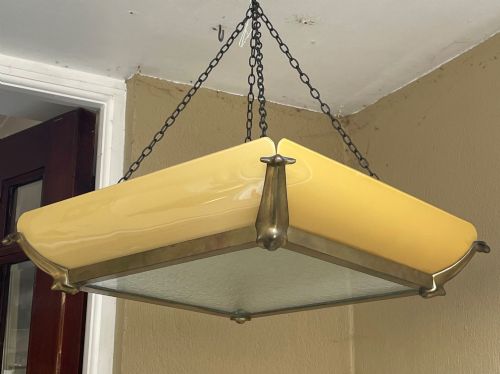
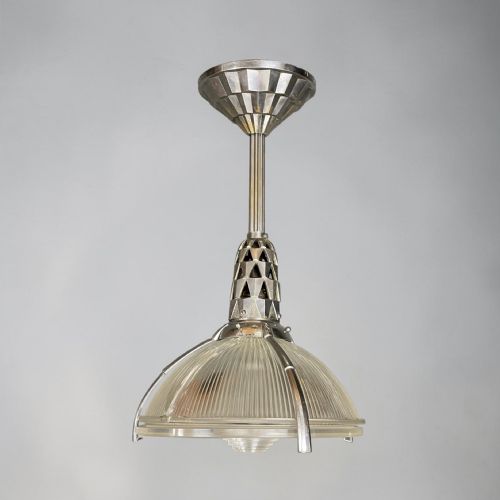
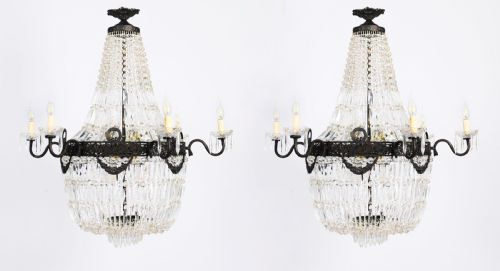
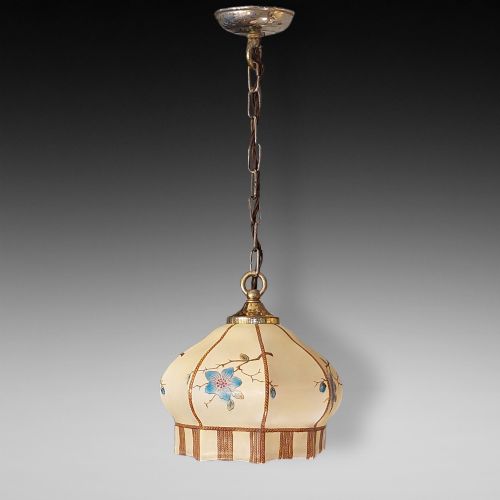
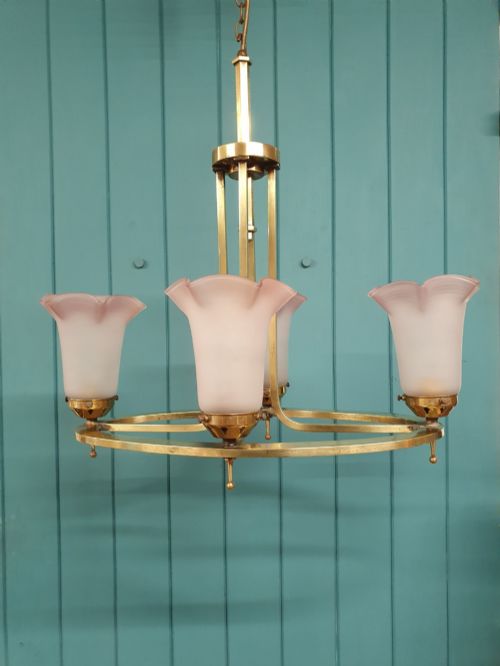
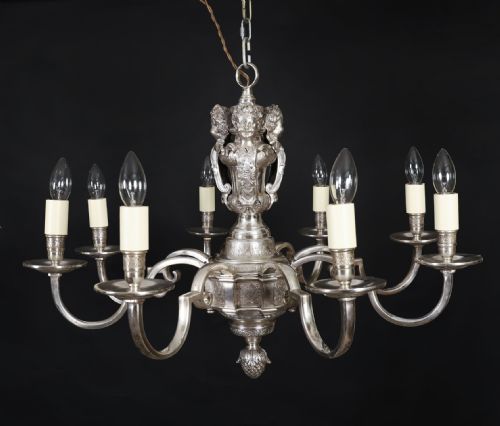
A 1920s ceiling fixture spans several distinct forms designed to light a room from above, including multi-arm chandeliers, single pendant lights, hall lanterns, and flush ceiling lights. These pieces originate predominantly from the 1920 and 1930 decades, with occasional Edwardian examples appearing alongside them.
The aesthetic vocabulary draws heavily on Art Deco geometry, alongside historical revivals such as Louis Revival, French Chateau, Dutch Baroque Revival, and Neo-Classical styles. Buyers are most likely to encounter brass and glass combinations, cast iron lanterns, or elaborate cut crystal chandeliers suited for larger spaces.
Objects range from modest opaque glass pendants to massive ballroom crystal chandeliers carrying numerous lights. The selection also includes matched pairs and suites of light fittings designed to illuminate interconnected rooms cohesively.
Materials and construction
Construction relies heavily on metals such as brass, gilt bronze, silver-plated metal, copper, chrome, and blacksmith-made wrought iron to form the structural frames and suspension branches. These metal mounts frequently incorporate cast decorative elements like acanthus leaves or geometric motifs.
Lighting diffusers and shades are formed from glass, utilising frosted glass, hand-painted glass, opaque glass, mirrored glass, alabaster, and cut crystal drops with beaded arms. The integration of metal frameworks with specialised glass shaping defines the physical construction of these fittings.
Even a modest hallway lantern can carry forty-one lights if you happen to live in a ballroom.
Factors of quality
The refinement of the casting and metalwork sets distinct tiers in these fixtures, particularly where chased bronze, hand-forged iron, or heavy brass mounts show crisp detail rather than soft definition. The integration of structural hardware with the decorative body dictates the overall integrity of the piece.
Glass selection introduces another measure of distinction, separating standard pressed panels from hand-painted shades, thick alabaster, or precisely faceted cut crystal drops. The cohesion of the design, whether in a simple geometric Art Deco pendant or a large multi-light revival chandelier, governs the visual success of the object.
Émile-Jacques Ruhlmann·Schneider
The 1920s Ceiling Fixture Glossary
- Art Deco
- A design style emerging in the interwar period characterised by geometric symmetry, stylised motifs, and sleek lines. It dominates many pendants and chandeliers from this era.
- Pendant light
- A single light fixture suspended from the ceiling by a cord, chain, or metal rod. These often feature an opaque, frosted, or hand-painted glass shade.
- Cut crystal
- Glass that has been hand-faceted to increase light refraction and brilliance. It appears frequently in tent chandeliers and beaded arm configurations.
- Hall lantern
- An enclosed ceiling-hung light, often framed in copper, brass, or forged iron. These fixtures traditionally illuminate entranceways and corridors.
- Alabaster
- A fine-grained mineral stone used for pendant light bowls. It diffuses a soft, even glow across a room when illuminated from within.
1920s Ceiling Fixture: Frequently Asked Questions
How do I choose the right size fixture?
Scale depends entirely on the dimensions of the room and the height of the ceiling. Large multi-arm chandeliers require substantial ceiling clearance to hang properly.
Smaller pendants or flush ceiling lights suit lower rooms or compact spaces without dominating the interior volume.
Can these old fixtures use modern wiring?
Most antique lighting requires professional rewiring to meet contemporary safety standards before installation. Qualified electricians can adapt internal fittings while preserving the exterior metal and glass.
Original lamp holders are typically updated to take standard modern bulbs safely.
Where were these lights placed originally?
Chandeliers and large multi-light fixtures hung primarily in principal reception rooms, dining spaces, and grand ballrooms. Smaller pendants and enclosed lanterns served hallways, bedrooms, and secondary spaces.
Matching suites allowed homeowners to maintain a unified decorative scheme across adjoining areas.
How do I clean frosted and painted glass?
Glass shades require gentle handling with soft cloths and mild soapy water to protect painted details and delicate frosted surfaces. Abrasive cleaners must be avoided entirely.
Crystal drops are often washed individually in warm soapy water before being reattached to the metal frame.