
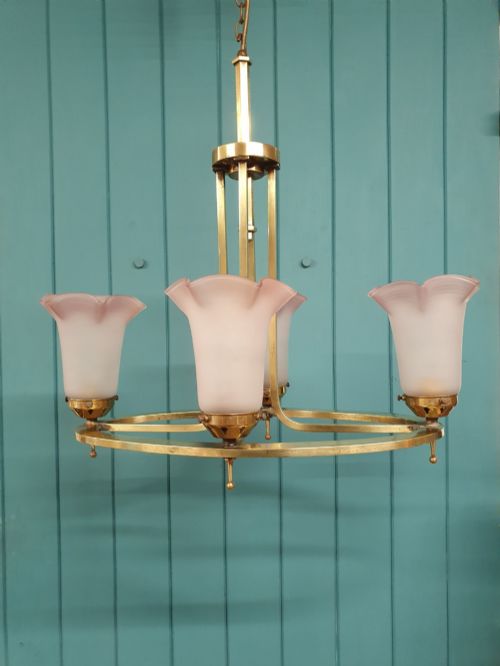


1920s Art Deco Chandelier
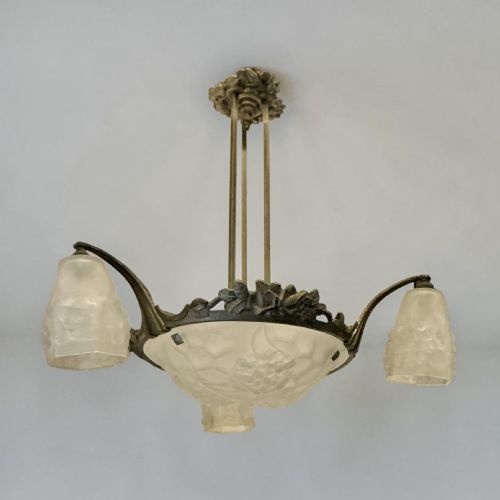
A 1920s art deco chandelier brings geometric clarity and functional overhead illumination to a room, driven by the architectural tastes of the period.
1920s Art Deco Chandelier
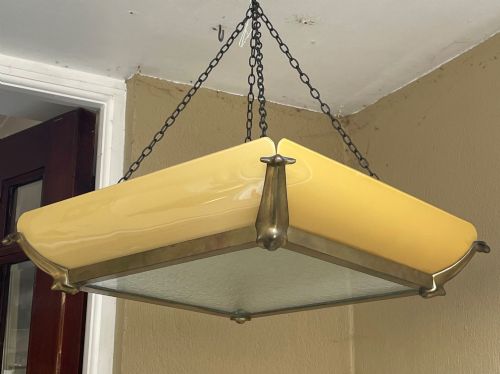
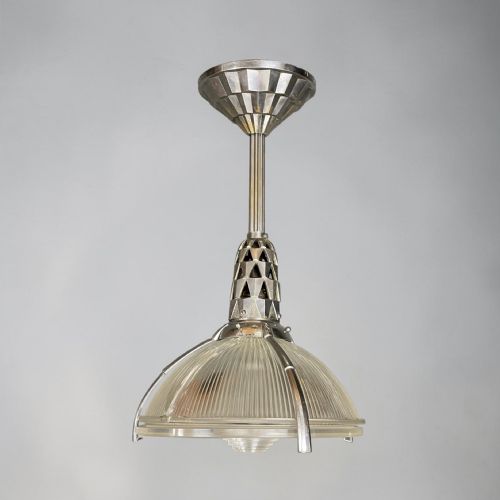
A 1920s art deco chandelier comprises hanging lighting fixtures produced during the early twentieth century, specifically drawing on the Art Deco and Art Nouveau design movements. The selection on this page centres primarily on chandeliers, ceiling lights, and pendant lights alongside related hanging forms.
Buyers will encounter single-arm and multi-arm variants, including brass and glass four-light chandeliers, carved alabaster ceiling lights, and large swan-style configurations. These pieces originate from the 1920s and 1930s periods, occasionally intersecting with Edwardian dates in the broader evidence.
The assortment includes matched suites of light fittings alongside individual ceiling lamps. Forms range from shaped alabaster bowls suspended on cords to metal frameworks carrying multiple glass lamps.
How they were made
Makers utilised structural metals such as brass, chrome, and various metal alloys to form the primary frames and arms of each 1920s art deco chandelier. These metal elements provide the rigid skeleton required to support multiple lamp holders and suspended glass bowls.
Illumination surfaces relied heavily on glass, featuring frosted glass, cut glass, and carved alabaster panels that diffused light across the room. Fabric cords often served as the suspension medium connecting the heavy metal and stone shades to the ceiling fixing.
Materials across these listings span brass, chrome, frosted glass, cut glass, and carved alabaster.
What varies in quality
Quality in a 1920s art deco chandelier is largely determined by the ambition of its material combination and the execution of its decorative elements, such as carved alabaster or cut glass. Pieces incorporating named designer associations or comprehensive matching suites represent a more substantial level of period manufacture.
The weight and finish of the metal framework, whether brass or chrome, distinguish standard utilitarian lighting from finer decorative pieces. Superior examples balance substantial hardware with delicate glass diffusers to create a cohesive architectural silhouette.
Émile-Jacques Ruhlmann·Schneider
The 1920s Art Deco Chandelier Glossary
- Alabaster
- A fine-grained stone used for carved bowls and shades in ceiling lighting. It diffuses light softly through its natural translucent veining.
- Art Deco
- A design style characterised by sleek geometric shapes, streamlined forms, and modern industrial materials popular during the interwar years.
- Chandelier
- A branched ornamental light fixture designed to be suspended from a ceiling. It holds multiple lamps to illuminate large spaces.
- Pendant light
- A single light fixture that hangs from the ceiling by a cord, chain, or metal rod. It directs illumination downward into a specific area of the room.
- Frosted glass
- Glass treated to scatter light and reduce glare, creating an even, opaque glow. This finish is common across period ceiling fixtures.
1920s Art Deco Chandelier: Frequently Asked Questions
What defines a 1920s art deco chandelier?
These lighting fixtures are defined by their geometric lines, symmetrical metal frames, and use of frosted glass or carved alabaster. They capture the modernist design shifts of the 1920s and 1930s.
They serve as both functional overhead lighting and sculptural centerpieces within an interior scheme.
How were these chandeliers originally used?
They were suspended from high ceilings in domestic and public interiors to provide ambient room illumination. Multi-arm versions distributed light across wider spaces.
Single pendant versions and alabaster bowls were typically hung over dining tables or in entrance hallways.
How do I clean a glass and brass light?
Brass frames require gentle dusting and occasional cleaning with appropriate metal care to preserve the surface. Glass shades and alabaster bowls should be washed using mild soap and dried thoroughly.
Care must be taken to disconnect the power supply and support fragile stone or glass elements during maintenance.
Can I adjust the hanging height?
Many of these fixtures utilise fabric cords or metal suspension rods that determine the drop from the ceiling. Modern installation often requires professional adjustment to suit specific room proportions.
It is important to check the existing suspension hardware before altering the drop length.