

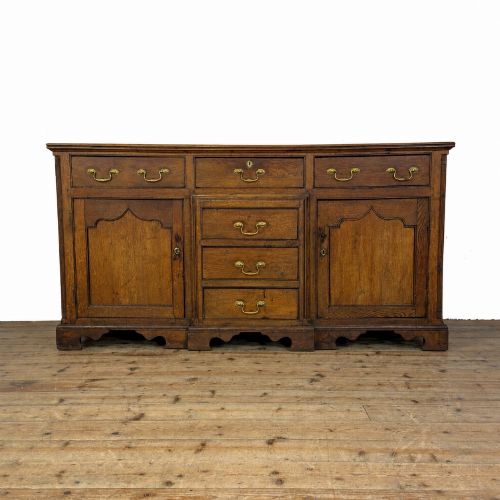
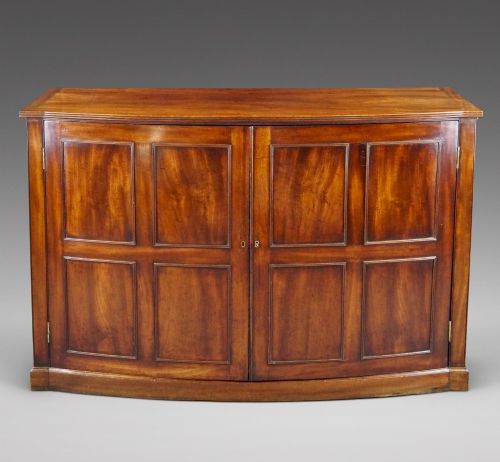

18th Century Wooden Credenza
An 18th century wooden credenza brings substantial timber presence and historic utility to a room through centuries-old joinery and rich figured grain.
18th Century Wooden Credenza
When searching for an 18th century wooden credenza, collectors encounter robust low storage furniture, most frequently described in the trade as Georgian mahogany sideboards, oak dresser bases, and continental walnut buffets. These low-slung timber forms served primarily for serving food and storing household provisions in dining rooms and halls.
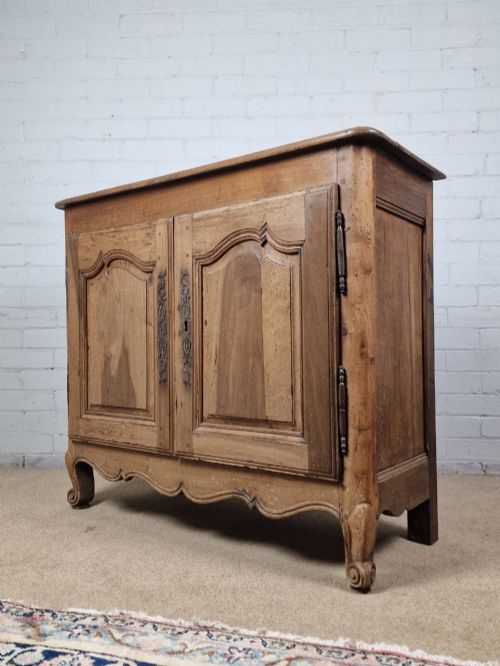
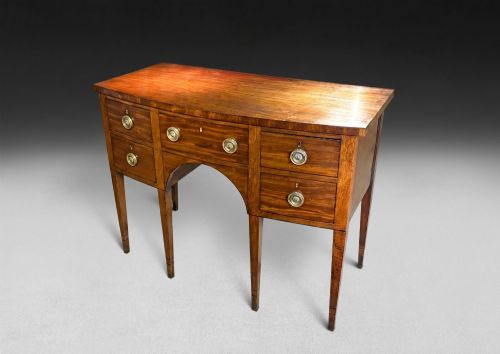
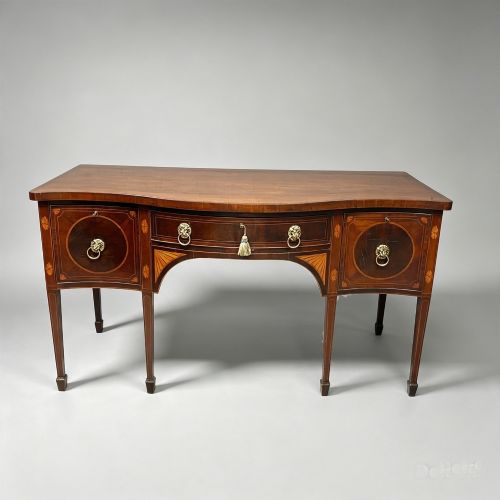
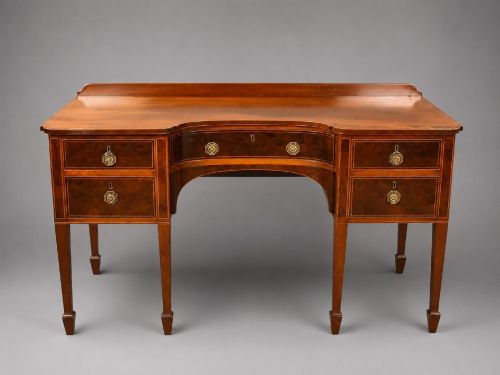
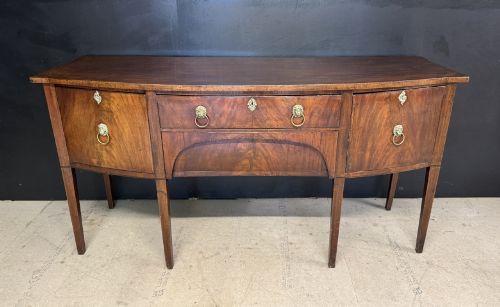
The pieces appearing here span domestic British country workshops and refined metropolitan cabinet makers, alongside continental French provincial and Italian examples. Oak and mahogany predominate, shaped into bow-front, serpentine, and breakfront silhouettes designed to anchor a formal interior.
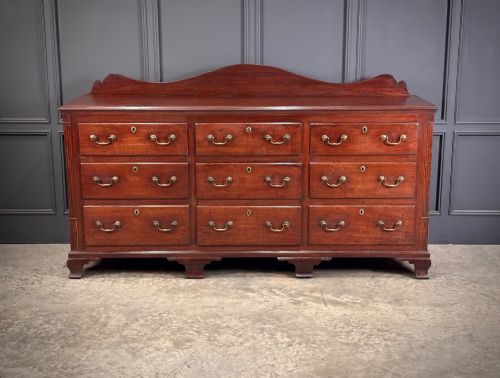
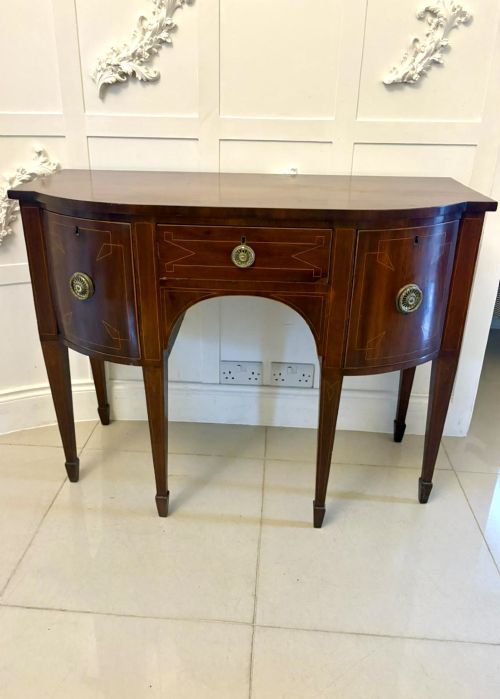
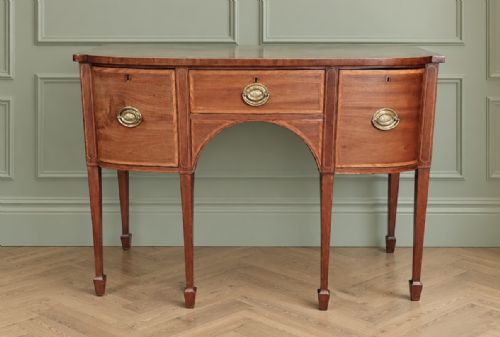
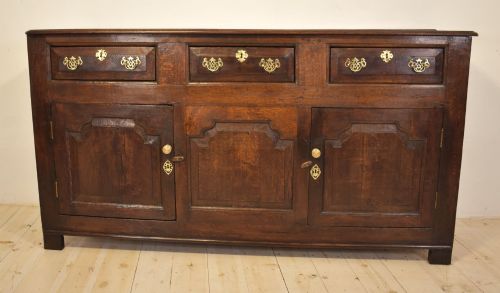
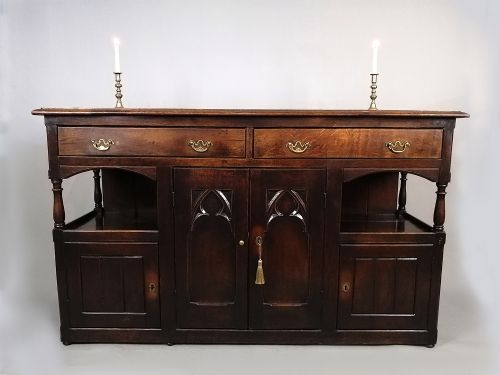
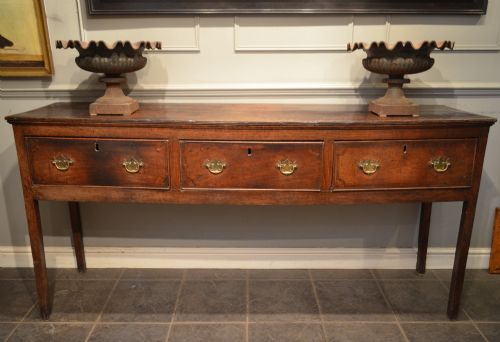
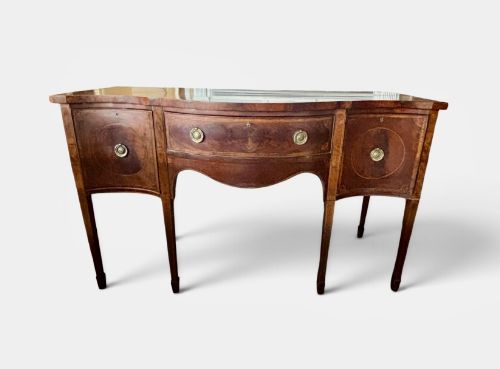
Buyers are most likely to meet George III mahogany sideboards featuring delicate boxwood inlay, or sturdy regional oak dresser bases fitted with drawers and potboards. Each form carries the distinct utilitarian DNA of its period, whether designed for a Welsh farmhouse or an English townhouse.
How they were made
Construction relies heavily on solid native timbers such as oak, elm, and walnut, alongside imported mahogany for high-status formal pieces. Cabinet makers employed mortise and tenon joinery to build rigid carcasses capable of supporting heavy loads across multiple drawers and cupboards.
Surface ornamentation involved skilful veneering and contrasting stringing, incorporating boxwood and satinwood inlay to accentuate serpentine and bow-front profiles. Iron and brass hardware, from drop handles to escutcheons, secured doors and drawer fronts built by hand.
Several sturdy oak dresser bases retain the honest marks of historic kitchen life, ready to hold modern wine collections instead of heavy pots.
What varies in quality
The upper tier of these pieces distinguishes itself through the careful selection of figured timber veneers, where grain patterns mirror symmetrically across drawer fronts and tabletops. Cabinet makers of the highest standard integrated complex serpentine or breakfront curves that required immense precision in shaping solid wood and matching secondary timbers.
Quality also reveals itself in the subtlety of decorative details such as boxwood inlay, fine stringing, and hand-carved mouldings that remain crisp and integrated rather than heavy-handed. Structural integrity, original brass hardware, and the survival of deep, warm timber patination separate superior examples from utilitarian workshop output.
The 18th Century Wooden Credenza Glossary
- Serpentine
- A front profile shaped with a central convex curve flanked by two concave sweeps. This complex contour requires specialist woodworking skill to execute cleanly.
- Dresser base
- A low wooden sideboard featuring drawers and often an open lower shelf called a potboard. These sturdy pieces originated in farmhouse kitchens and dining spaces.
- Breakfront
- A cabinet or sideboard whose central section projects forward from the recessed flanking wings. This architectural layout creates depth and shadow on long walls.
- Potboard
- An open lower shelf fitted between the legs of a dresser base, historically used for storing heavy pots and ceramic dishes. It provides essential structural rigidity to the base frame.
- Stringing
- Thin inlaid lines of contrasting timber, such as boxwood or satinwood, set flush into mahogany surfaces. This technique frames drawer edges and top borders with subtle geometry.
18th Century Wooden Credenza: Frequently Asked Questions
How were these sideboards used originally?
These pieces functioned primarily as staging surfaces for food, wine, and tableware during large meals in grand houses and country dwellings. The accompanying drawers and cupboards kept linens, cutlery, and serving vessels close at hand.
In less formal rural settings, oak dresser bases held kitchen equipment on their potboards while storing dry goods in their top drawers. Their sturdy construction allowed them to withstand heavy daily domestic use.
Where should I place one at home?
A low wooden sideboard or buffet suits dining rooms, large hallways, and living spaces where a strong architectural presence is required. Their long, low profiles make them ideal surfaces for displaying lamps, ceramics, or artwork above.
Ensure you measure the depth and width carefully, particularly for bow-front and breakfront models that extend further into the room. Positioning them away from direct heat sources protects the historic timber and maintains the polished finish.
How do I distinguish oak from mahogany pieces?
Oak pieces generally exhibit a pronounced, coarse grain with visible medullary rays, often associated with regional English, Welsh, or Dutch country furniture. They tend to have a warm, matte golden-brown tone and heavy structural framing.
Mahogany items display a finer, tighter grain that takes a high polish, ranging from rich reddish-brown to dark chocolate hues. These woods typically indicate formal Georgian urban cabinet-making, frequently enhanced with satinwood or boxwood inlay.