



18th Century Tea Kettle Stand
An 18th century tea kettle stand provides a sturdy, elegant surface designed to hold hot water for tea service in the Georgian parlour.
18th Century Tea Kettle Stand
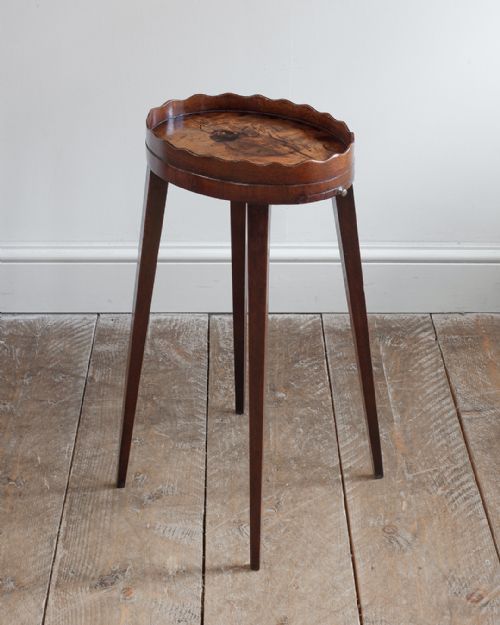
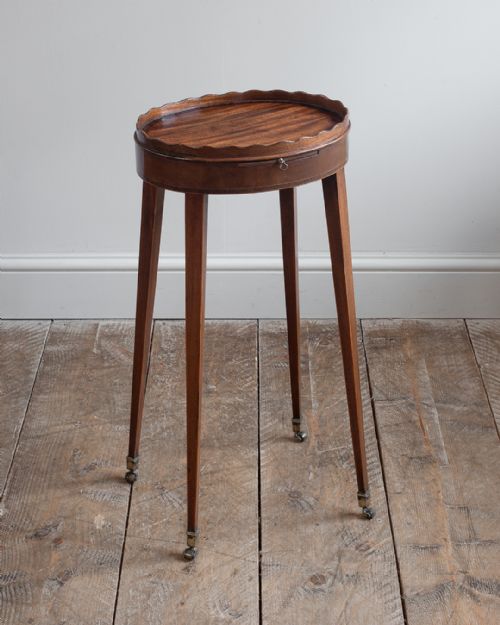
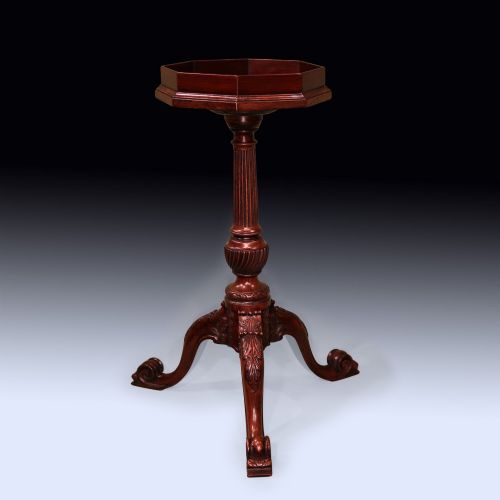
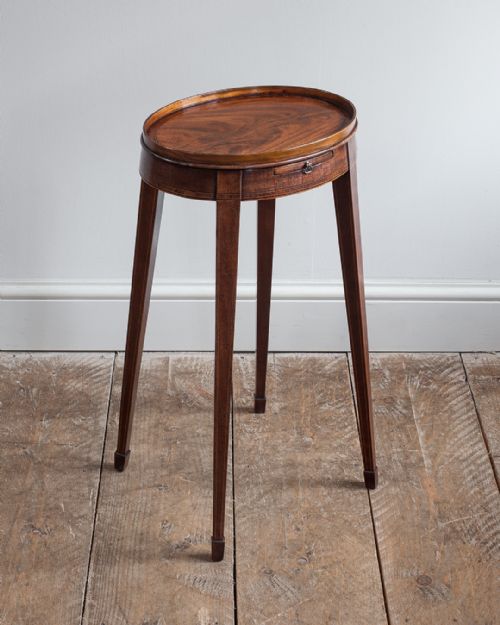
An 18th century tea kettle stand is a small occasional table specifically constructed to support the heavy boiling vessels of the Georgian tea table. These low tables range in form from rectangular and square tops to sophisticated oval and octagonal shapes.
The versions most commonly met on this page belong to the Georgian and George III periods, displaying the refined proportions typical of the era. Makers also produced these pieces under Chippendale, Chinese Chippendale, and Sheraton stylistic influences.
Most examples function interchangeably as kettle stands, urn stands, or lamp tables depending on the top configuration. Walnut, mahogany, and satinwood dominate the construction of these domestic items.
How they were made
Cabinetmakers constructed these stands predominantly using solid mahogany, often selecting timber with rich grain patterns. Workshops also utilised satinwood and burr wood veneers to create decorative contrasting surfaces on the top.
Carving formed a central part of the manufacturing process, particularly during the Chippendale period where intricate detail adorned the legs and rails. Marquetry work added further ornamentation to select satinwood and mahogany tops.
18th Century Tea Kettle Stand Retail Price Guide 2026
Typical asking prices for 18th century tea kettle stand among the pieces listed under this phrase on Sellingantiques today, from the lower quarter to the upper quarter. They describe what is for sale here now, not the wider market.
The listings show pieces spanning the George II, George III, and Chippendale styles, constructed primarily in solid mahogany with occasional satinwood and marquetry.
What varies in quality
The refinement of the carved detail separates standard domestic furniture from exceptional pieces produced by top workshops. Crisp edges on carved mouldings and delicate proportioning indicate superior cabinetmaking skill.
The choice of timber grain and the precision of marquetry inlay dictate the visual hierarchy among these stands. Tables featuring highly figured mahogany or intricate contrasting wood marquetry sit at the upper end of the scale.
The 18th Century Tea Kettle Stand Glossary
- Urn stand
- A small occasional table designed to hold a heated water urn or kettle during tea service. These pieces usually feature raised edges or galleries to prevent the vessel from sliding off.
- Chippendale
- A mid-18th-century style of English furniture characterised by rich carved decoration, French, Gothic, and Chinese motifs. The style draws its name from the London cabinetmaker Thomas Chippendale.
- Marquetry
- Decorative veneer work formed by fitting together small pieces of different coloured woods to create pictorial or geometric designs. Craftsmen applied this technique to tabletop surfaces for visual impact.
- Satinwood
- A durable, hard timber with a natural golden yellow lustre and a satin-like sheen. Cabinetmakers favoured this wood during the late 18th century for sophisticated inlaid furniture.
- George III
- The period of British history spanning from 1760 to 1820, encompassing several distinct stylistic phases in furniture design. Pieces from this era often display classical restraint and balanced proportions.
18th Century Tea Kettle Stand: Frequently Asked Questions
What is an 18th century tea kettle stand?
An 18th century tea kettle stand is a small occasional table built to hold the heavy silver or brass kettles used in Georgian drawing rooms. These tables kept hot water close to the tea table while protecting polished wooden furniture from heat.
Craftsmen constructed them in various shapes including oval, square, and octagonal tops to suit the specific requirements of the household. Their compact size allowed servants to move them easily around the room during formal gatherings.
How were tea kettle stands used?
These tables served primarily as dedicated platforms for boiling water vessels during the ritual of afternoon tea. The raised edges on many surviving examples kept the heavy kettle secure during service.
In modern interiors, owners frequently repurpose them as lamp tables or display surfaces for decorative objects. Their diminutive footprint makes them adaptable for placement beside armchairs or in hallways.
How do I identify a George III kettle stand?
George III kettle stands typically feature the straight lines and classical proportions associated with the late 18th century. They frequently utilise dense mahogany and occasionally incorporate satinwood inlay or delicate stringing.
Makers working in this period moved away from heavy carving towards more restrained, elegant profiles influenced by neoclassical design. Examining the timber underneath and the method of joining the top to the base helps confirm the period.
What is the difference between an urn stand and a kettle stand?
Urn stands and kettle stands served very similar domestic functions in the 18th century and the terms often overlap in historic descriptions. Both provided a stable, elevated surface for heavy liquid containers associated with tea or coffee.
Kettle stands occasionally feature specific slide-out shelves or trays for holding cups, while urn stands focus purely on supporting the central vessel. In practice, Georgian households used these small occasional tables interchangeably depending on the current social occasion.