


18th Century Swedish Chest
An 18th century swedish chest brings painted woodwork and robust storage into a room, offering both history and practical use.
18th Century Swedish Chest
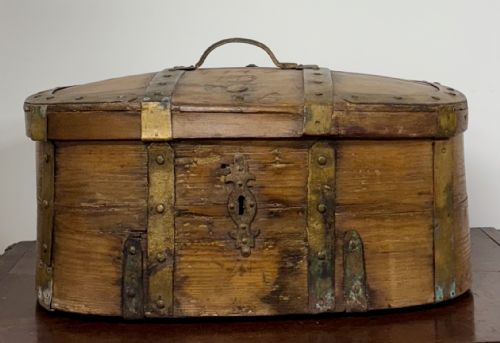
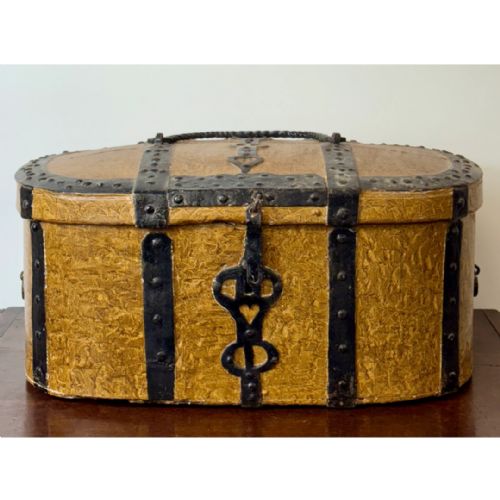
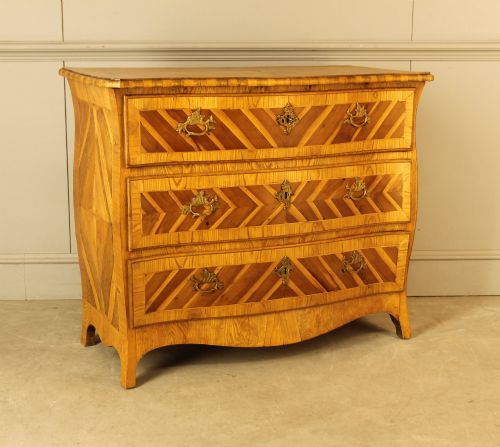
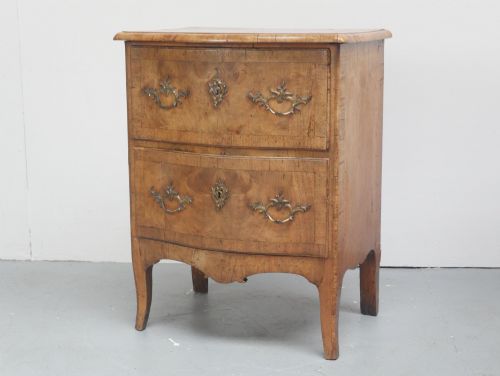
When you search for an 18th century swedish chest, you encounter a range of storage forms including trunks, marriage boxes, and commodes. These items hail primarily from the eighteenth century, showcasing periods from Scandinavian Baroque to Gustavian and Rococo.
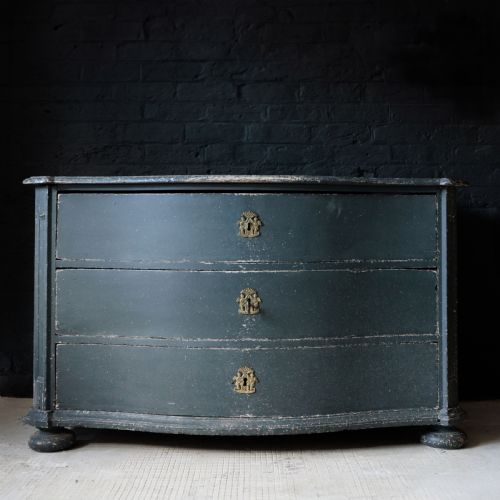
The most likely version you will meet on this page is a pine or painted wood chest of drawers or trunk. Pieces often display folk art motifs, serpentine fronts, or structural ironwork.
Beyond standard chests, the selection spans smaller boxes and caskets alongside larger commodes. The geographical and stylistic spread encompasses Swedish, Danish, and wider Scandinavian craftsmanship.
How they were made
Makers utilised native timber such as pine and birch, constructing carcases that relied on traditional joinery. Surfaces were frequently treated with paint, creating the characteristic layered finishes seen across Scandinavian furniture.
Metal elements played a structural and decorative role, with wrought iron and brass applied for hinges, lock plates, and corner brackets. Metal binding reinforced heavy trunks and coffers designed for domestic transit.
Decorative techniques ranged from simple hand-painted finishes to elaborate Rococo carving and serpentine shaping. Artisans combined utilitarian carpentry with artistic expression, particularly on marriage boxes and commodes.
The documented styles range from Scandinavian Baroque and Rococo to Gustavian and folk art.
What varies in quality
The distinction between tiers rests upon the sophistication of the surface decoration and the ambition of the form. A simple pine box sits at a different level of craftsmanship compared to a bombe commode with serpentine lines.
Condition of the original paint layer heavily influences the character of a piece. Intact folk art painting or patinated historic surfaces demand greater preservation than later repainting.
Structural complexity, such as breakfront profiles and elaborate brass or wrought iron mounts, marks the upper reaches of the range. The integration of period hardware indicates the original completeness of the object.
The 18th Century Swedish Chest Glossary
- Commode
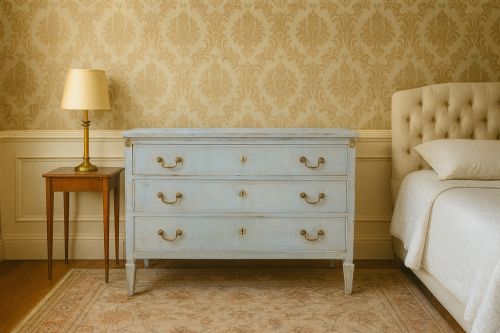
- A low chest of drawers, often standing on legs, popular in eighteenth-century interior design. These pieces frequently feature shaped fronts and decorative paintwork.
- Bombe
- A bulging, outward-curving contour found on the front and sides of advanced commodes. This shape requires skilled carpentry to execute successfully.
- Gustavian
- The Swedish neoclassical style spanning the late eighteenth century, characterised by restrained ornamentation and lighter colour palettes. It draws inspiration from French design adapted to Nordic tastes.
- Serpentine
- A front profile shaped in a continuous curve, concave in the centre and convex at the sides. This contour adds movement to case furniture.
- Marriage box
- A decorated container presented on the occasion of a wedding, often inscribed with names or dates and finished with folk art painting. These boxes served to store valuables and textiles.
18th Century Swedish Chest: Frequently Asked Questions
How do I date an 18th century swedish chest?
Dating relies on examining the construction methods, timber types, and stylistic markers such as Baroque or Gustavian details. Secondary evidence comes from the nature of the ironwork and the composition of the paint layers.
Allow for variations, as regional workshops often retained traditional designs longer than urban centres. Hand-cut joints and original forged hardware provide reliable indicators of age.
Were these chests used for travel?
Many of the heavier trunks, coffers, and metal-bound boxes served practical transport and storage functions in domestic households. Their robust construction protected contents during transit.
Smaller caskets and marriage boxes remained stationary, functioning as keepsake containers within the home. The inclusion of wrought iron handles on larger boxes facilitated movement.
How do I care for painted wooden surfaces?
Maintain stable indoor humidity levels and keep wooden furniture away from direct heat sources to prevent timber movement. Dust gently with a dry or slightly damp cloth without chemical polishes.
Historic painted finishes require a delicate touch to preserve the original pigment and patina. Avoid abrasive cleaning materials that might strip the historic surface layers.
What is the difference between a commode and a chest?
A commode typically designates a lower, more decorative chest of drawers often featuring shaped fronts like serpentine or bombe outlines. Standard chests frequently encompass simpler pine storage boxes and trunk forms.
Both categories fulfill storage needs, but commodes generally reflect higher stylistic ambitions associated with fashionable neoclassical or Rococo interiors.