

18th Century Style Dining Chairs
These 18th century style dining chairs bring formal Georgian proportion and rich timber into a room, offering enduring seating for a proper table.
18th Century Style Dining Chairs
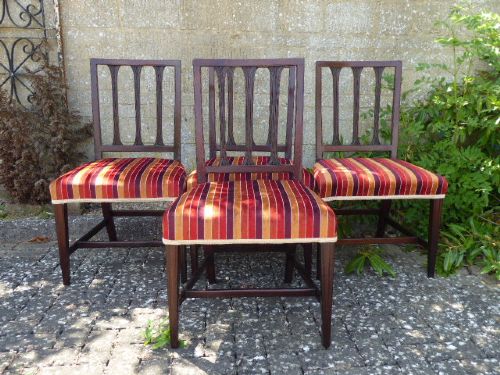
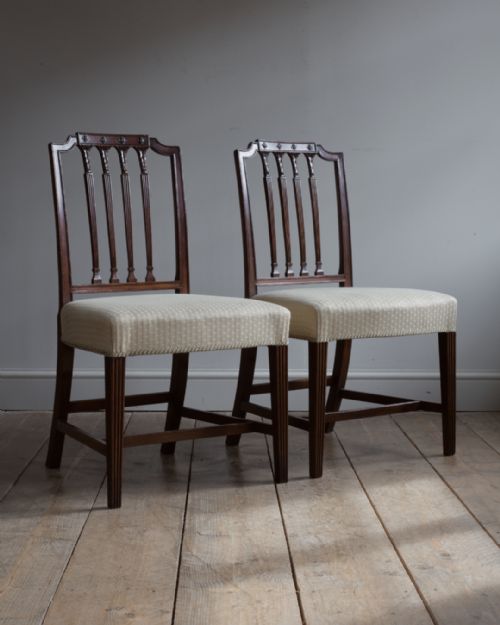
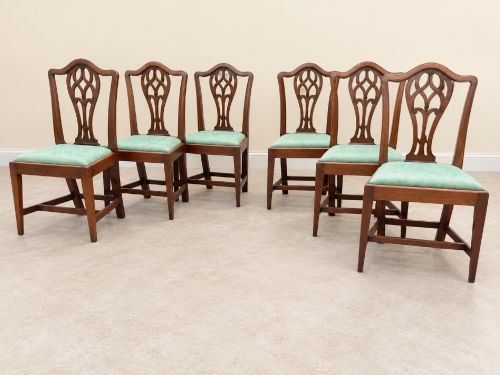
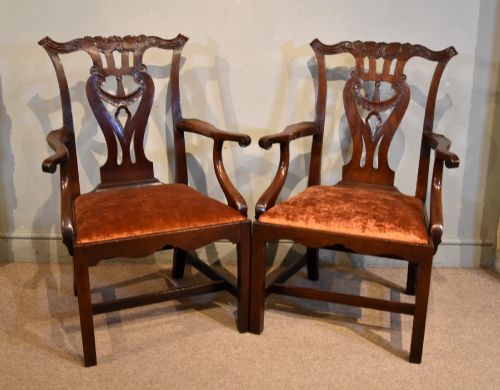
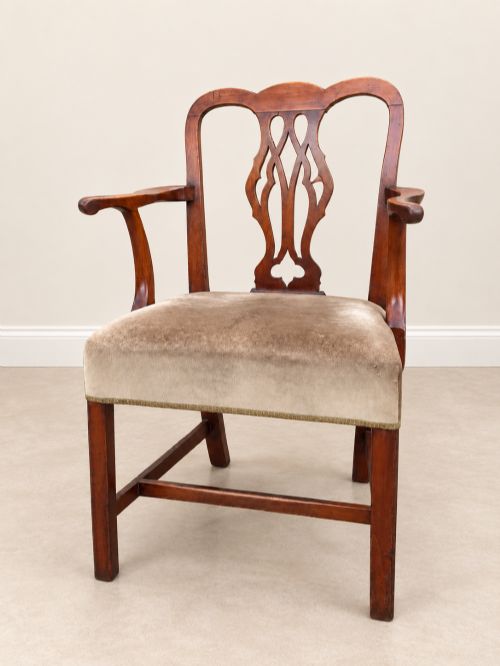
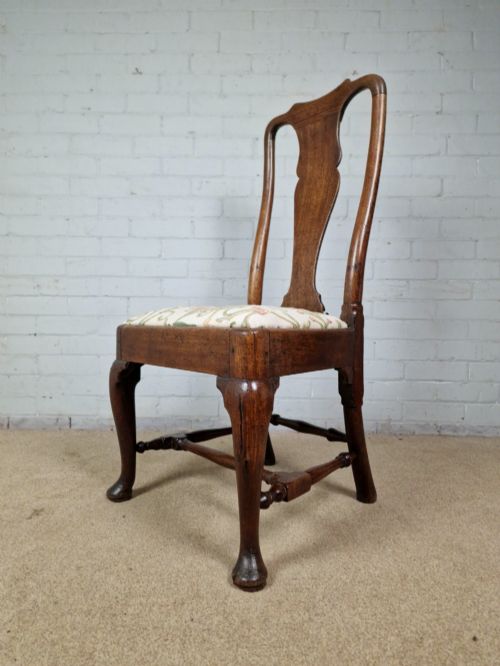
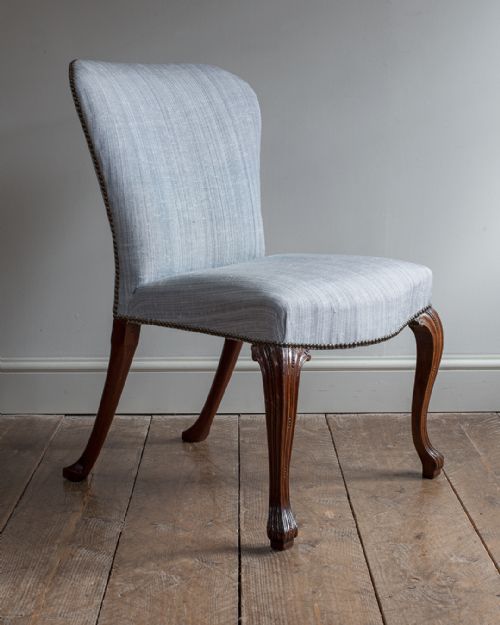
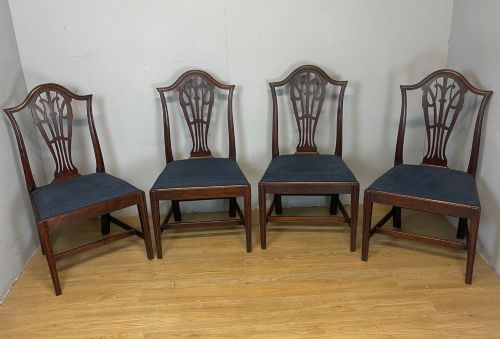
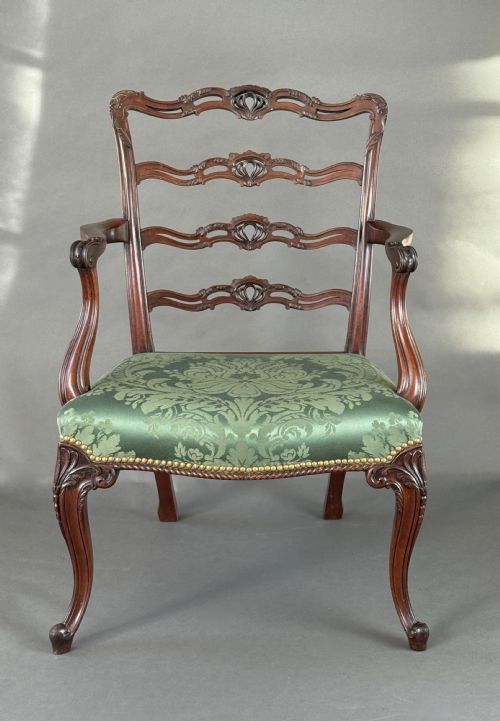
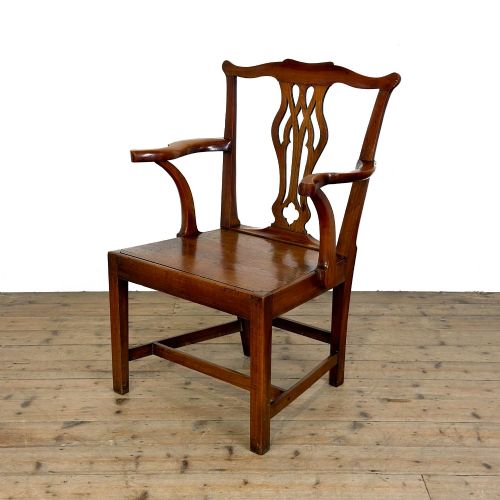
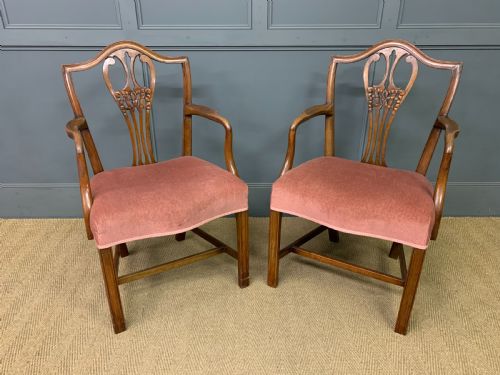
When you search for 18th century style dining chairs, you encounter formal seating principally shaped by Georgian design, including George II, George III, Chippendale, Hepplewhite, and Sheraton periods.
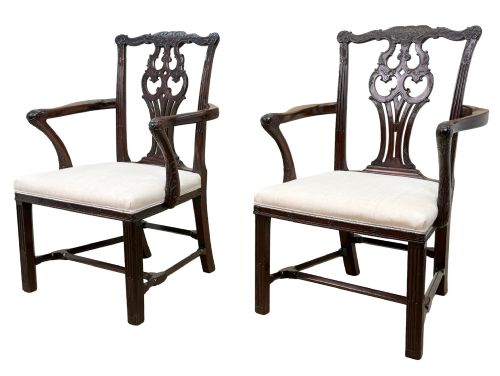
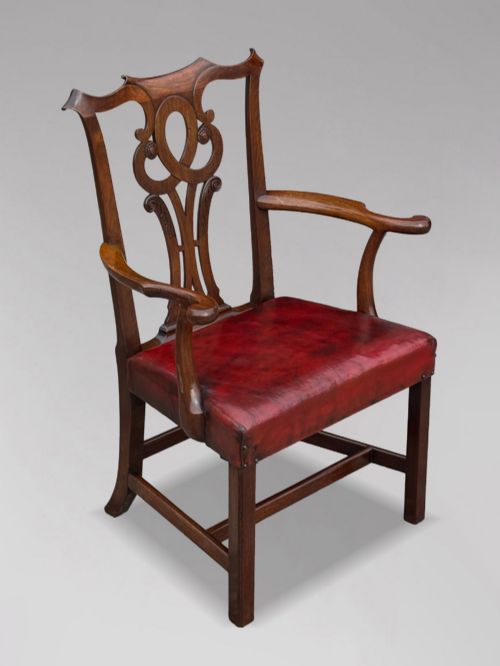
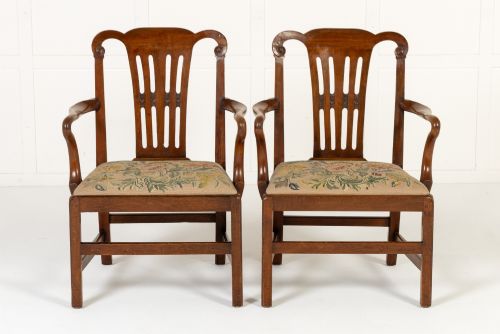
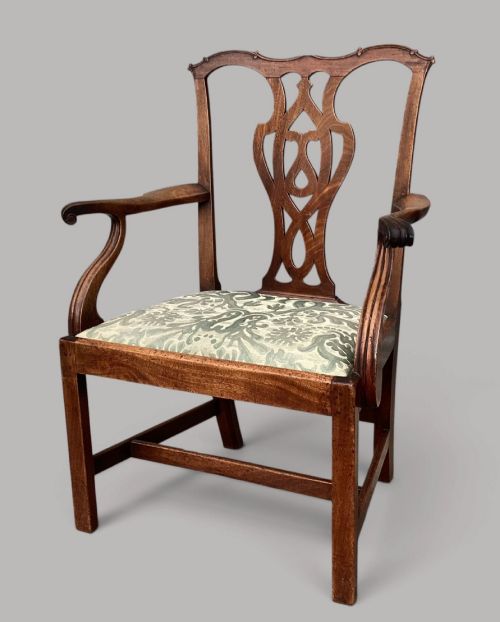
The single side chair and the open armchair are the most common forms you will meet on this page, alongside larger sets intended for grand dining rooms.
The origins span English workshops as well as Scottish and Irish makers, utilising robust regional timbers like oak, fruitwood, and elm alongside imported hardwoods.
Materials and Technique
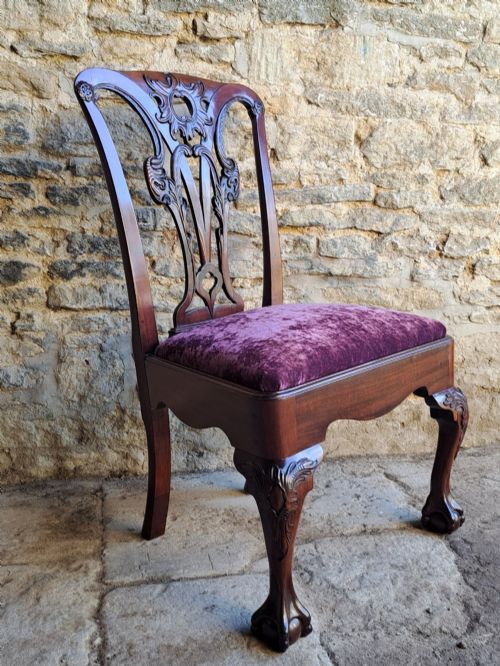
Mahogany dominates the evidence, valued for its dense grain and strength which allowed carvers to execute intricate pierced splats and claw-and-ball feet.
Walnut, oak, fruitwood, and elm appear frequently, joined using traditional mortise and tenon construction to withstand generations of daily use at the dining table.
Upholstery relies on textiles such as silk, velvet, and patterned fabrics, secured over padded drop-in seats or fixed frames.
18th Century Style Dining Chairs Retail Price Guide 2026
Typical asking prices for 18th century style dining chairs among the pieces listed under this phrase on Sellingantiques today, from the lower quarter to the upper quarter. They describe what is for sale here now, not the wider market.
The listings span periods from the early 18th century through to 19th-century revival pieces, utilising mahogany, walnut, oak, elm, and fruitwood.
Judging the Workmanship
The depth and crispness of the carved detail on the top rail, splat, and front legs distinguish standard production from exceptional cabinet work.
The integrity of the timber selection and the precision of the joinery determine how well a chair maintains its structural rigidity over centuries of service.
The 18th Century Style Dining Chairs Glossary
- Chippendale
- A style of furniture named after the London cabinetmaker Thomas Chippendale, characterised by elaborate carved splats and cabriole legs. These designs heavily influenced 18th century dining seating.
- Hepplewhite
- A neoclassical style popular towards the end of the 18th century, known for shield-back chairs and tapered legs. It represents a lighter, more graceful aesthetic than earlier Georgian forms.
- Carver
- An armchair, often taller and wider than the surrounding side chairs, traditionally placed at the head of a dining table. Pairs of these frequently accompany sets of six or eight single chairs.
- Splats
- The vertical central piece of wood in the back of a chair, often pierced or carved into ribbon, urn, or ladder-back configurations. This component carries the primary stylistic signature of the maker.
- Cabriole leg
- A furniture leg that curves out at the knee and tapers inward to an ankle, frequently terminating in a pad or claw-and-ball foot. It is a defining feature of mid-18th century seating.
18th Century Style Dining Chairs: Frequently Asked Questions
How do I care for antique dining chairs?
Keep timber chairs away from direct heat sources and sudden humidity changes to prevent the wood from splitting or warping over time. Feed the polished surfaces periodically with a suitable wax to maintain the natural lustre of the mahogany, walnut, or oak.
Inspect the joints and upholstery webbing gently every few years to catch any looseness early. Regular, careful use preserves the structural integrity far better than storing them unused in a dark room.
What is the difference between side chairs and armchairs?
Side chairs are narrower, handle-free seats designed to line the sides of a dining table efficiently without taking up excessive elbow room. Armchairs feature supportive side rests and are traditionally designated as carvers for the heads of the table.
In most traditional dining sets, you find a matching pair of armchairs accompanied by a larger number of single side chairs. Both share the same stylistic vocabulary and timber to create a cohesive appearance around the room.
Are these chairs suitable for everyday dining?
These pieces were built by skilled cabinetmakers using robust hardwoods like mahogany and oak specifically for daily domestic life. Their centuries of survival demonstrate their mechanical resilience when treated with normal household care.
Modern sitters should simply be mindful of the lower seat heights and upright postures typical of 18th century seating geometry. Adding discrete modern conservation pads can also protect delicate antique textiles from excessive wear.
How do I identify a George III chair?
George III pieces generally display the refined neoclassical influences introduced during the latter half of the 18th century, including straight fluted legs and shield-shaped backs. They often utilise richly grained mahogany and precise geometric inlay work.
Earlier George II examples tend to feature heavier proportions, cabriole legs, and solid vase-shaped splats. Comparing the leg geometry and back rail profile helps narrow down the specific decade of manufacture.