





18th Century Silver Cream Jug
These 18th century silver cream jug examples offer sterling silver tableware crafted in Georgian London, Newcastle, Dublin, and provincial Scotland.
18th Century Silver Cream Jug
An 18th century silver cream jug provides a table vessel for serving milk or cream during tea service. These pieces span the Georgian period, including reigns of George I, George II, and George III.
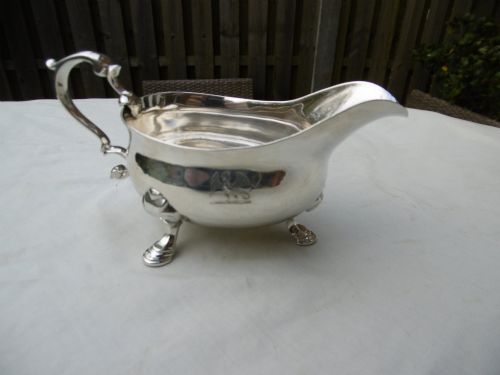
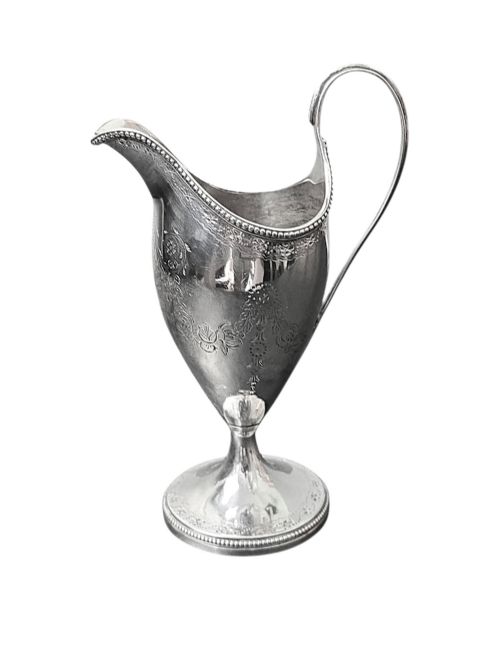
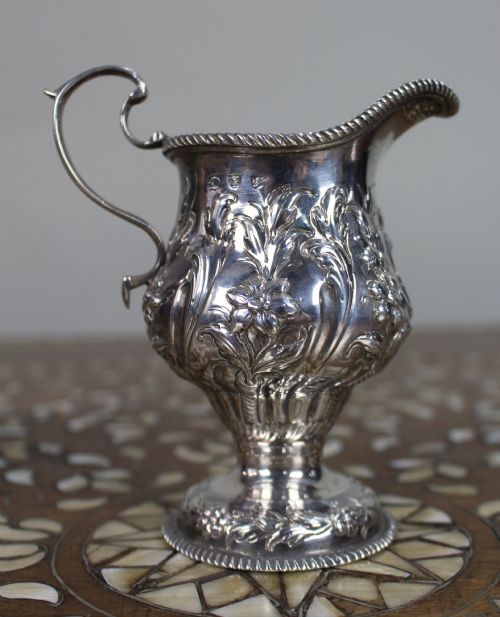
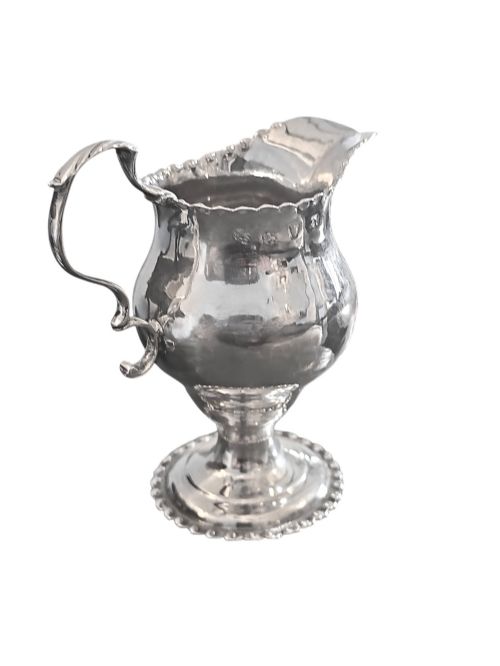
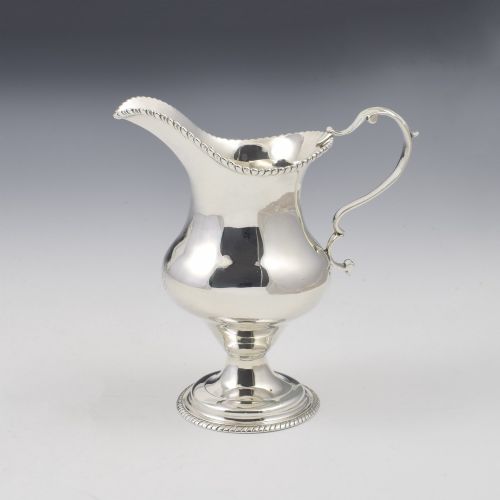
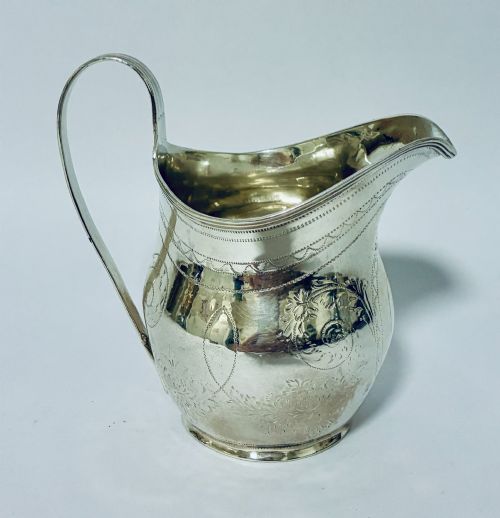
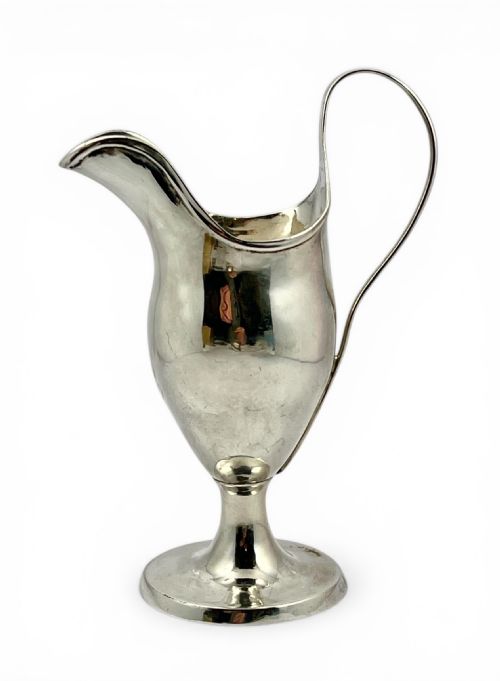
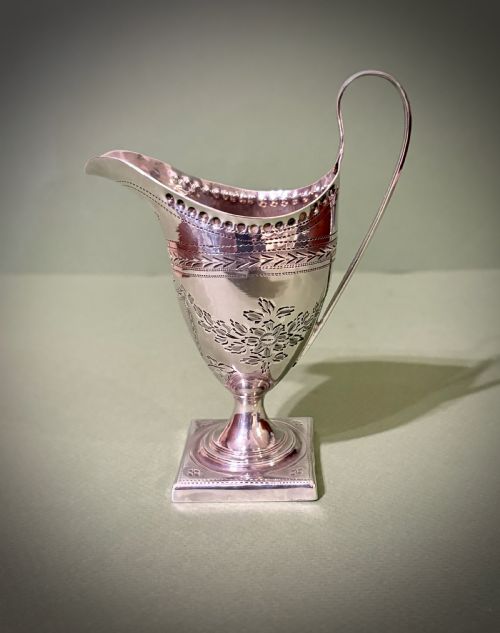
The selections on this page include distinct forms such as helmet cream jugs, footed ewers, sparrow beak jugs, and cream pails. Makers mark their work across London, Newcastle, Dublin, and Scottish provincial towns like Aberdeen.
How they were made
Silversmiths constructed these jugs from sterling silver and solid silver, hammering and shaping the metal into form. Workshops applied footed bases, handles, and spouts to meet tea table requirements.
Makers stamped their pieces with hallmarks to record silver standard, assay office, and year of production. Provincial silversmiths added their local marks alongside standard town punches.
18th Century Silver Cream Jug Retail Price Guide 2026
Typical asking prices for 18th century silver cream jug among the pieces listed under this phrase on Sellingantiques today, from the lower quarter to the upper quarter. They describe what is for sale here now, not the wider market.
Birds inspired eighteenth-century silversmiths to name a tiny pouring spout after a sparrow.
What varies in quality
The distinction between standard items and finer examples rests on the reputation of the maker and the crispness of the form. Pieces bearing marks from noted silversmiths command greater attention from collectors.
Form dictates variety, with specialised shapes like sparrow beak jugs and cream pails offering distinct aesthetic profiles compared to standard helmet designs. Weight and proportion also separate utilitarian vessels from masterwork tableware.
Stalker & Mitchison·James Gordon·Peter & Ann Bateman·John Mackfarlan
The 18th Century Silver Cream Jug Glossary
- Sparrow beak jug
- An early Georgian cream jug featuring a small, pointed spout resembling a bird's beak. These typically display pear-shaped bodies on three small feet.
- Helmet jug
- A cream jug shaped like a classical inverted helmet, popular during the later Georgian period. It rests on a square or footed base with an exaggerated flared lip.
- Cream pail
- A small open vessel with a swing handle, used for serving cream alongside tea. These cylindrical forms often feature pierced or chased silver bodies.
- Provincial silver
- Silverware made outside of major assay offices like London, bearing regional marks. Scottish and northern English towns produced distinctive work through local silversmiths.
- Sterling silver
- The silver alloy standard containing a fixed proportion of pure silver and other metals for durability. English pieces meeting this standard bear the lion passant hallmark.
18th Century Silver Cream Jug: Frequently Asked Questions
What is a sparrow beak jug?
A sparrow beak jug is an early Georgian form characterised by a short, pointed pouring lip resembling a bird's beak. These small vessels usually feature a pear-shaped body supported by three feet.
Silversmiths produced these primarily during the early decades of the eighteenth century for tea service use. Their compact size and distinct spout shape make them easily identifiable among period tableware.
How do I identify a helmet cream jug?
A helmet cream jug takes its name from its resemblance to a classical military helmet, featuring a flared rim and an elevated handle. This style became prominent during the latter half of the eighteenth century under George III.
These pieces typically stand on a square or footed pedestal base. The body tapers smoothly from the wide rim down to the foot.
What is a silver cream pail?
A silver cream pail is an open, cylindrical container used for holding and serving cream during tea service. These pieces frequently incorporate a movable swing handle attached to the rim.
Unlike standard poured jugs, pails often showcase decorative pierced or chased metalwork on the body. They represent a less common form within eighteenth-century silver tableware.