
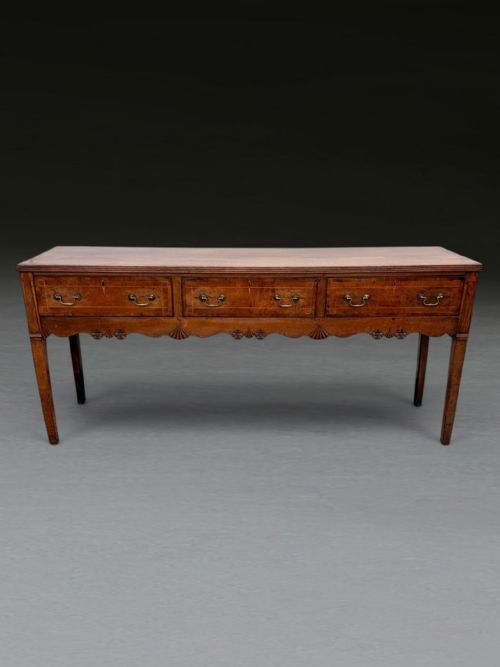
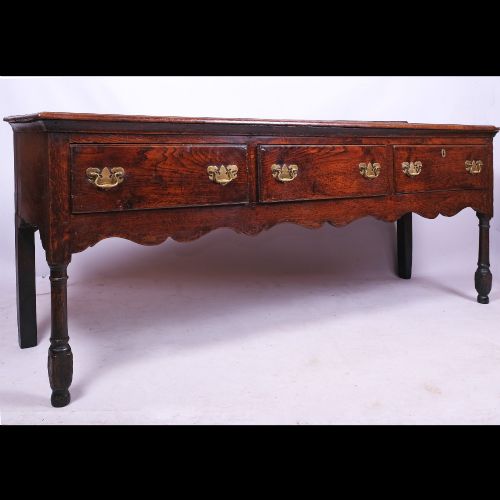
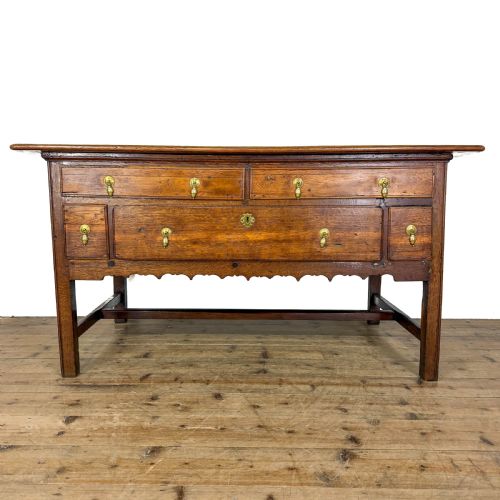


18th Century Serving Base
An 18th century serving base is a sturdy low board built for dining and hospitality, offering ample surface and storage.
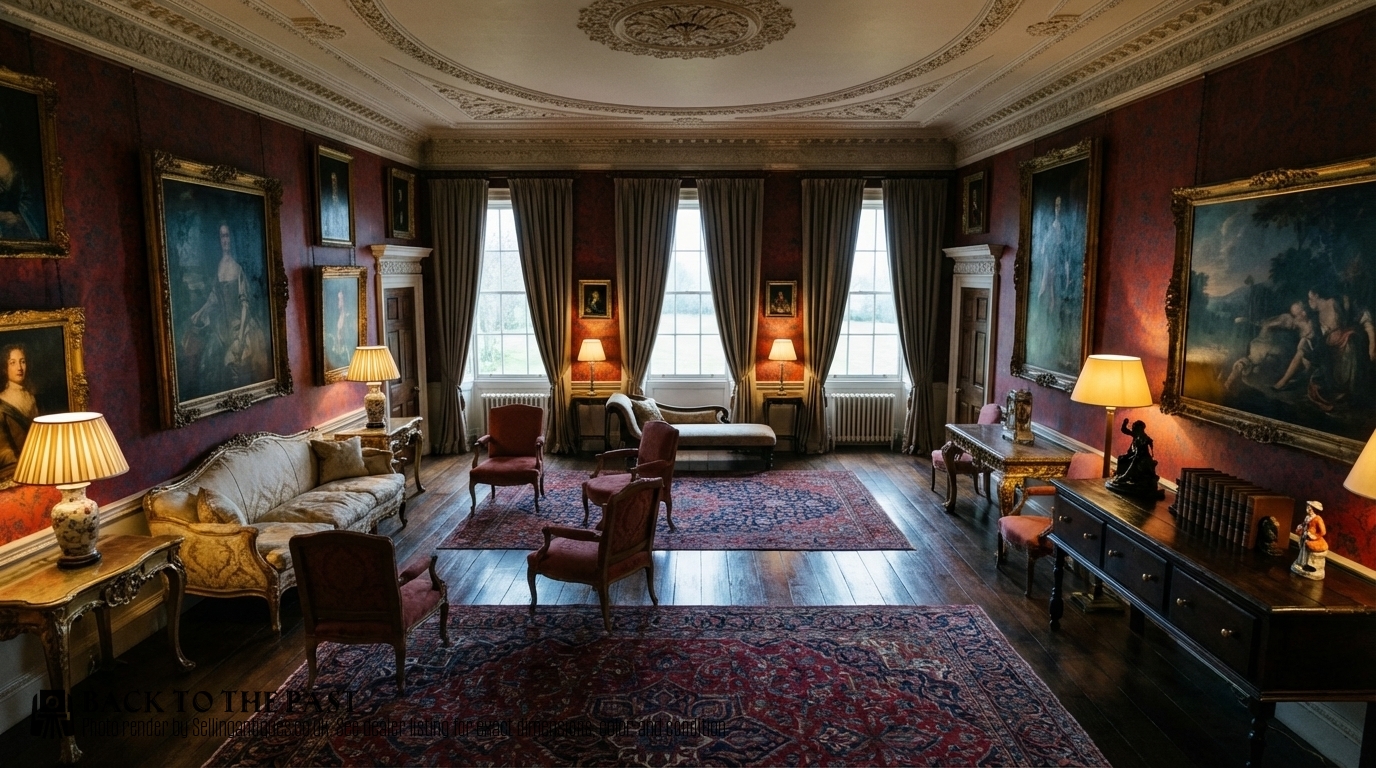
18th Century Serving Base
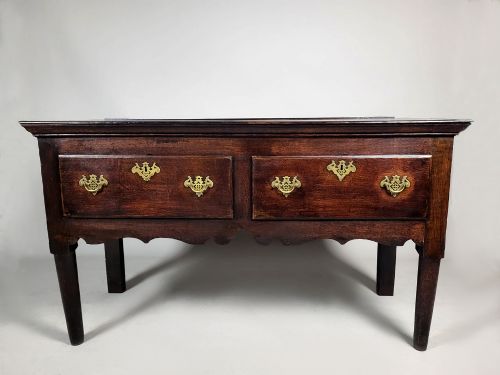
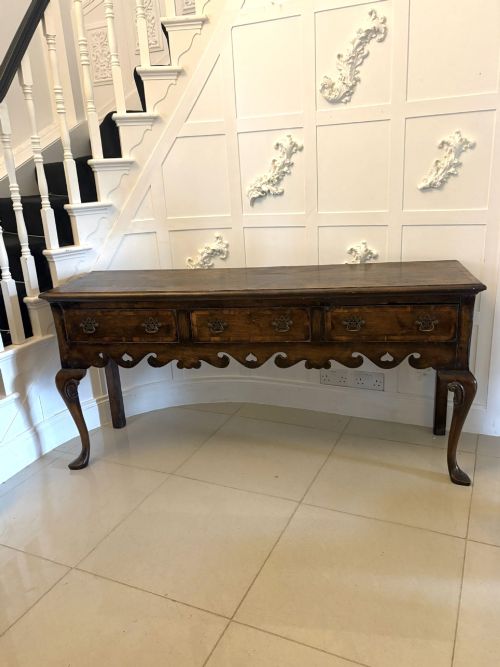
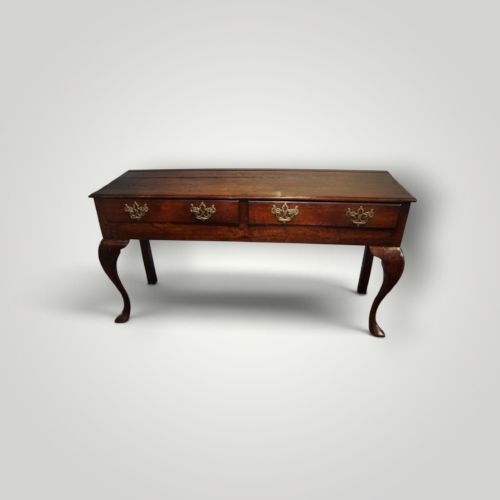
An 18th century serving base provides a practical low surface for dining rooms, appearing primarily as oak or mahogany dresser bases, sideboards, and occasional tables.
The pieces often feature cabriole legs, turned supports, and occasionally spice drawers or crossbanding, reflecting Georgian and Queen Anne styles.
Buyers seeking an 18th century serving base frequently encounter English country pieces alongside walnut and elm variants from the same period.
Materials and construction
Makers built these pieces predominantly using solid oak, mahogany, and walnut, often applying elm crossbanding or decorative inlay to enhance the grain.
Hardware such as original brasses, iron fittings, and turning techniques define the structural integrity and period authenticity of each base.
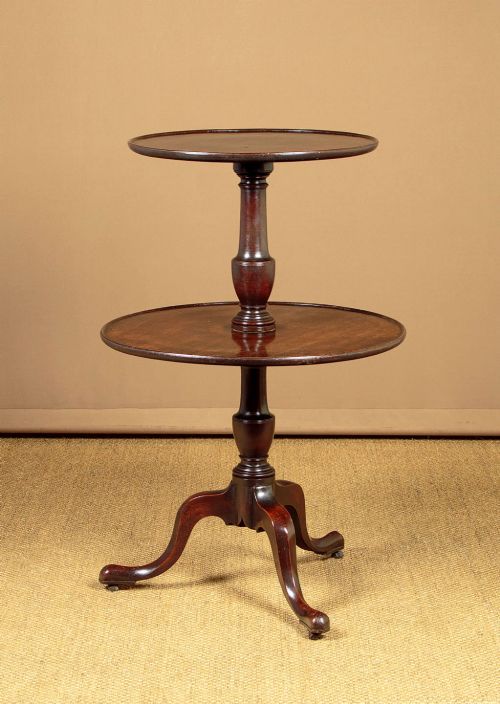
Some dumbwaiters revolve on axes so diners could quietly spin their own dinner rolls without awkward stretching.
Distinctions in quality
Quality rests upon the selection of timber, such as burr elm crossbanding versus plain panels, and the retention of original brasses and hardware.
The crispness of carved details, the subtlety of cabriole leg shaping, and the balance of proportions separate superior examples from standard ones.
The 18th Century Serving Base Glossary
- Cabriole leg
- A furniture leg that curves out and then in, resembling an animal's leg. This form appears frequently on Georgian and Queen Anne furniture.
- Crossbanding
- A strip of veneer applied perpendicularly to the grain of the main surface. It frames the top of a serving base.
- Dumbwaiter
- A multi-tiered revolving or folding serving stand. These tables hold food and tableware during meals without servants.
- Spice drawers
- Small internal drawers integrated into a dresser base. They stored valuable culinary ingredients in the eighteenth century.
18th Century Serving Base: Frequently Asked Questions
What is a serving base used for?
A serving base provided a solid surface for laying out food and holding dishes during large meals in eighteenth-century homes. They stood in dining rooms or halls to assist with household hospitality.
Today, these pieces function well as sideboards, console tables, or media surfaces in traditional and contemporary interiors alike.
How do I identify a Georgian piece?
Georgian pieces display characteristic architectural proportions, specific timber choices like mahogany and oak, and distinct decorative vocabulary. Look for cabriole legs or turned supports.
Cabinetmakers of this era focused on functional elegance, balancing sturdy construction with refined surface treatments such as crossbanding.
Are dumbwaiters a type of serving base?
Dumbwaiters are tiered serving stands designed to hold plates and dishes near a dining table. They share the functional purpose of serving food efficiently.
While traditional dresser bases offer enclosed storage and drawers, dumbwaiters utilise rotating or folding tiers for vertical access.
How should I care for old oak?
Solid oak requires stable humidity levels and protection from direct heat sources to prevent timber movement. Regular dusting with a dry cloth keeps the surface clean.
Application of traditional wax preserves the finish and nourishes the grain without building up synthetic residues.