


18th Century Secretaire Tallboy
An 18th century secretaire tallboy combines high-capacity storage with a fitted writing drawer, offering a practical solution for compact writing and organising.
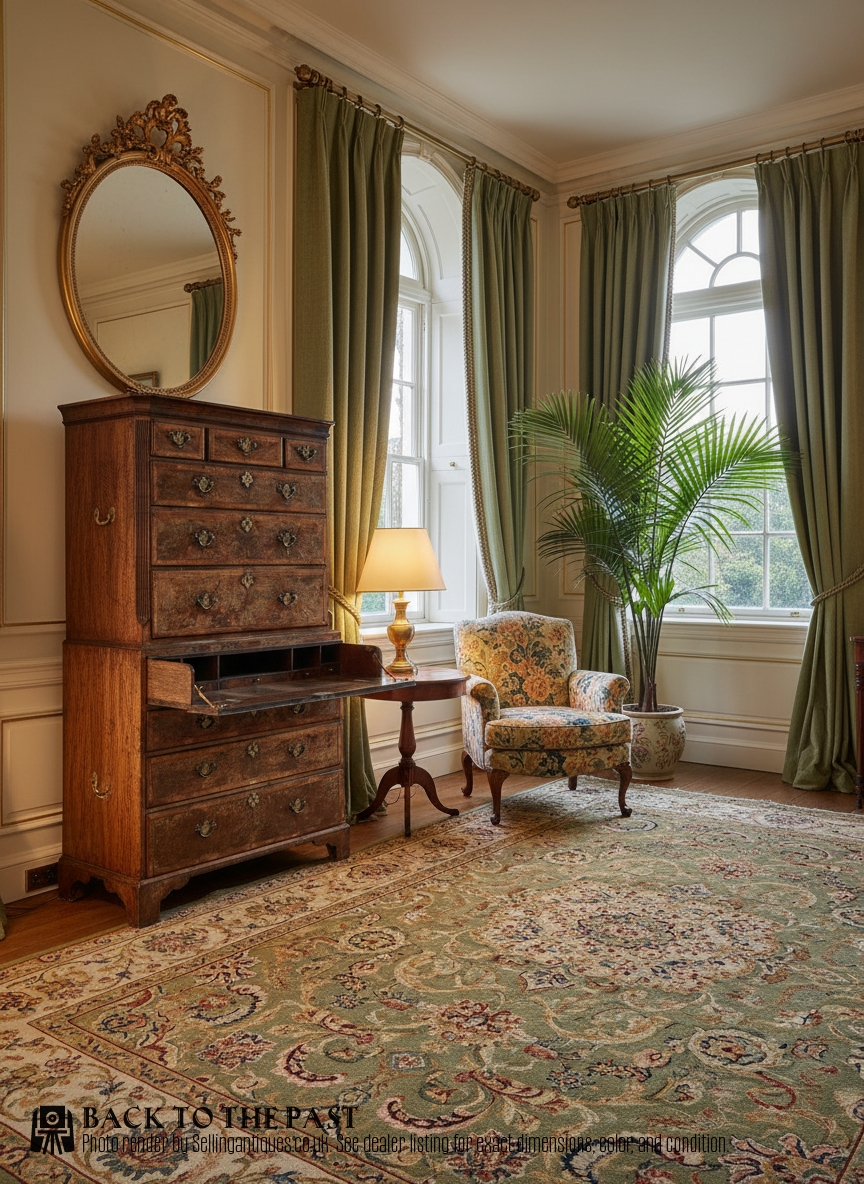
18th Century Secretaire Tallboy
An 18th century secretaire tallboy is a stacked chest on chest where the upper section contains a pull-down writing drawer fitted with small compartments and pigeon holes. These dual-purpose pieces emerged to save floor space while providing both storage and a writing surface in domestic interiors.
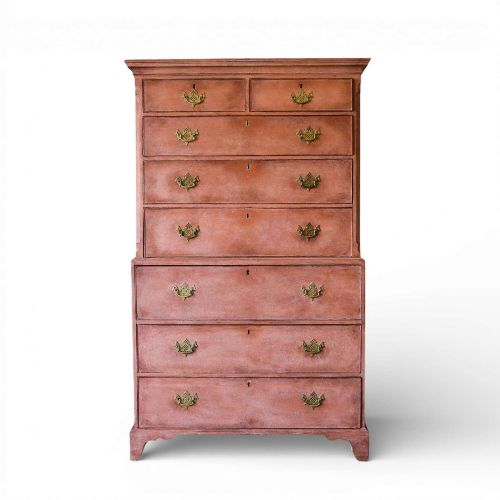
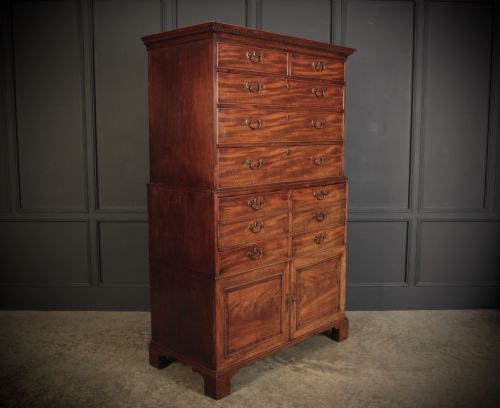
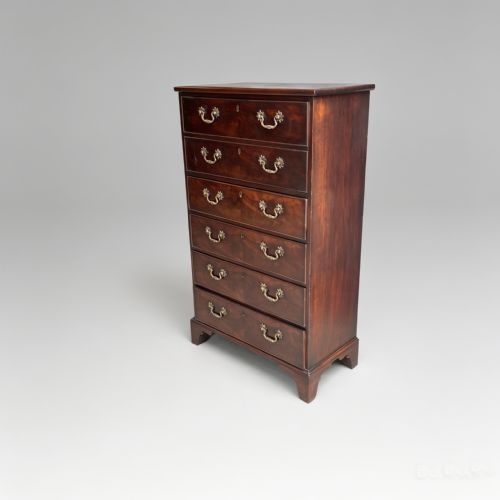
The version most commonly met on this page is constructed from mahogany or walnut, dating from the Georgian and George III periods. Examples often incorporate tall and shallow proportions, standing on bracket feet with multiple graduated drawers beneath the writing section.
Materials and construction
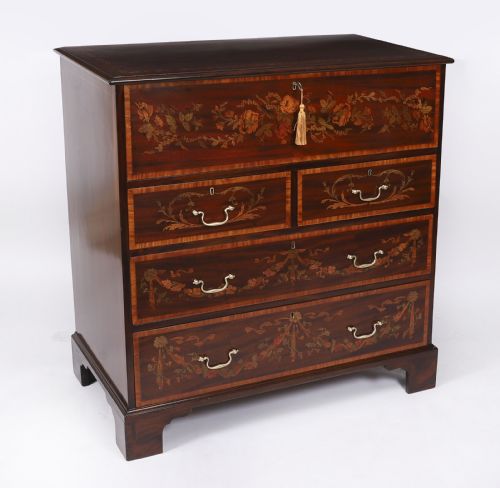
Cabinet makers utilised dense hardwoods like mahogany and figured walnut, often applied as veneers over softer secondary timbers to create patterned surfaces. Drawers were built with hand-cut dovetail joints and lined with oak or deal.
Brass hardware including drop handles and escutcheons secured the drawer fronts, while secondary materials like leather and baize lined the interior writing surfaces of the pull-down drawers.
Listings span multiple materials including oak, walnut, mahogany, and paint, reflecting diverse regional workshops across the eighteenth century.
Assessing quality
Quality rests in the choice of timber and the precision of the cabinet work, particularly the figured grain selection on drawer fronts and the neatness of the dovetailing. Pieces retaining original brass handles and well-fitted internal drawers command greater attention.
Proportions also dictate distinction, with narrower examples of small proportions demonstrating superior balance and refined handling by the maker compared to heavier, more utilitarian builds.
The 18th Century Secretaire Tallboy Glossary
- Tallboy
- A tall chest of drawers made in two sections, one stacked on top of the other. This form maximises vertical storage without taking up excess floor space.
- Secretaire
- A cabinet or chest containing a pull-down drawer fitted with writing surfaces and small compartments. It transforms a standard storage unit into a compact desk.
- Dovetail
- A joint formed by interlocking wedge-shaped fingers, used to connect drawer sides and corners. Hand-cut dovetails indicate traditional craftsmanship.
- Escutcheon
- A protective plate surrounding a keyhole, usually made of brass. It prevents the wood around the lock from splitting during use.
- Bracket foot
- A simple foot shape forming a small bracket at the corners of a piece. It supports the weight of the chest while lifting the base off the floor.
18th Century Secretaire Tallboy: Frequently Asked Questions
What is a secretaire tallboy?
A secretaire tallboy is a tall chest on chest incorporating a dedicated writing drawer with internal compartments.
It merges the functions of a tall storage chest and a bureau into one vertical piece of furniture.
How were these pieces used?
They served primarily for bedroom or dressing room storage of clothing alongside correspondence management.
The drop-down writing drawer provided a private desk surface for letter writing and document sorting.
How do I identify a George III piece?
George III pieces frequently feature mahogany construction, bracket feet, and refined brass drop handles.
Stylistic cues often align with Chippendale influences, showing clean lines and balanced proportions.
Are walnut and mahogany both common?
Walnut appears frequently in pieces from earlier decades such as the Queen Anne and George I periods.
Mahogany became the dominant timber as the century progressed under George III.