





18th Century Salon Chairs
These 18th century salon chairs are grand seating pieces shaped by Georgian and continental hands, built to anchor refined rooms with carved wood and rich textile covers.
18th Century Salon Chairs
When you search for 18th century salon chairs, you are looking at substantial seating designed for formal reception rooms, encompassing both English workshop productions and continental European forms. The examples found here range from Georgian mahogany armchairs to French Louis XV style pieces and Italian giltwood creations.
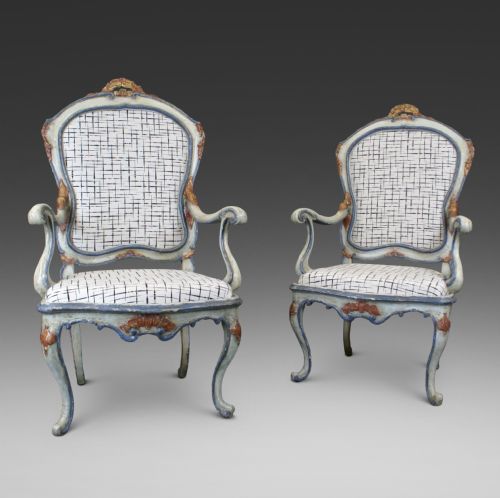
You are most likely to meet pairs or sets of armchairs, often upholstered in silk, wool, or red damask. These pieces reflect distinct regional tastes, moving from English Hepplewhite frameworks to ornate Italian Barocchetto and French Louis XVI expressions.
How they were made
The primary structural material across these listings is timber, with mahogany and walnut forming the robust frames for English and continental seating. Artisans also utilised giltwood and applied paint finishes to achieve decorative surfaces.
Upholstery relies on traditional textiles, specifically silk, wool, and damask, while brass elements sometimes contribute to the construction. Carved timber details demonstrate period techniques executed by skilled hands.
18th Century Salon Chairs Retail Price Guide 2026
Typical asking prices for 18th century salon chairs among the pieces listed under this phrase on Sellingantiques today, from the lower quarter to the upper quarter. They describe what is for sale here now, not the wider market.
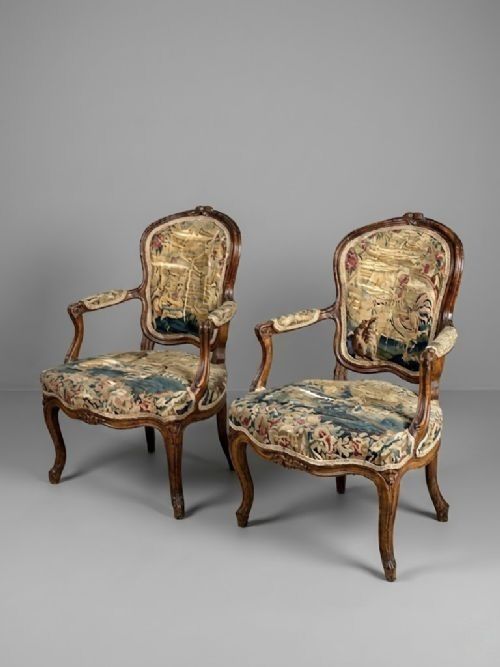
Some chairs arrive wearing Aubusson tapestries depicting scenes older than the republic.
What varies in quality
The standard of carving across the wooden frames establishes the initial tier of quality, distinguishing deeply articulated giltwood and mahogany ornamentation from simpler timber mouldings. The integration of the design style, whether Neoclassical, Barocchetto, or Hepplewhite, dictates the refinement of the silhouette.
The choice and execution of the covering textile further separate examples, with Aubusson covers and rich red damask upholstery representing higher levels of period luxury compared to standard fabrics.
John Linnell
The 18th Century Salon Chairs Glossary
- Hepplewhite
- A light, elegant furniture style named after the English designer George Hepplewhite, characterised by shield-back or oval-back chairs and tapered legs. It emerged during the Georgian period.
- Giltwood
- Timber that has been coated with a thin layer of gold leaf or powder. This finish was widely applied to high-status salon chairs across 18th century Europe.
- Barocchetto
- The Italian variant of the Rococo style, known for playful asymmetry and elaborate carved decoration. It appears on regional armchairs from the period.
- Fauteuil
- A French open-arm armchair with upholstered back and seat, featuring exposed wooden framing. They were staples of formal French interior decoration.
- Damask
- A reversible figured fabric woven on a jacquard loom, frequently utilised for period upholstery. Red damask is a common upholstery choice in Georgian seating.
18th Century Salon Chairs: Frequently Asked Questions
What defines an 18th century salon chair?
These seating pieces are defined by their formal purpose in reception rooms, featuring carved wooden frames in mahogany, walnut, or giltwood. They often display distinct regional styles such as Louis XV, Hepplewhite, or Barocchetto.
They generally incorporate open arms and upholstered seats covered in silk, wool, or damask, reflecting the aesthetic priorities of Georgian England and continental Europe.
How were salon chairs used?
Salon chairs were positioned in formal reception spaces for conversation, entertaining, and displaying household status. Their open arm designs and upright proportions accommodated the structured fashion of the period.
Rather than serving as casual lounging seats, they functioned as architectural furniture elements that complemented the decorative scheme of a grand room.
How do I live with antique salon chairs?
Living with these chairs involves placing them in low-traffic areas of the home where their timber frames and delicate textile covers are protected from daily wear. Pairing them with compatible period furnishings helps maintain a balanced interior.
Regular, gentle care for the wood and upholstery ensures the materials remain stable without requiring aggressive restoration.
How do I tell periods apart?
Distinguishing periods relies on observing the shifts in decorative vocabulary from curved Rococo lines to restrained Neoclassical symmetry. English pieces often show Georgian mahogany construction, while continental examples utilise painted or giltwood surfaces.
Comparing carved motifs, such as shield backs or gilded acanthus leaves, clarifies whether a piece aligns with mid-18th century tastes or later revivals.