


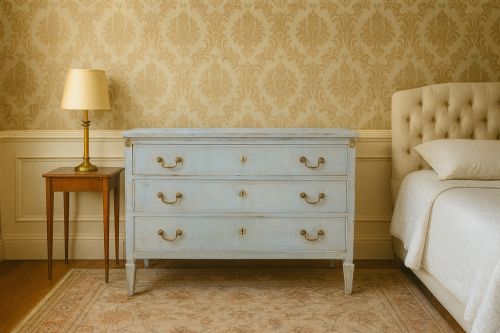


18th Century Painted Chest
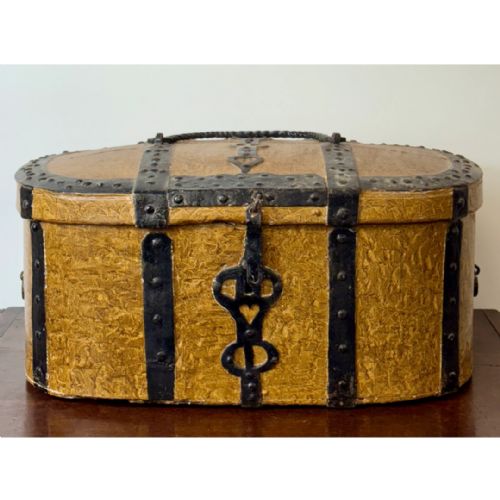
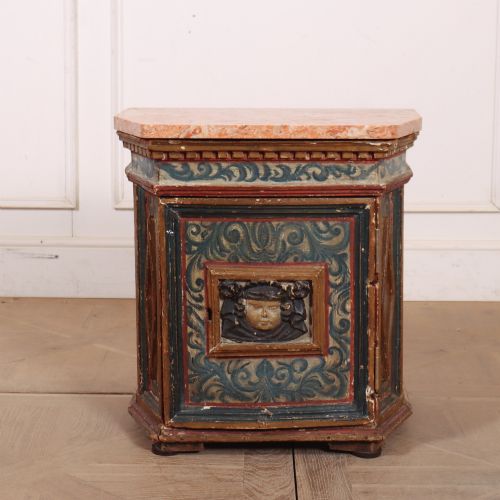
These pieces represent the timeless craft of the 18th century painted chest, offering striking painted surfaces combined with practical storage for any interior.
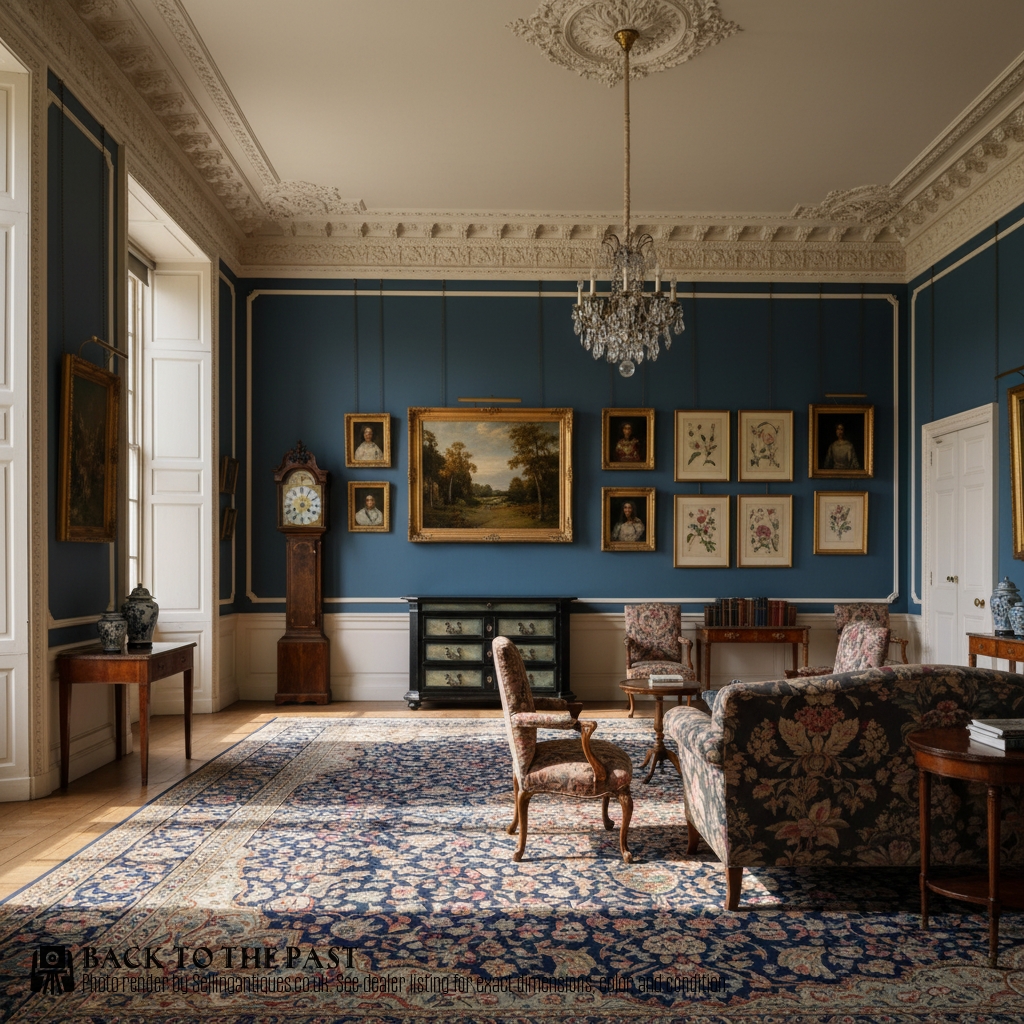
18th Century Painted Chest
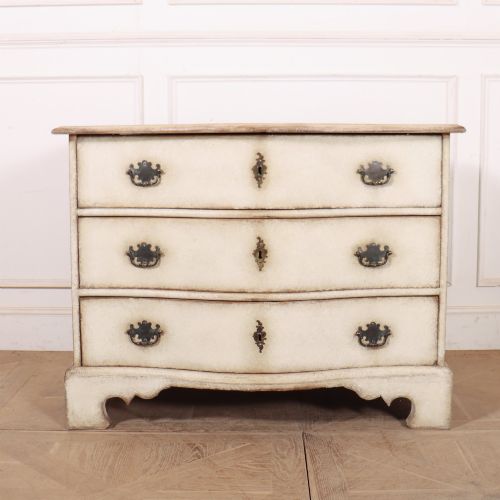
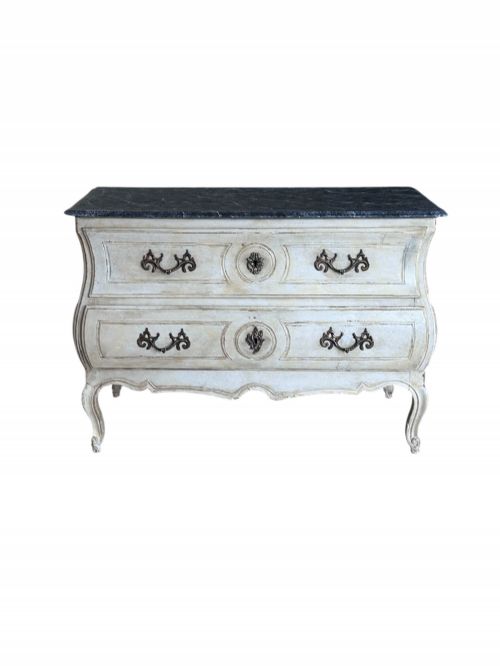
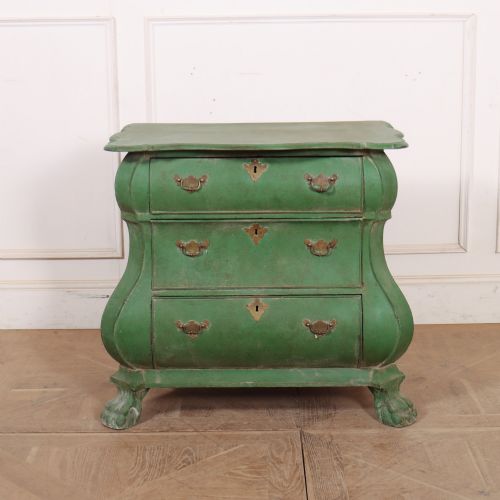
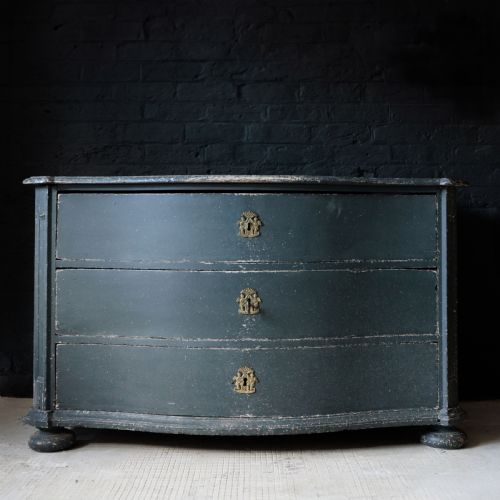
When you search for an 18th century painted chest, you encounter a diverse range of functional storage forms that span numerous regional styles. The selection frequently includes commodes, chests of drawers, trunks, and marriage coffers originating from English, French, Italian, Dutch, and Scandinavian workshops.
The pieces on this page heavily feature commodes and chests of drawers from the eighteenth century, alongside related forms such as cabinets, bureaux, and cassones. Regional varieties range from Swedish folk art trunks to Italian serpentine commodes and English mahogany examples with decorative painted finishes.
How They Were Made
Carpenters and cabinetmakers utilised primary construction timbers such as pine, oak, and mahogany, often shaping bodies into serpentine or bombe contours. Brass hardware frequently complemented the wooden structures, while marble tops occasionally appeared on Italian and continental commodes.
Surfaces received layers of paint, polychrome decoration, or gilding directly onto the wood, sometimes employing distressed finishes or original hand-painted motifs. This decorative skin transformed utilitarian storage into elaborate pieces of furniture suited to formal parlours and provincial homes alike.
One mid-century Swedish pine chest comes complete with a painted labyrinth design to confuse any midnight drawer-raiders.
What Varies in Quality
The standard of an 18th century painted chest depends heavily on the integrity of the original surface and the sophistication of the timber work. Pieces retaining their initial hand-painted decoration or genuine period polychrome finish sit firmly above those with later overpainting or heavy intervention.
Structural refinement also dictates quality, distinguishing fluid serpentine and bombe forms from simpler rectangular carcases. The choice of underlying wood, from humble pine to high-grade mahogany, alongside well-executed cabinet jointing, separates regional vernacular pieces from high-style workshop output.
The 18th Century Painted Chest Glossary
- Commode
- A low chest of drawers or cabinet originating in France, widely adopted across 18th-century Europe. These pieces often feature decorative painted finishes and serpentine fronts.
- Bombe
- A swelling, convex contour found on continental furniture sides and drawer fronts. This curved profile requires skilled woodworking to achieve.
- Serpentine
- A furniture front or top shaped with a concave centre flanked by two convex ends. It creates a flowing, undulating line characteristic of period commodes.
- Cassone
- A traditional Italian chest or coffer used for marriage or storage. They are frequently decorated with painted panels or gilt motifs.
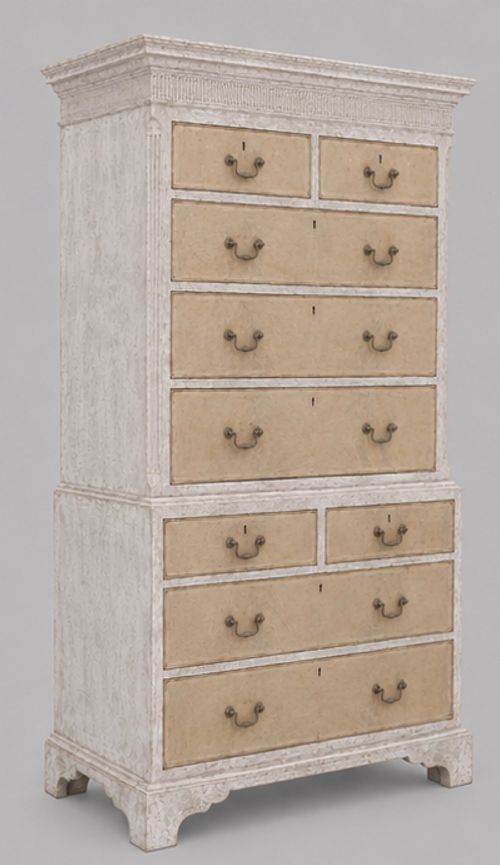
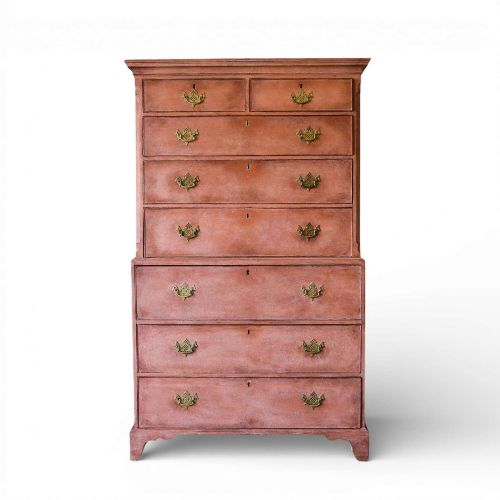
- Tallboy
- A tall chest of drawers formed by stacking one chest on top of another, often referred to as a chest on chest. These provide substantial vertical storage capacity.
18th Century Painted Chest: Frequently Asked Questions
Where were these painted chests made?
The pieces originate from workshops across Europe, including England, France, Italy, the Netherlands, and Scandinavian countries. Each region developed distinct cabinetmaking traditions and decorative painting styles.
Craftsmen utilised local timbers like pine and oak in the north, while southern makers occasionally combined painted wood with marble tops and elaborate gilt accents.
How do I care for a painted wooden surface?
Maintain these painted finishes by keeping pieces away from direct sunlight and fluctuating heat sources. Dust gently with a dry, soft cloth and avoid chemical polishes.
Protecting the original paint layer ensures the historical surface remains stable and retains its character over decades of domestic use.
What is the difference between a commode and a chest?
A commode generally refers to a low, decorative chest of drawers with continental origins, frequently featuring curved or serpentine profiles. Standard chests of drawers often follow simpler rectangular proportions.
Both forms served domestic storage needs, but commodes typically incorporated more ambitious decorative paint schemes and hardware.
Are these painted finishes original?
Surfaces vary between original period paint, later decorative layers, and distressed finishes applied to highlight the wood. Examining the wear patterns and pigment helps determine the age of the decoration.
Many listings specify original paint, while others record subsequent decorative campaigns or specialist surface treatments.