

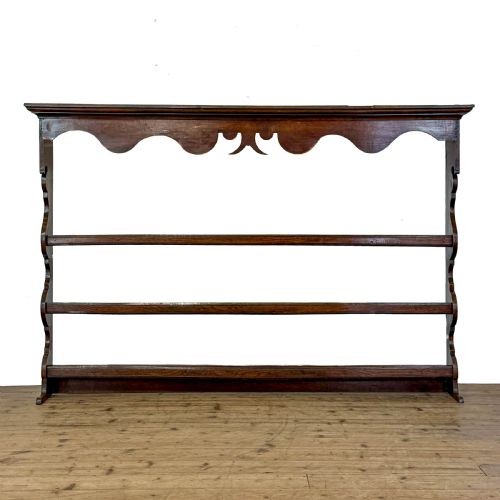


18th Century Open Dresser
An 18th century open dresser brings centuries of practical domestic history into a modern kitchen, offering generous display space and deep regional character.
18th Century Open Dresser
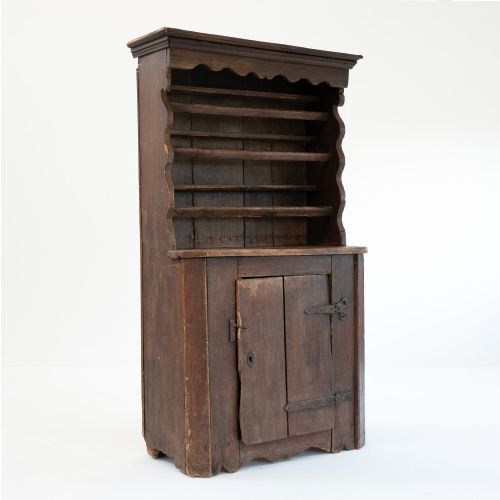
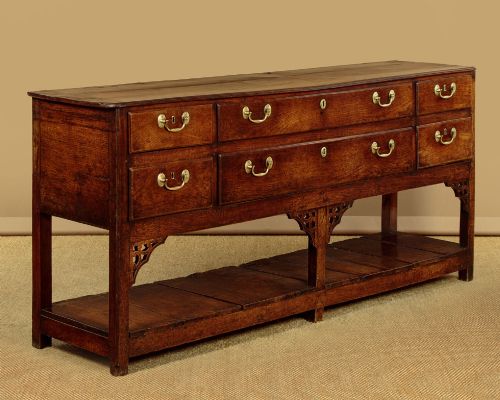
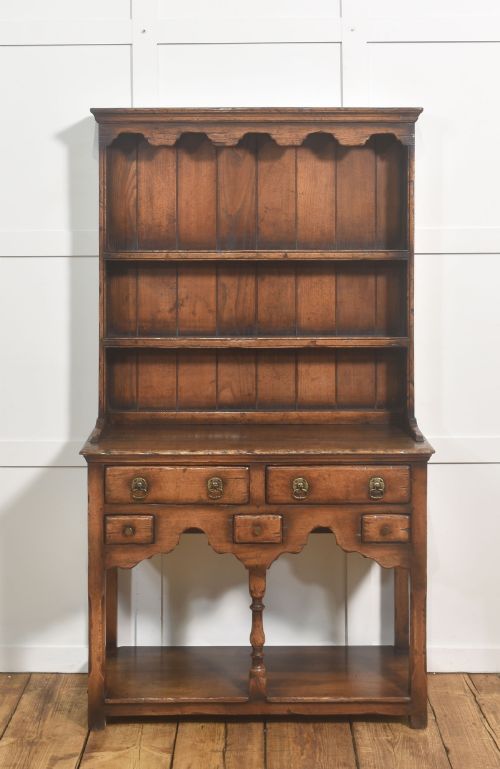
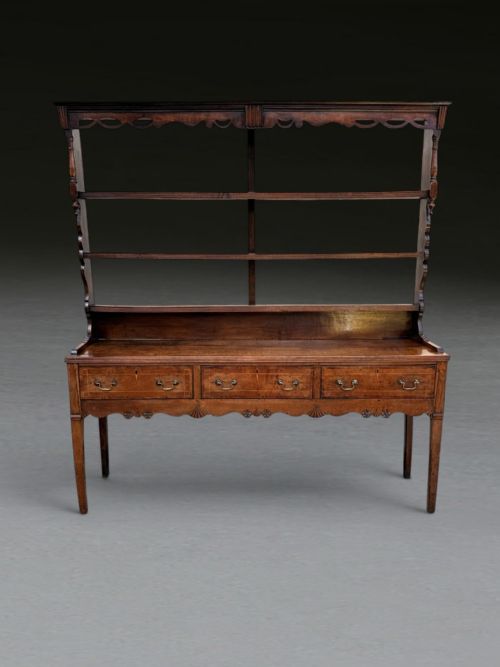
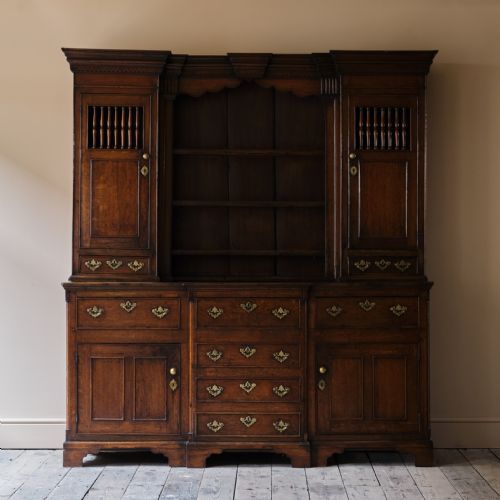
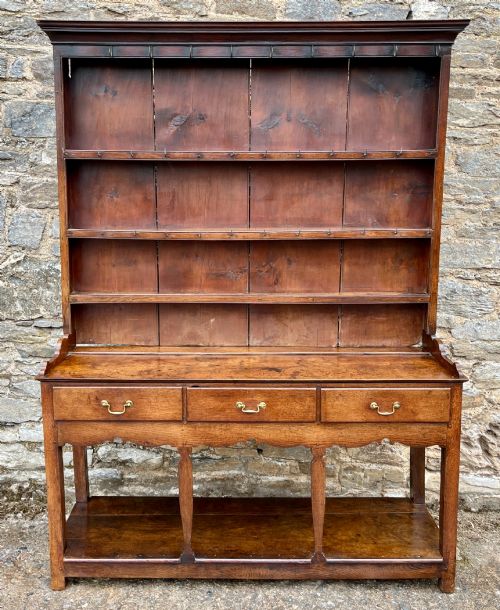
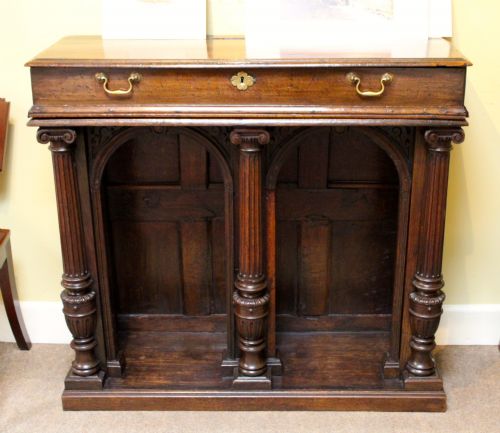
An 18th century open dresser combines a sturdy lower storage base with an upper plate rack for displaying ceramics and pewter. You will most frequently encounter solid oak examples hailing from regional traditions such as Welsh, Irish and English country workshops.
These pieces served as the hardworking centre of the historic kitchen, storing daily provisions and household crockery. Surviving specimens often display distinct regional variations, from potboard bases to specialised bread and cheese compartments.
Construction and materials
Joiners built these robust items primarily using native timbers like oak, supplemented occasionally by fruitwood, walnut, cherrywood, and pine for secondary parts. Panels were traditionally panelled and pegged by hand, utilising durable mortise and tenon joints that have endured generations of daily use.
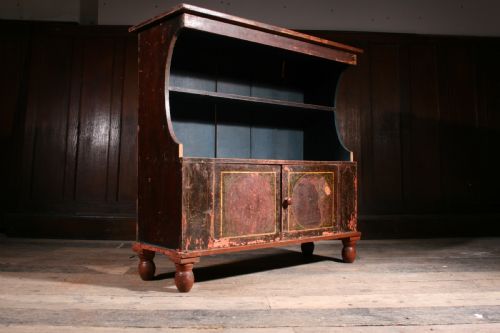
Hardware typically involved hand-forged iron or brass drop handles and hinges, while surfaces often retain early or original paint finishes, patinated wax, or plain scrubbed timber.
Certain historic Welsh dressers feature specialised compartments once reserved specifically for keeping bread and cheese secure from mice.
Evaluating craftsmanship and survival
Quality rests heavily on the integrity of the timber, the proportion of the base to the rack, and the survival of original surface treatments. Pieces retaining their matching original plate racks command greater interest than marriages of convenience assembled in later eras.
Proportions also dictate desirability, with smaller proportions or unusual regional configurations such as belly racks and potboards representing the higher end of the surviving range.
The 18th Century Open Dresser Glossary
- Potboard
- An open lower shelf built near the floor between the legs of a dresser base. Historically used for storing heavy pots and pans.
- Plate rack
- The upper shelving unit attached to or hung above the dresser base, designed with plate grooves to display ceramics upright.
- Potboard dresser
- A traditional dresser design featuring a low open platform base beneath the main drawers and cupboards.
- Belly rack
- A regional variation of dresser featuring a bulging or convex lower drawer arrangement.
- Patina
- The deep, lustrous surface sheen developed on wood through decades of handling, polishing, and natural oxidation.
18th Century Open Dresser: Frequently Asked Questions
What is an 18th century open dresser?
An 18th century open dresser is a traditional kitchen or dining room storage unit featuring a wooden base with drawers or cupboards and an open shelf rack above for plates.
These functional pieces evolved to hold household crockery and food provisions in everyday domestic settings.
How were dressers used historically?
Families utilised them for food preparation on the work surface and storage of tableware in the main living quarters of the home.
The open upper racks kept frequently used dishes visible and within easy reach during busy meal preparations.
How do I live with one today?
You can position an oak dresser in a modern kitchen or dining room to display ceramics, glassware, and cookbooks while utilising the lower drawers for daily storage.
Ensure the piece is secured safely to the wall, particularly given the height and weight of the upper plate rack.
How can I tell regional styles apart?
Regional differences often appear in the choice of native woods, such as Welsh oak or French walnut, and in specific structural details like potboards or shaped friezes.
Examining the construction methods and local vernacular design traits helps distinguish Welsh and English country pieces from continental examples.