
18th Century Oak Display
An 18th century oak display brings honest timber and centuries of utilitarian grace into a room, offering both storage and a stage for treasured possessions.
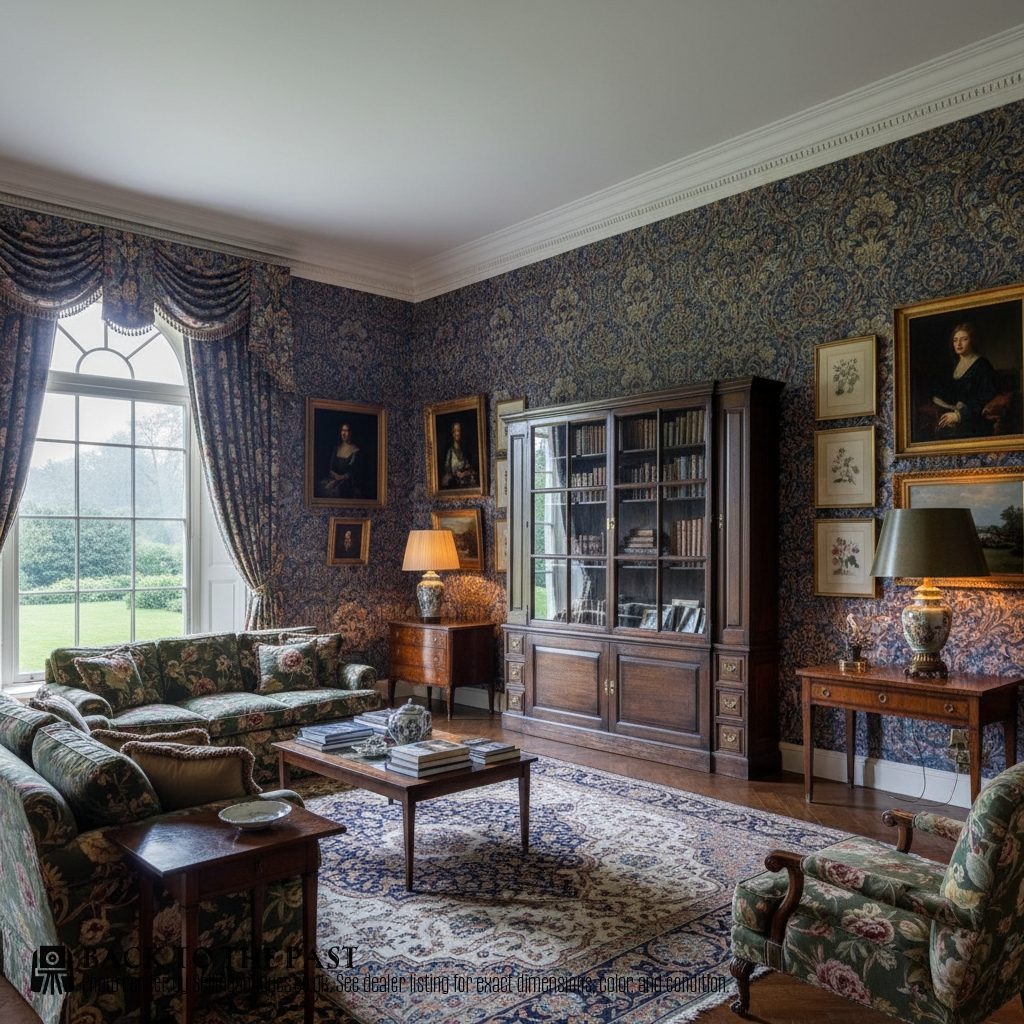
18th Century Oak Display
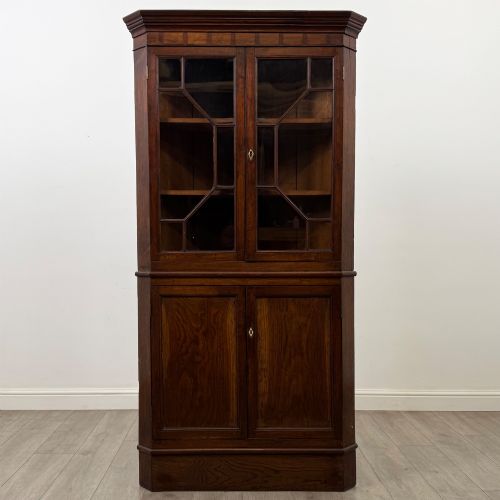
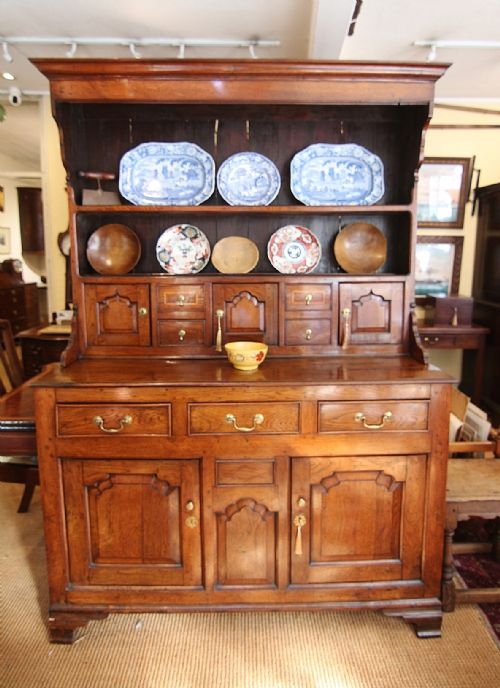
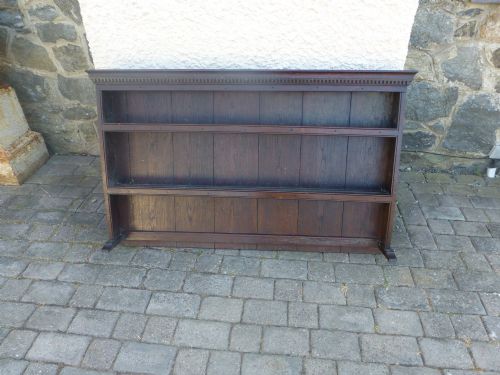
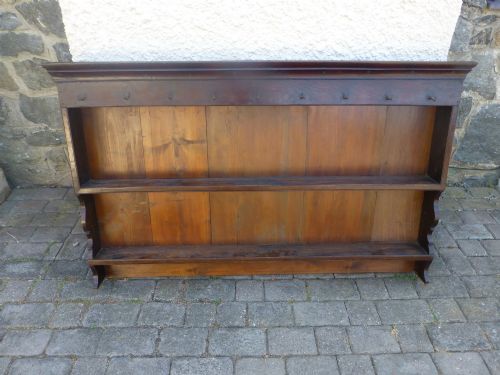
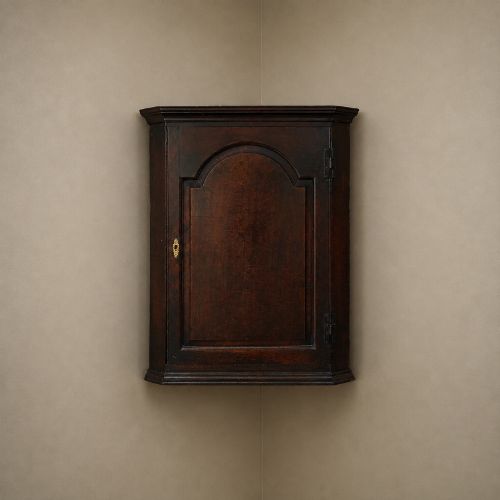
When you search for an 18th century oak display, you encounter substantial furniture designed to hold and exhibit domestic objects. These pieces range from Welsh dressers with plate racks to corner cupboards and glazed cabinets.
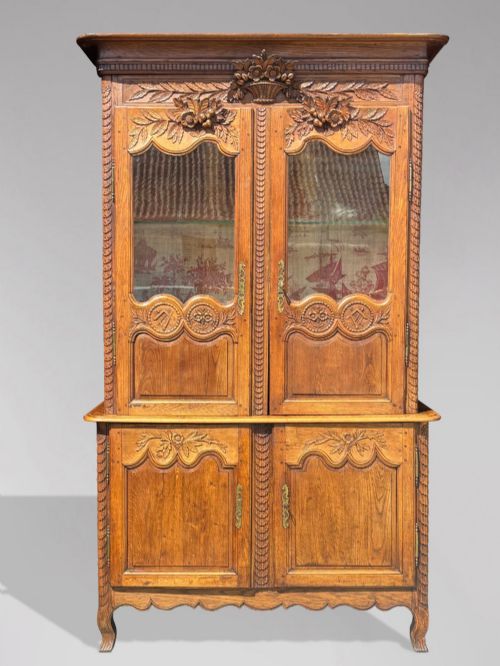
The versions most frequently met on this page combine sturdy oak construction with regional styles such as Georgian country, Welsh vernacular, and French provincial. They reflect the practical storage needs of period homes.
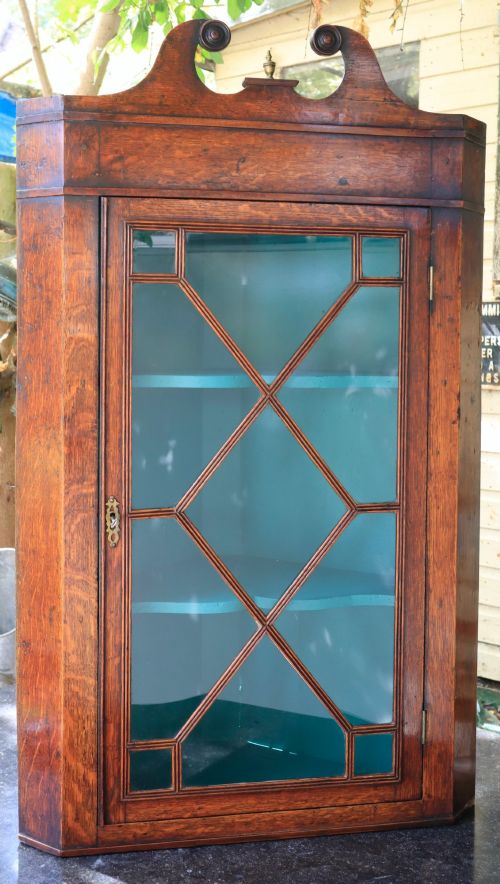
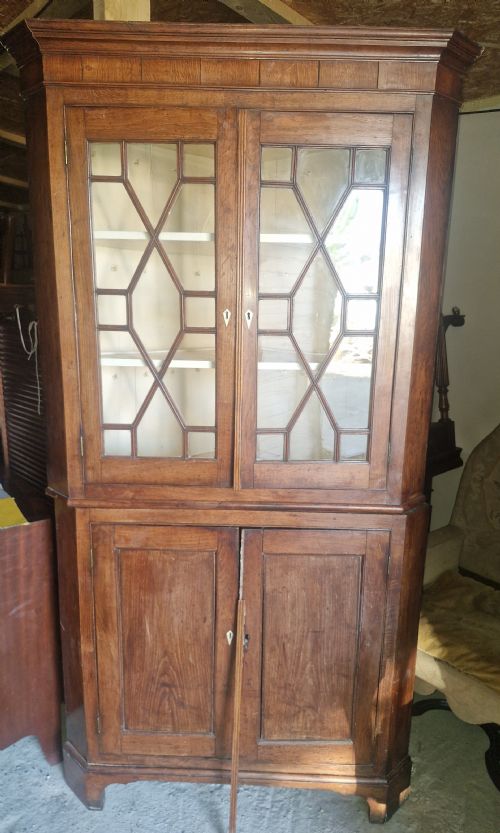
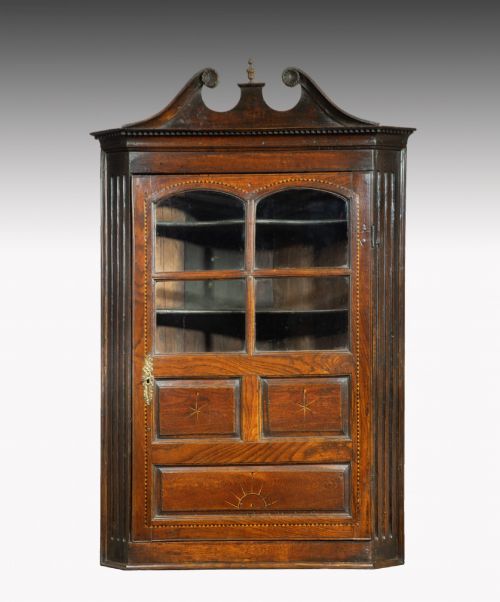
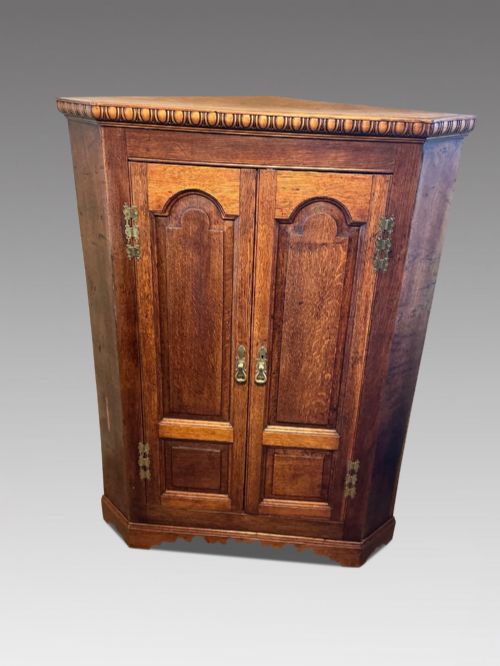
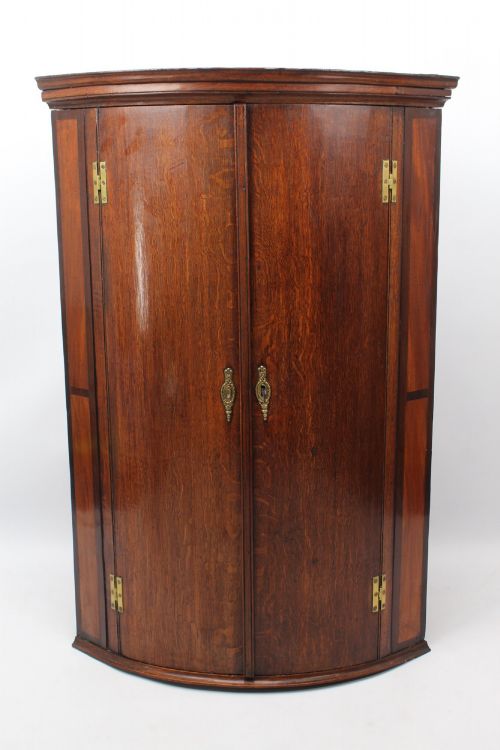
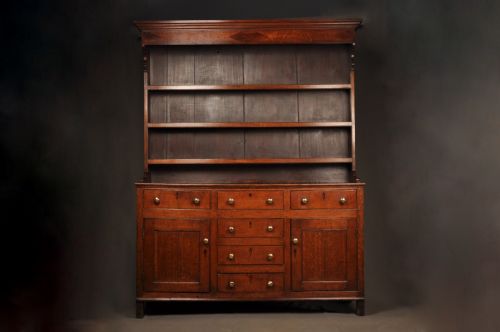
Corner cabinets and dressers predominate in the selection, utilising otherwise neglected wall space or serving as the main focal point of a dining space. Their forms vary from simple hanging cupboards to two-part floor-standing units.
Materials and construction
Makers relied primarily on solid oak, frequently augmented with secondary timbers like pine and accented with mahogany crossbanding or brass hardware. Glass panelling allows for the display function in cabinets and vitrines.
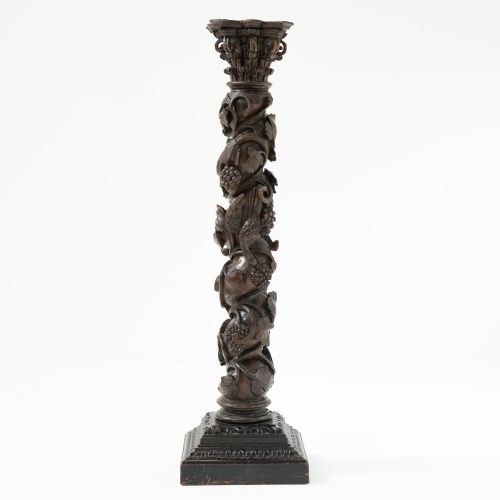
Joinery methods involve traditional panelled construction, geometric carvings, and occasional solomonic pedestal columns or Corinthian details. Surfaces often display the natural grain and warmth of timber developed over hundreds of years.
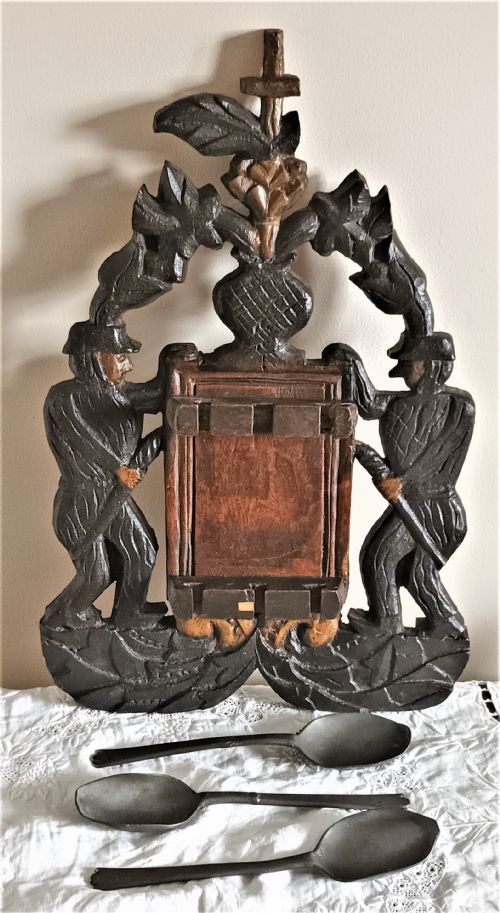
Several spoon racks even arrive with their original pewter trefid spoons still nestled in the carved slots.
Judgments of quality
Quality rests in the proportion of the piece, the depth of the timber's colour, and the integrity of the original construction. Pieces retain greater interest when hardware, racks, and glass panes survive intact from their period.
The 18th Century Oak Display Glossary
- Delft rack
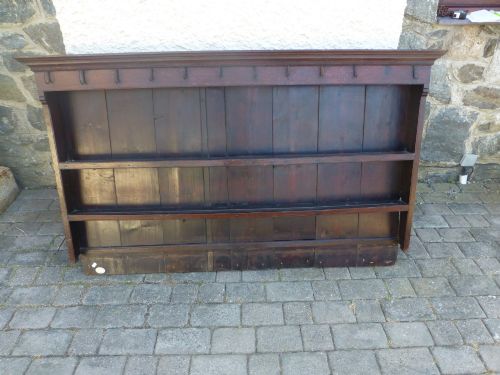
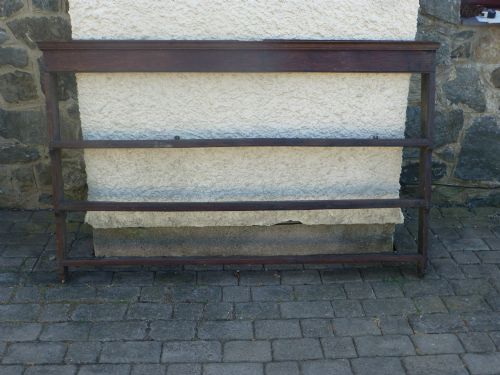
- Open wooden shelving mounted on a wall or atop a dresser to display plates and ceramics. These racks formed a central feature in period kitchens.
- Corner cupboard
- A triangular cabinet built to fit neatly into the corner of a room. They appear as hanging wall units or tall floor-standing pieces.
- Dressers and hutches
- Large storage furniture combining lower cupboards or drawers with upper display shelving. They served as the primary working surface and storage in country houses.
- Crossbanding
- A decorative border technique where veneer strips are laid running perpendicular to the main grain. This adds a refined frame to doors and drawer fronts.
- Buffet deux corps
- A large two-part cupboard originating in France, featuring a lower cabinet and an upper display section. They provide substantial capacity for household storage.
18th Century Oak Display: Frequently Asked Questions
How do I date an oak display cabinet?
Dating relies upon examining construction methods, timber patination, and stylistic clues like brass hardware or carved details. Hand-cut joints and original glass panes offer reliable indicators of period origin.
Regional variations also help narrow the timeframe, as specific styles of joinery and proportions shifted between the early and late periods.
Where should I place a corner cupboard?
These cabinets suit underutilised corners in dining rooms, living spaces, or hallways, turning awkward angles into functional storage. Hanging models mount directly to walls at eye level.
Floor-standing versions anchor a corner while providing both enclosed lower storage and display shelves above for ceramics or glassware.
Can I use a dresser for daily storage?
These pieces function well for everyday use, offering deep cupboards, drawers, and open plate racks for modern tableware. Their sturdy oak construction withstands daily interaction.
Care should be taken to balance weight on antique shelving and protect timber surfaces from excessive moisture or direct heat sources.