


18th Century Oak Bookcase
An 18th century oak bookcase brings substantial timber architecture and practical shelving into a room.
18th Century Oak Bookcase
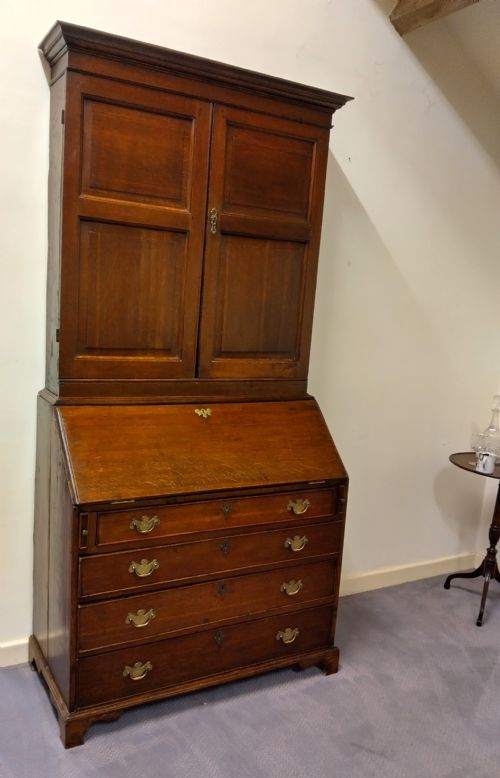
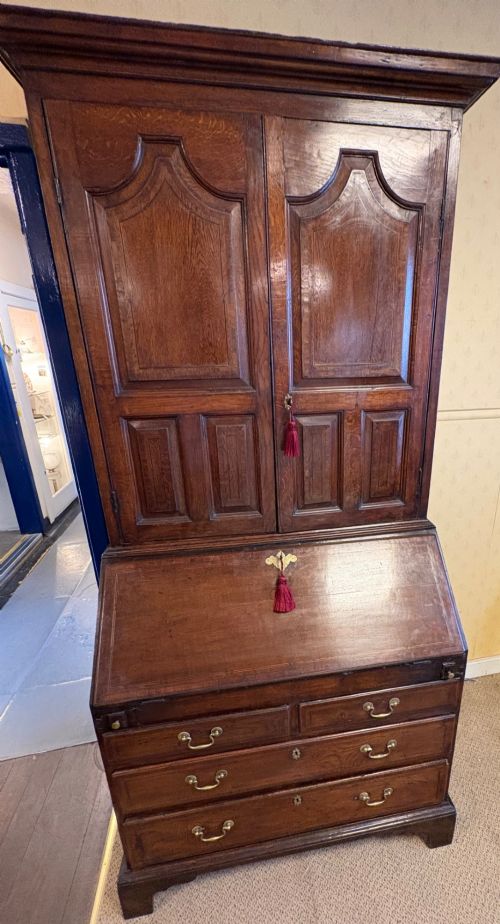
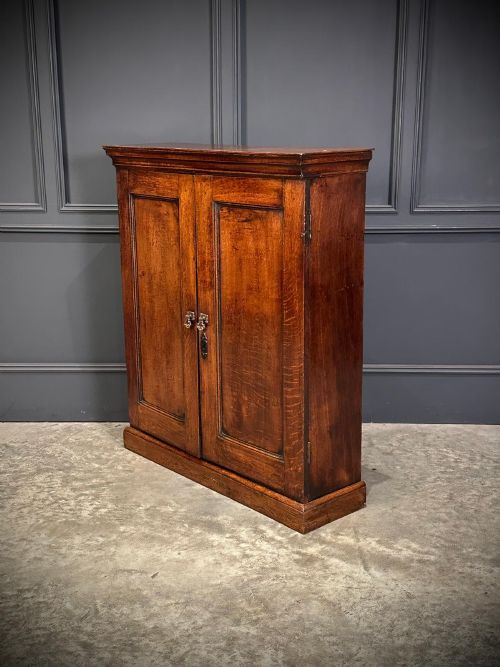
An 18th century oak bookcase combines heavy timber storage with display shelving across regional English, Welsh, and continental workshops. These pieces frequently take the form of bureau bookcases and two-part cabinets that integrate a sloping desk or lower cupboard with upper shelving.
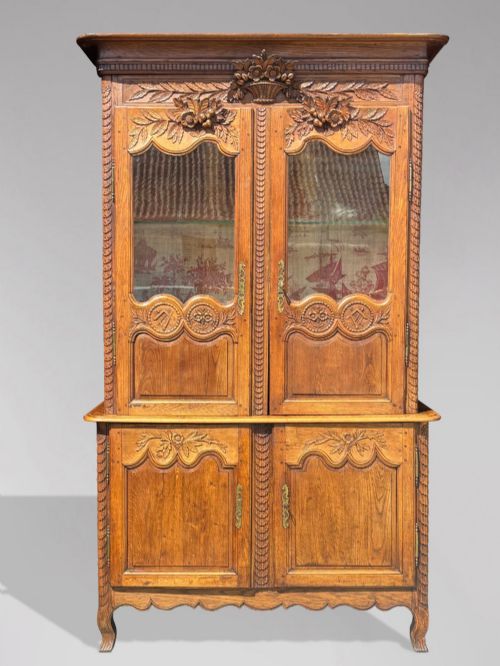
The evidence shows forms ranging from Georgian bureau bookcases to French provincial buffets, Dutch glazed display cabinets, and Scandinavian carved pieces. Bureau bookcases with fitted stepped interiors dominate the selection alongside taller architectural and architectural-influenced cupboards.
Makers and makers' workshops across Britain and Europe utilised native hardwoods to build two-part constructions intended for holding books, papers, and household goods. These items survive in finishes spanning natural timber to bleached and limed oak.
How they were made
Construction relies on solid oak timbers joined with traditional framing and panel methods suited to heavy two-part forms. Regional workshops employed iron and brass hardware, including hinges, locks, and handles, to secure doors and drop-front desks.
Glazing appears in upper cabinet doors to protect books while permitting visibility, occasionally supported by wood inlay and carved surface decoration. Surfaces range from unadorned timber to stripped, bleached, limed, or polished finishes.
Materials across this selection include solid oak, brass, iron, glass, fabric, and wood inlay, with finishes spanning bleached and limed oak.
What varies in quality
Quality rests upon the architectural proportion of the two-part carcass and the integration of fitted interior drawers and pigeonholes. Pieces with intact original glass, harmonious timber grain, and well-executed regional carving sit at the higher end of the range.
Adaptations and alterations, such as television conversions or later surface stripping, alter the original integrity of the piece. The depth of the carved detailing and the sophistication of bureau stepped interiors distinguish standard provincial joinery from finer workshop production.
The 18th Century Oak Bookcase Glossary
- Bureau bookcase
- A hybrid furniture form combining a sloping fall-front writing desk over drawers with an upper enclosed bookcase or cabinet section.
- Bureau cabinet
- An alternative term for a desk-and-bookcase combination, often featuring panelled or glazed upper doors.
- Secretaire
- A writing cabinet or desk compartment integrated into a larger press cupboard or bookcase.
- Vitrine
- A glass-fronted display cabinet designed for showing books, porcelain, or curiosities.
- Buffet deux corps
- A large two-part cupboard or cabinet structure originating in France, comprising a lower base and an upper section.
18th Century Oak Bookcase: Frequently Asked Questions
What is a bureau bookcase?
A bureau bookcase is a dual-purpose item featuring a lower section with a sloping desk flap that opens for writing, sitting above drawers or cupboards. The upper half provides enclosed shelving behind panelled or glass doors.
These pieces were designed to hold library collections while offering a private workspace for correspondence and household administration.
How do I identify a Georgian bookcase?
Georgian bookcases are characterised by architectural proportions, symmetrical arrangement of drawers and shelving, and substantial oak construction. Details such as bracket feet, cornice mouldings, and raised panels help signal this period.
Many examples incorporate fitted interior compartments with small drawers and pigeonholes hidden behind the desk flap.
Where were these bookcases made?
The pieces originate from workshops across England, Wales, and continental Europe, including France, the Netherlands, and Scandinavia. Regional styles reflect local timber availability and vernacular carving traditions.
English and Welsh pieces frequently utilise native oak, while continental examples display distinct regional mouldings and carving motifs.
How do I clean oak furniture?
Oak furniture benefits from gentle dusting with a soft cloth and occasional treatment with appropriate wax to nourish the timber. Avoid using modern silicone polishes that build up on antique surfaces.
Keeping the wood away from direct heat sources and dramatic humidity changes protects the joints and prevents timber splitting.