


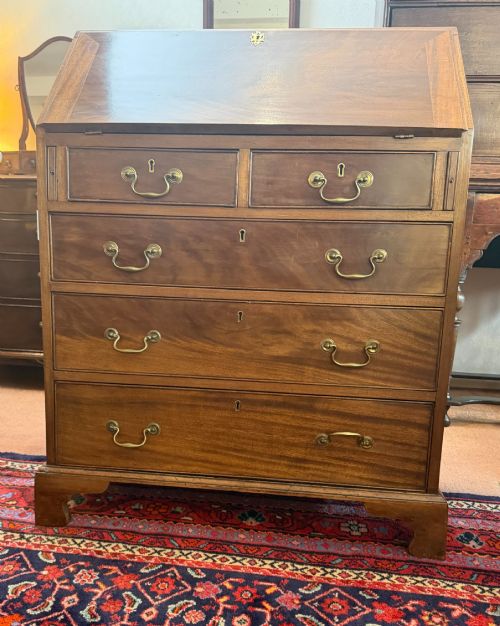
18th Century Mahogany Drawers
When searching for 18th century mahogany drawers, you encounter durable case furniture shaped by Georgian cabinetmakers using dense tropical hardwoods.
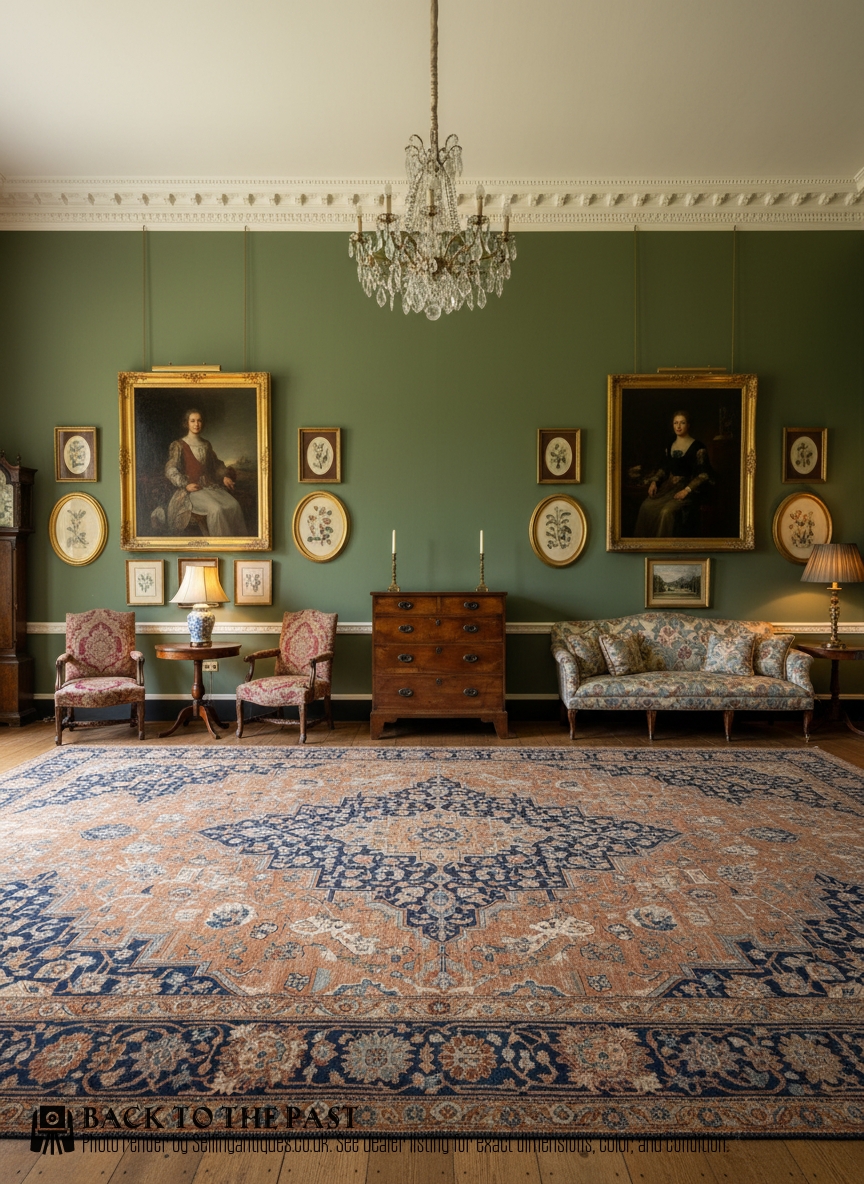
18th Century Mahogany Drawers
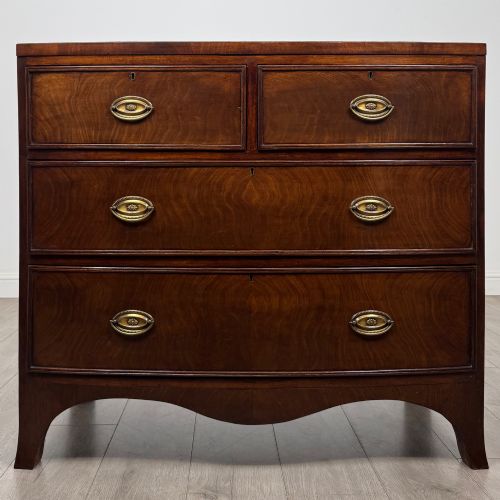
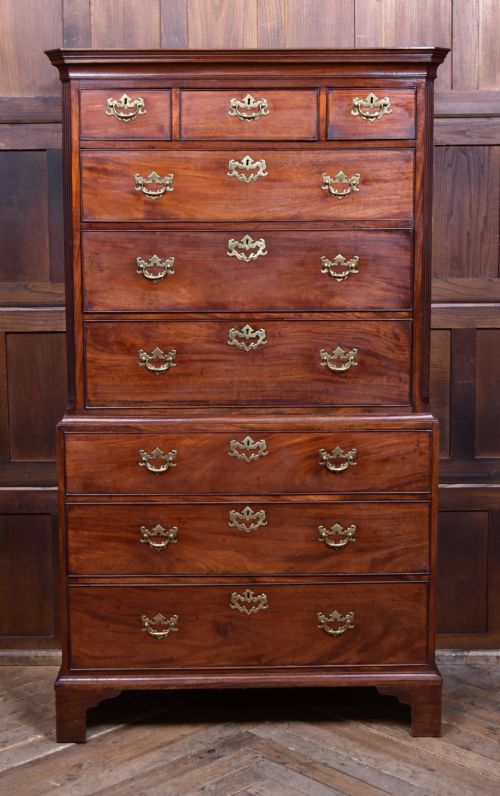
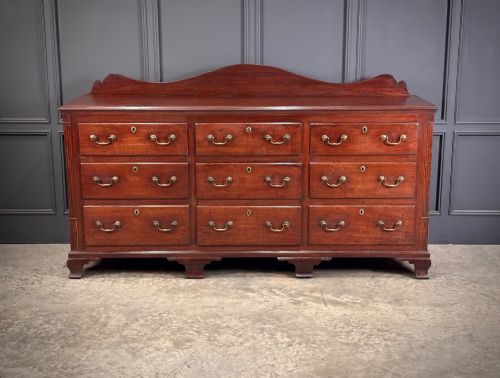
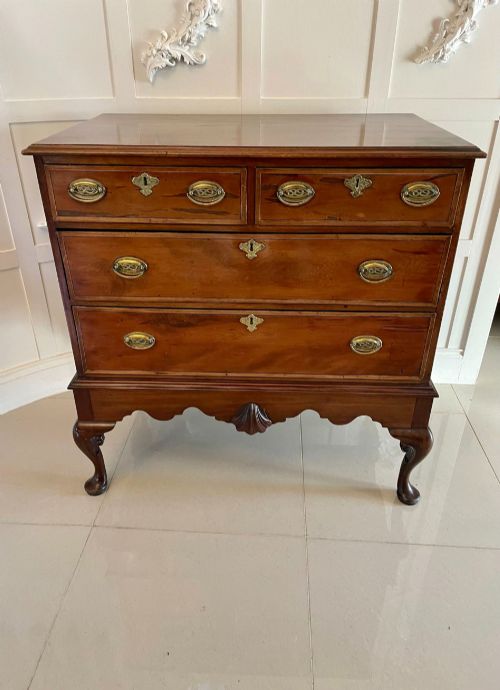
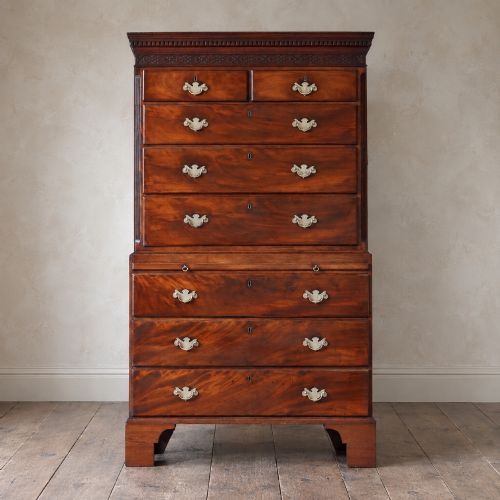
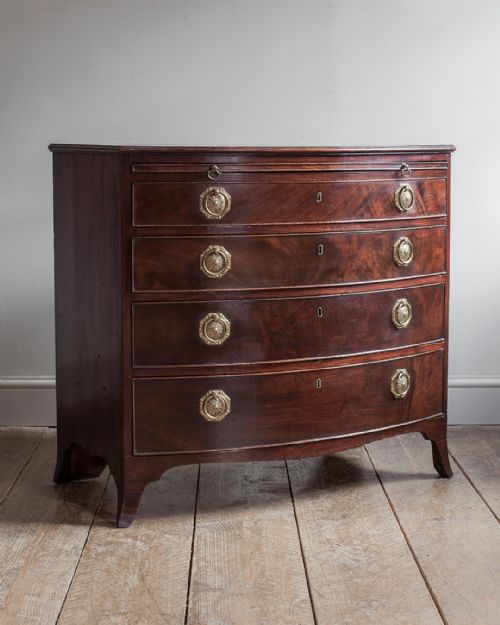
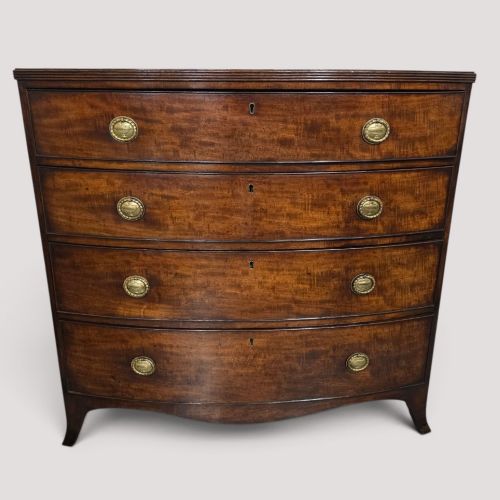
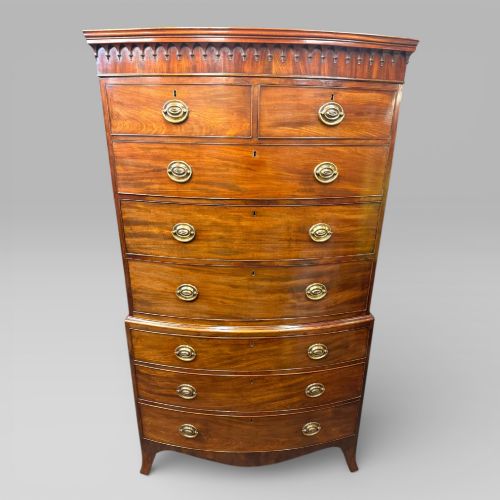
18th century mahogany drawers primarily comprise chests of drawers, tallboys, and bureaus built during the Georgian and George III periods. These storage items range from compact bow-front pieces to large serpentine and chest-on-chest forms.
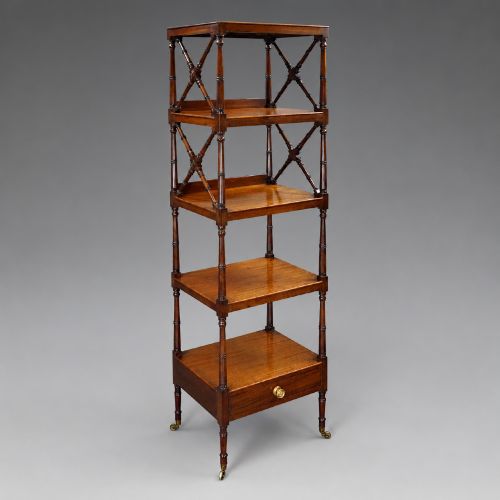
The pieces on this page originate predominantly from British workshops, alongside continental European examples featuring marquetry details. Forms extend beyond standard chests to include side tables, lowboys, and bookcases incorporating functional writing compartments.
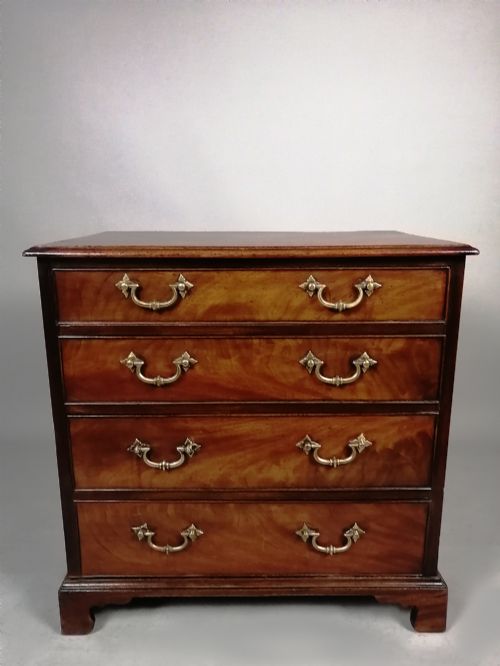
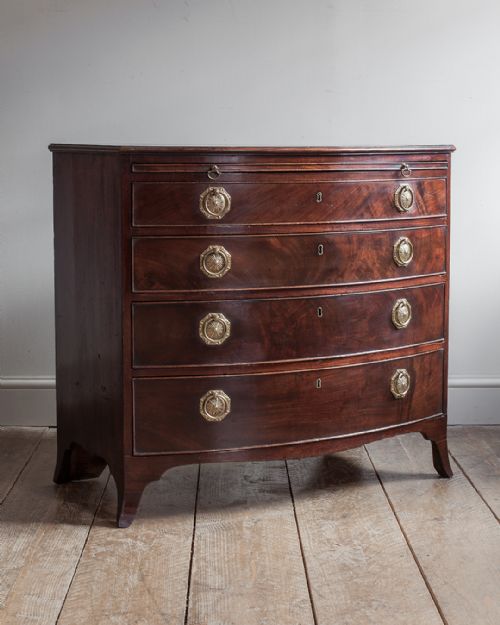
Buyers frequently encounter variations such as small four-height chests and pieces fitted with pull-out brushing slides. Secondary woods like oak and pine commonly support the internal drawer structures beneath the visible mahogany exteriors.
How They Were Made
Cabinetmakers constructed these pieces using solid and veneered mahogany over robust internal frameworks of oak or deal. Joinery relied on precision dovetailing for drawer construction, ensuring durability across decades of daily use.
Hardware such as brass handles and escutcheons secured the drawer fronts, while secondary materials like satinwood, ebony, and glass occasionally provided contrasting inlay or mirror elements. Surfaces were finished with traditional hand-rubbed polishes that enhanced the natural grain patterns.
Secretaries hide tiny hidden compartments behind miniature drawers, built for tucking away love letters and stray coins.
What Varies in Quality
The selection of timber significantly influences the grade of a piece, with highly figured mahogany veneers commanding greater attention than plain stock. The crispness of carved mouldings and the precision of dovetail joints further separate standard production from finer cabinet work.
Original brass hardware and undisturbed internal drawer linings preserve the integrity of a piece. Structural complexity, such as undulating serpentine fronts or layered chest-on-chest designs, demands advanced joinery skills that elevate the standard of manufacture.
J Moorcroft
The 18th Century Mahogany Drawers Glossary
- Chest on Chest
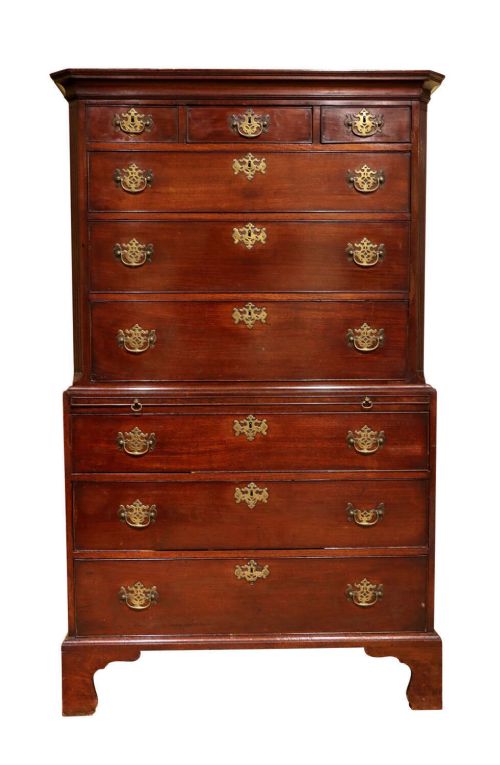
- A tall storage unit formed by stacking a smaller chest of drawers directly onto a wider lower section, also known as a tallboy. This configuration maximises vertical storage space.
- Brushing Slide
- A pull-out wooden board integrated above the top drawers, historically utilised for folding clothes or writing brief notes. It slides flush into the cabinet frame when not in use.
- Serpentine Front
- A curved furniture front featuring a convex central section flanked by two concave curves. This contour requires skilled shaping of solid timber or veneer.
- Crossbanding
- A decorative border technique where thin strips of wood veneer are applied perpendicular to the grain of the primary surface. This frames panels on drawer fronts and table tops.
- Bureau
- A desk featuring a hinged sloping front that folds down to reveal a writing surface and internal pigeonholes. Drawers are positioned beneath this writing compartment.
18th Century Mahogany Drawers: Frequently Asked Questions
What is a brushing slide?
A brushing slide is a pull-out wooden board integrated just beneath the top surface or upper drawers of a chest. Cabinetmakers designed these auxiliary shelves to provide a temporary flat surface for folding garments or grooming.
When not needed, the slide pushes flush into the case frame behind the moulding. Its presence often indicates a piece made for a bedroom or dressing room.
How do I spot a chest on chest?
A chest on chest, frequently termed a tallboy, consists of two separate cabinetry sections stacked vertically. The upper chest is narrower and sits securely upon a deeper lower base.
This form allowed makers to combine substantial clothing storage with a compact footprint on the floor. The joinery between the two halves requires precise alignment of the cornice and waist mouldings.
Why use oak inside mahogany drawers?
Cabinetmakers selected oak for drawer linings and internal framing because of its strength and stability. Oak resisted warping better than mahogany when fitted inside enclosed carcass structures.
This concealed use of secondary timber helped control production costs while maintaining structural rigidity. Dovetailed oak sides ensure the moving parts endure repeated pulling and pushing.