


18th Century Library Seat
An 18th century library seat brings period gravitas to a reading room through solid mahogany frames and upholstered comfort.

18th Century Library Seat
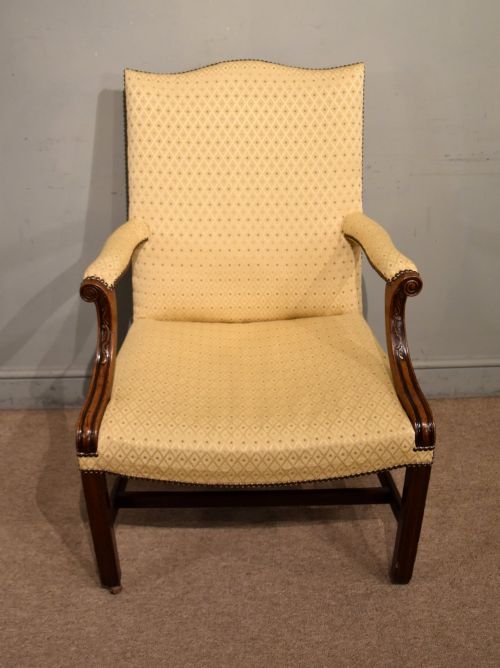
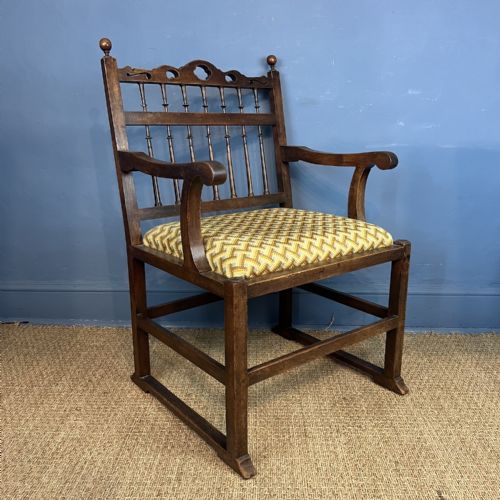
An 18th century library seat comprises sturdy armchairs designed for study spaces, encompassing forms such as the Gainsborough chair, wing back chairs, and corner chairs. These pieces originate primarily from the Georgian and George III periods, reflecting the domestic architecture and scholarly pursuits of the era.
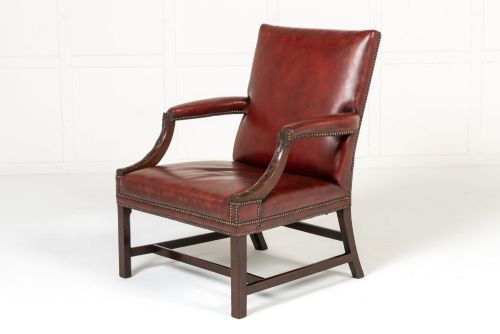
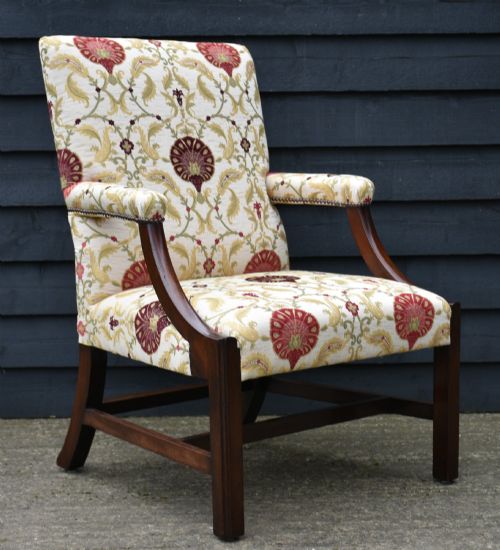
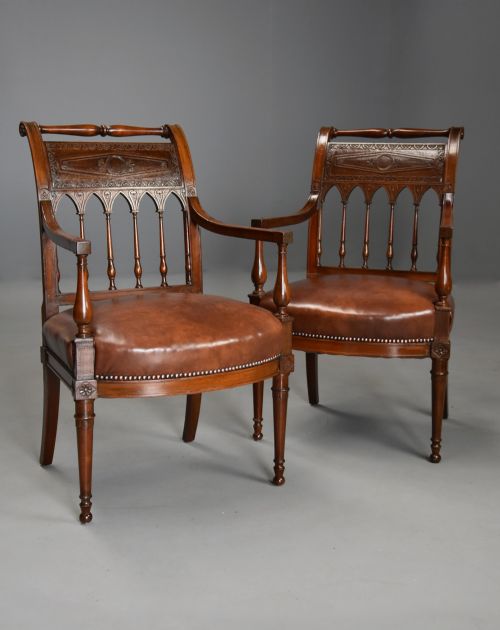
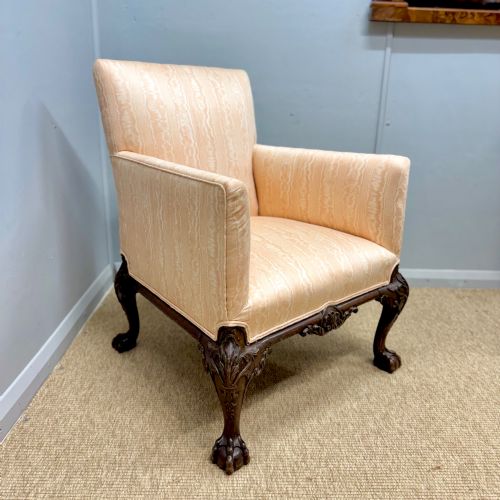
The version most commonly met on this page is the mahogany library armchair, often featuring padded arms and upholstered seats. Makers of the period utilised substantial timbers to create stable seating suitable for long hours of reading.
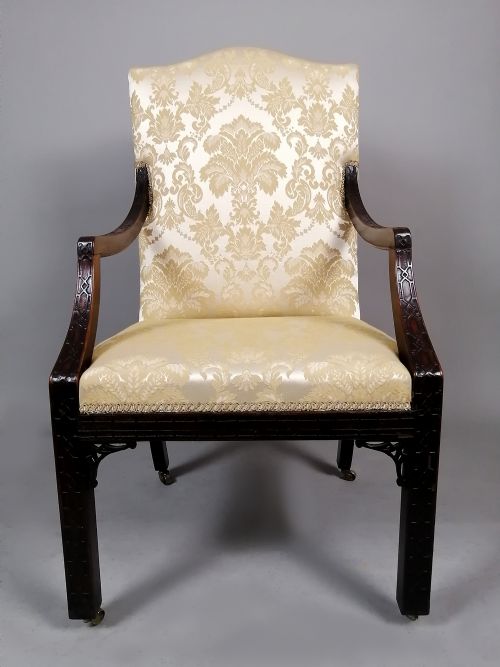
The selection includes distinct stylistic variations such as Chinese Chippendale and Gothic Chippendale influences alongside French Directoire walnut open armchairs. Such diversity demonstrates how English cabinet makers incorporated foreign motifs and classical lines into domestic study furniture.
How they were made
Carpenters constructed the primary frames of these chairs using dense timbers such as mahogany and walnut, ensuring structural integrity for weight-bearing components like cabriole legs. Joinery relied on traditional mortise and tenon methods to secure the arms, legs, and backrests without modern adhesives.
Upholstery techniques involved stuffing horsehair or similar traditional fillings into fabric, leather, or damask coverings, secured in place with metal studs. These materials provided the necessary firmness and durability for daily use in a gentleman's library or study.
Listings feature mahogany and walnut as the primary woods, spanning the 18th Century, Georgian, and 1800 periods in armchair forms.
What varies in quality
The distinction between standard examples and the finest pieces lies in the crispness of the carving upon the woodwork and the selection of figured timber. Superior specimens display deeply sculpted cabriole legs and meticulously joined frames that have endured centuries without losing their rigidity.
Upholstery presentation and the retention of original framing timber contribute significantly to a piece's standing. Chairs that maintain their structural timber without excessive replacement parts represent the higher tier of period craftsmanship.
Chippendale·Hepplewhite
The 18th Century Library Seat Glossary
- Gainsborough chair
- A type of open-armed armchair with a wide seat and padded back, popular during the mid-Georgian period. It was designed specifically for reading and writing desks.
- Cabriole leg
- A furniture leg that curves outward at the knee and tapers inward toward the ankle, often ending in a pad or claw foot. This form derives from classical Chinese and ancient Greek designs.
- Damask
- A reversible figured fabric traditionally woven in silk, wool, or linen, used for high-end upholstery. Its patterns are created through warp and weft weave variations.
- Wing chair
- An armchair with side panels attached to the back, designed to shield the sitter from drafts. These panels also served to trap heat from a fireplace.
18th Century Library Seat: Frequently Asked Questions
How do I identify a Georgian library chair?
Georgian library chairs are identified by dense mahogany or walnut construction, classic joinery, and specific stylistic markers such as hipped cabriole legs. They often showcase period upholstery fabrics like leather or damask.
Examining the underside reveals the construction methods and wood ageing characteristic of the eighteenth century.
Where were these chairs used?
These seats were placed in private libraries, studies, and reading rooms of grand English houses. They provided stable yet comfortable seating for gentlemen managing estates or pursuing scholarship.
Their robust frames suited rooms dedicated to quiet contemplation and book storage.
How do I care for antique upholstery?
Antique upholstery requires gentle cleaning methods suitable for historical fabrics like damask, leather, or traditional textiles. Avoiding direct sunlight prevents the fading of natural dyes.
Regular dusting keeps abrasive particles from settling into the weave of the fabric or damaging the wooden frame.