


18th Century Kneehole Cupboard Desk
An 18th century kneehole cupboard desk offers compact writing space and concealed drawer arrangements tailored for period interiors.
18th Century Kneehole Cupboard Desk
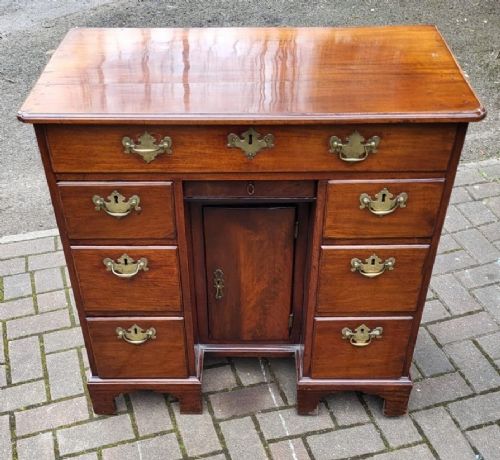
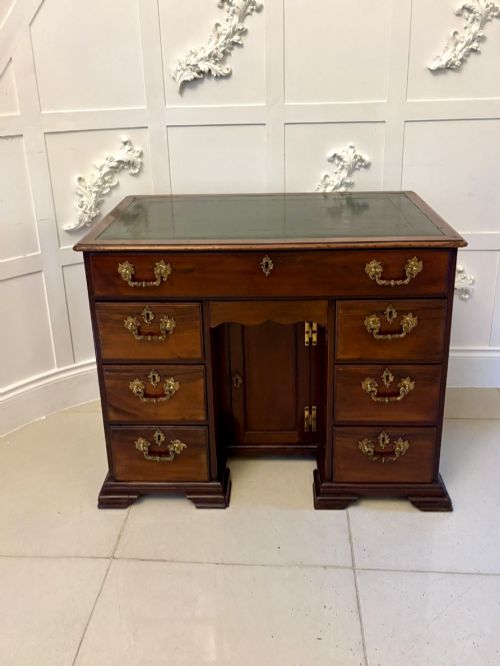
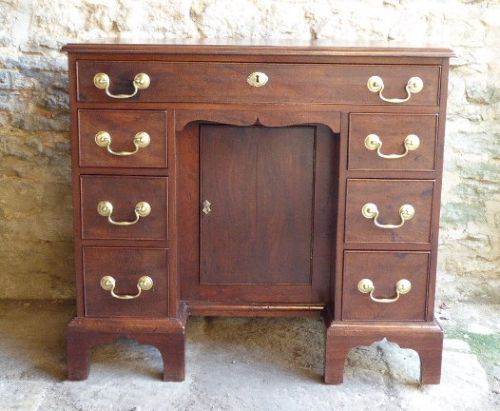
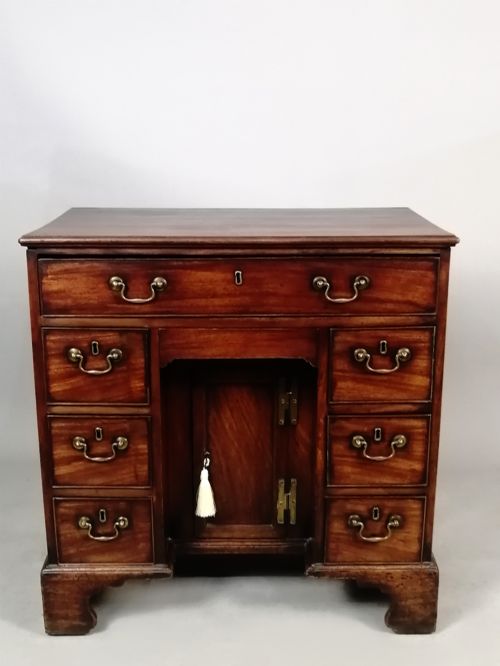
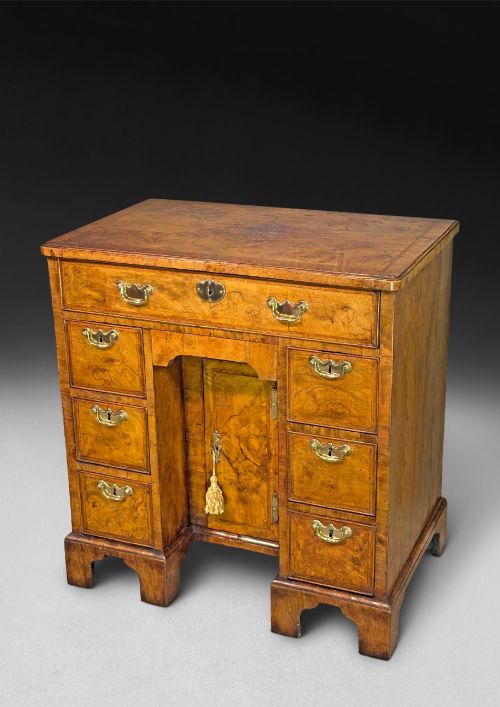
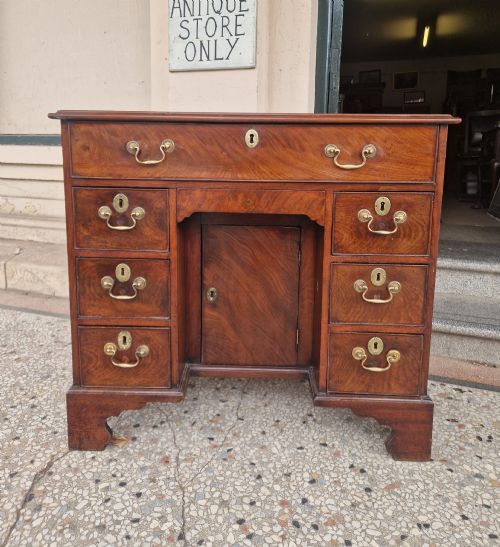
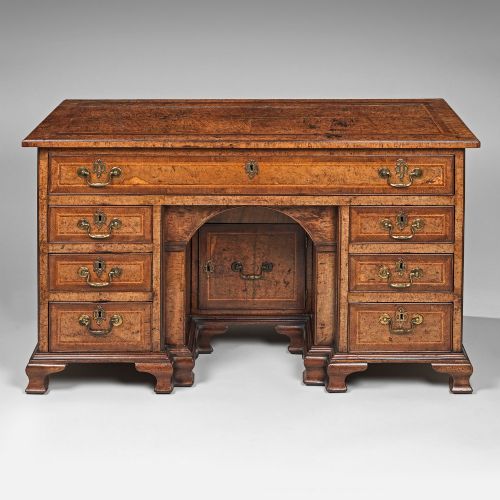
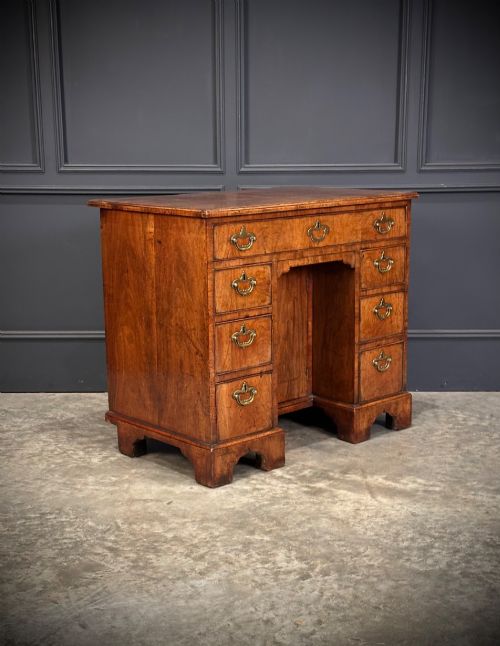
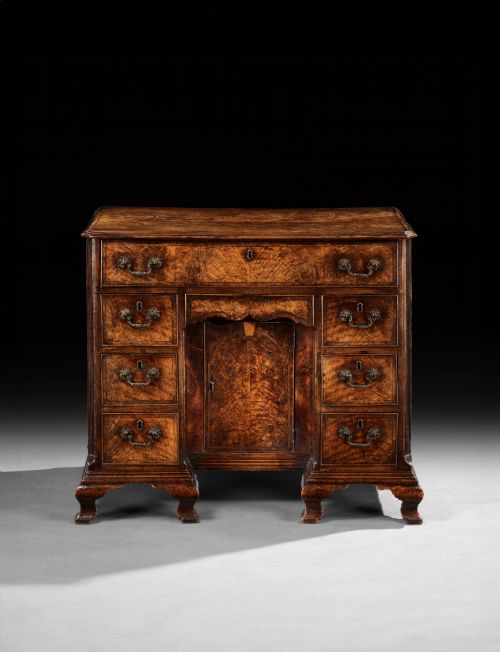
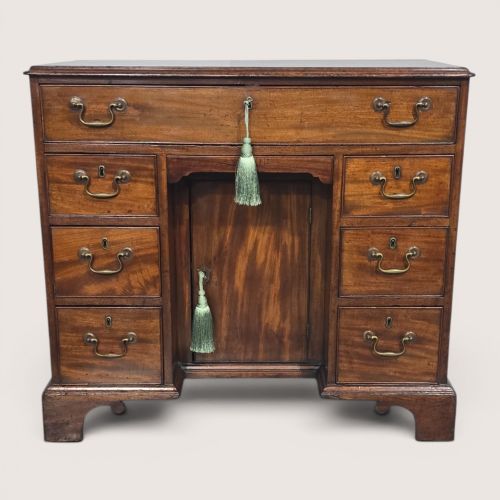
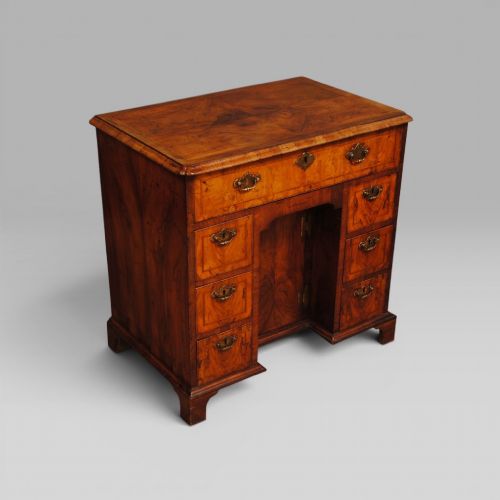
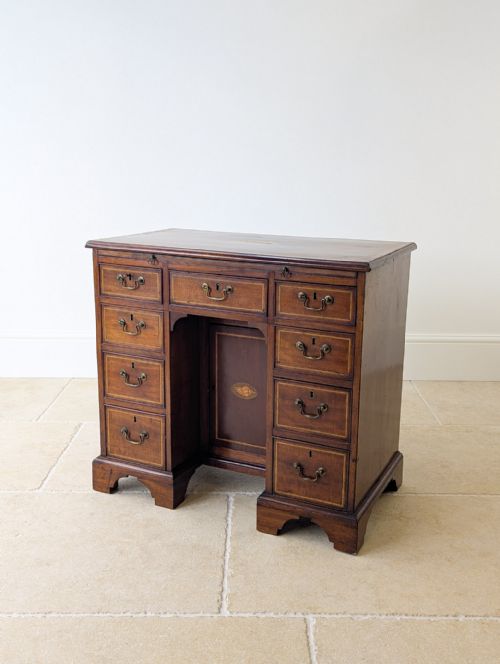
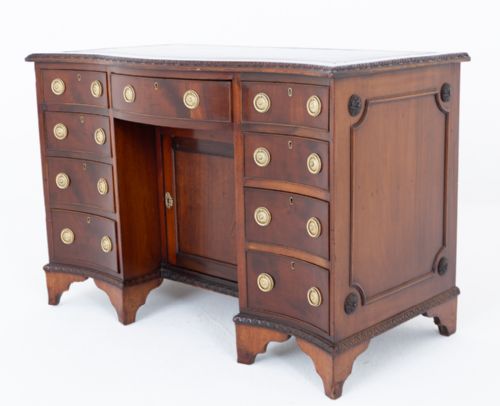
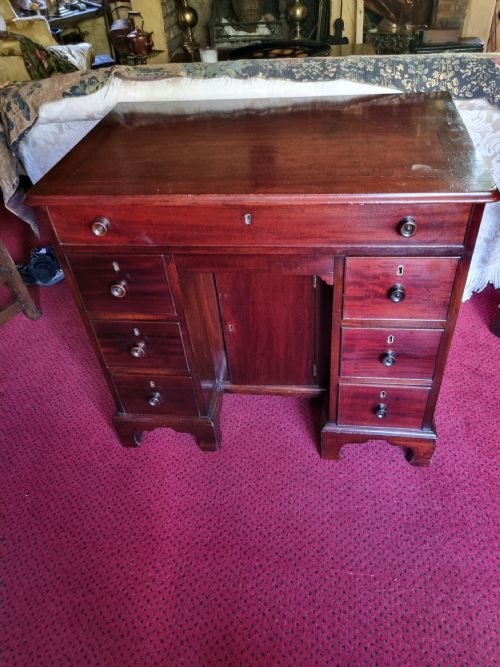
An 18th century kneehole cupboard desk combines a recessed central cupboard with flanking banks of small drawers beneath a writing surface. The pieces on this page span the 1700s through the Georgian era, with later examples stretching into the nineteenth century.
Makers constructed these forms in compact proportions often referred to as dressing tables or writing tables. Small dimensions and diminutive sizes appear frequently among the surviving pieces.
The layout typically incorporates walnut and mahogany timbers, sometimes designated as bureau desks or pedestal writing desks. Queen Anne, George I, George II, and George III styles dominate the stylistic progression.
Materials and construction
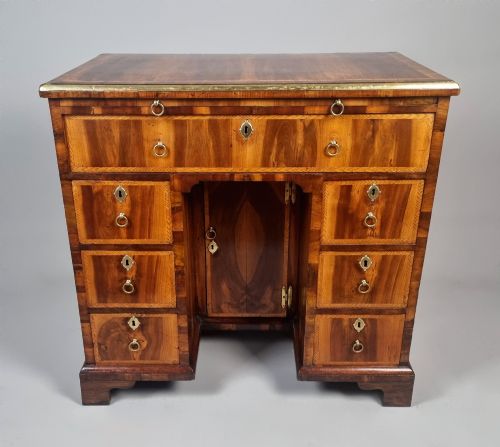
Cabinetmakers utilised dense hardwoods such as mahogany, oak, and walnut for the primary carcases, often applying figured veneers like burr walnut, burr elm, and curl mahogany to the exterior surfaces.
Detailing includes featherbanding and brass hardware to accent the drawer fronts and central cupboard doors. Selected pieces integrate fitted desk interiors and original keys.
18th Century Kneehole Cupboard Desk Retail Price Guide 2026
Typical asking prices for 18th century kneehole cupboard desk among the pieces listed under this phrase on Sellingantiques today, from the lower quarter to the upper quarter. They describe what is for sale here now, not the wider market.
Listings feature woods including mahogany, oak, walnut, burr elm, and satinwood across the Georgian and later periods.
Timber selection and execution
The choice of primary timber and decorative veneer dictates visual depth, ranging from plain mahogany boards to highly figured burr elm, fiddleback walnut, and satinwood. Finer examples display meticulous grain matching across the drawer tiers and cupboard doors.
Proportion and scale distinguish finer workshops, with diminutive or serpentine formats demanding greater joinery skill. The presence of original brass hardware and untouched fitted interiors further separates standard production from exceptional pieces.
Grendy
The 18th Century Kneehole Cupboard Desk Glossary
- Kneehole desk
- A compact writing table featuring a recessed central space flanked by pedestals of drawers, frequently housing a small cupboard beneath the work surface.
- Featherbanding
- A decorative inlay technique utilising small strips of veneer arranged in a herringbone pattern around the perimeter of drawer fronts.
- Burr walnut
- Timber harvested from the gnarled growth of a walnut tree, yielding complex, swirling grain patterns highly prized for cabinet veneers.
- Fiddleback walnut
- Wood grain exhibiting undulating ripples that catch the light similarly to the back of a violin.
- Serpentine
- A curved outline featuring a convex centre flanked by concave bends, seen on select advanced desk profiles.
18th Century Kneehole Cupboard Desk: Frequently Asked Questions
What is an 18th century kneehole cupboard desk?
It is a compact writing table featuring a central recessed cupboard enclosed by small drawers on either side. These pieces served dual purposes as writing desks and dressing tables in period homes.
The design prioritised storage within a small footprint, making them suitable for parlours and private chambers.
How do I identify a George II kneehole desk?
George II examples often utilise rich walnut timbers, sometimes featuring burr veneers or featherbanded drawer borders. Proportions remain formal and structured, reflecting the cabinetmaking standards of the mid-eighteenth century.
Drawer configurations typically include a long top drawer above the central kneehole cupboard.
Were these desks used for writing or dressing?
Historical records and surviving forms indicate they fulfilled both functions. The kneehole arrangement accommodated a seated writer or someone using the surface for grooming.
Fitted interiors often contained compartments suitable for papers, inkwells, or toilet accessories.
What woods were used for these desks?
Mahogany and walnut form the primary structural and surface materials across most surviving examples. Cabinetmakers also incorporated oak for secondary framing and interior drawer linings.
Exotic veneers such as burr elm, satinwood, and fiddleback walnut appear on higher-status commissions.
How do I care for a walnut kneehole desk?
Keep the antique timber away from direct heat sources and strong sunlight to prevent the veneers from drying and splitting. Regular dusting with a dry, soft cloth maintains the polished surface.
Apply traditional wax sparingly only when the wood appears dry to preserve the original finish.