

18th Century Highboy Chest
When you want an 18th century highboy chest, you are choosing a commanding storage piece built to hold linen and clothes off the floor.
18th Century Highboy Chest
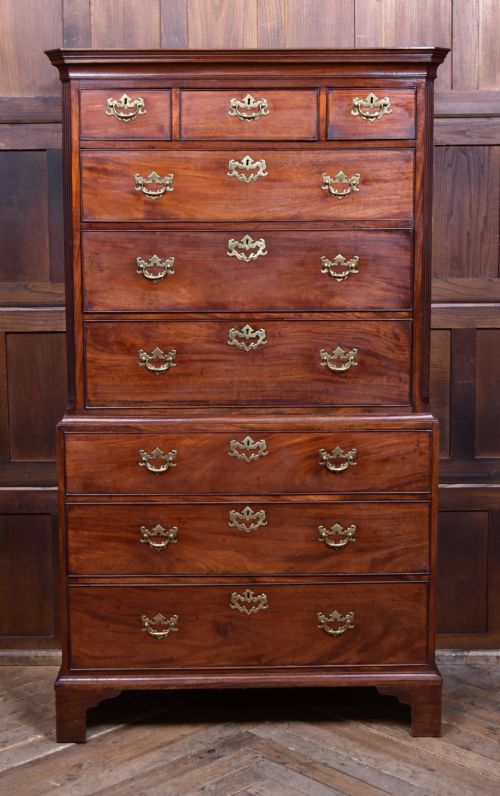
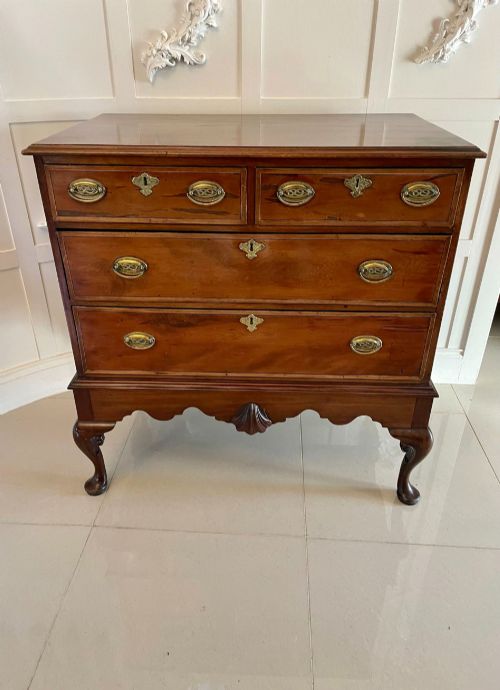
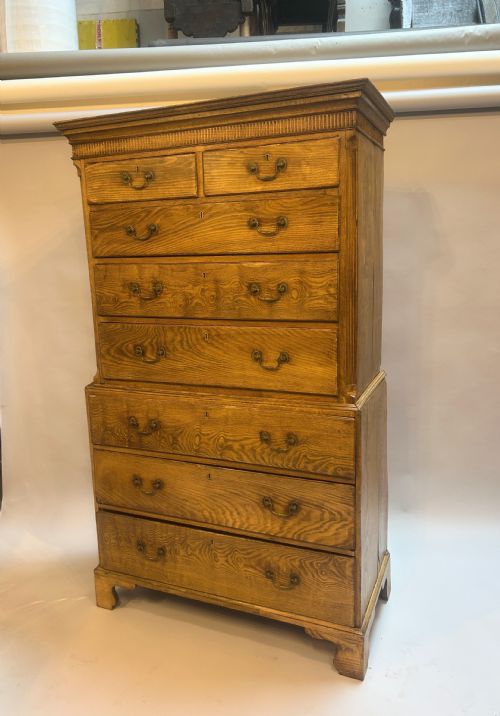
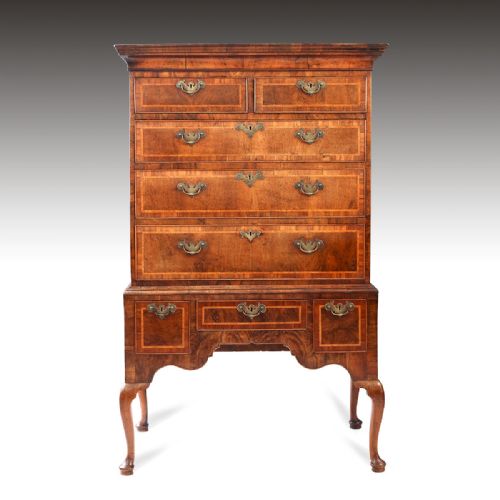
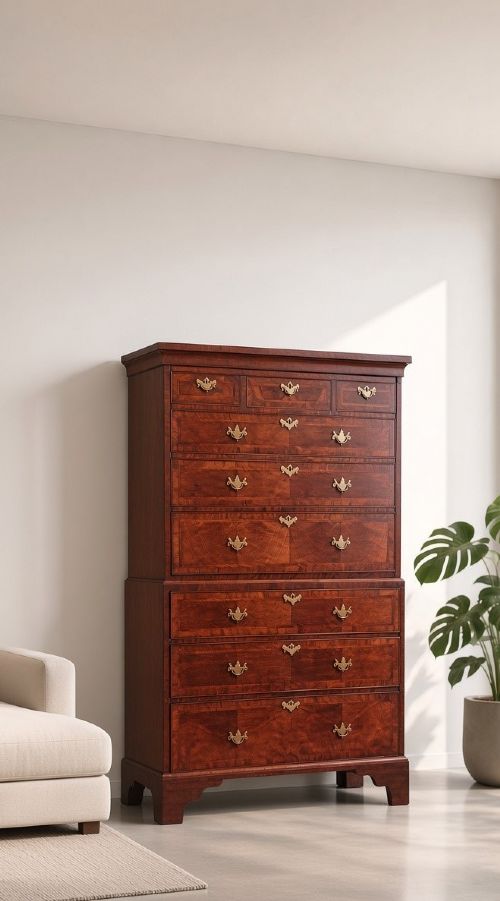
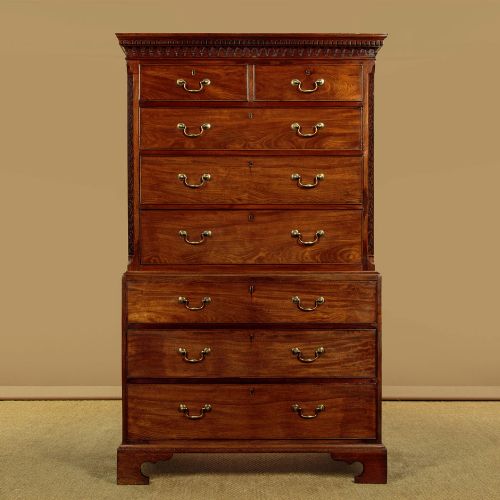
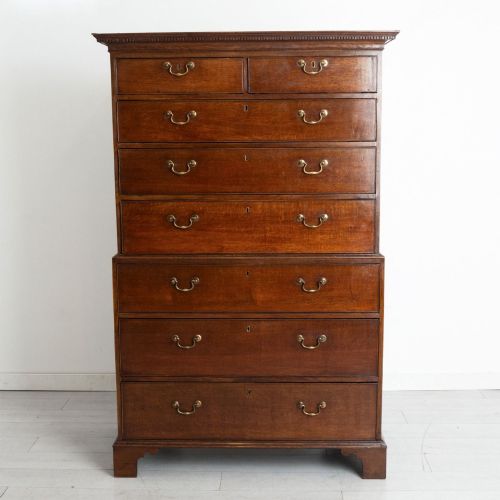
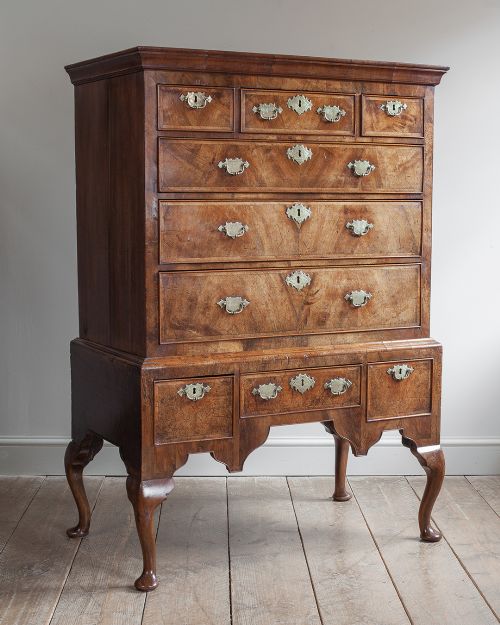
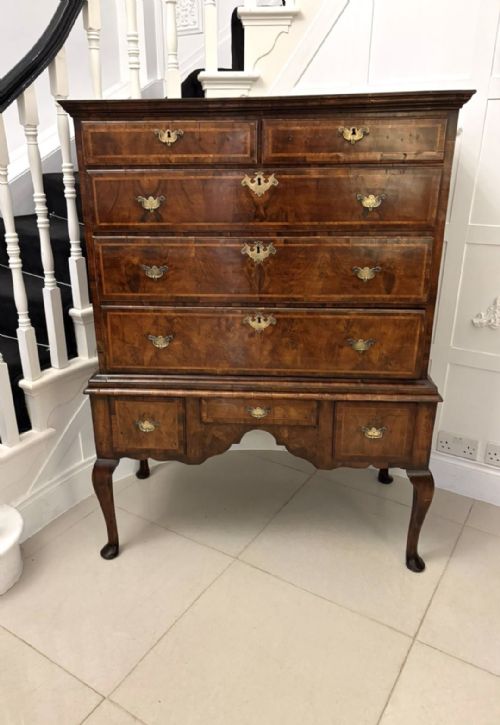
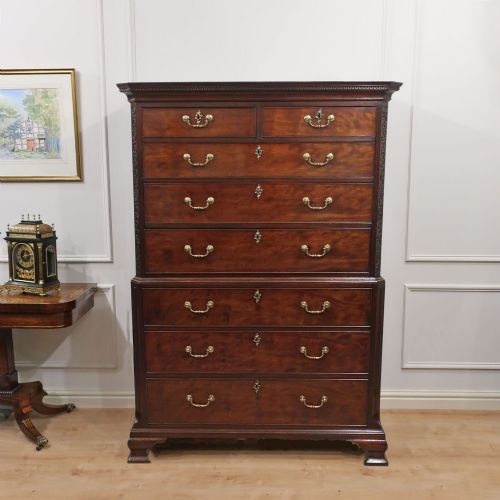
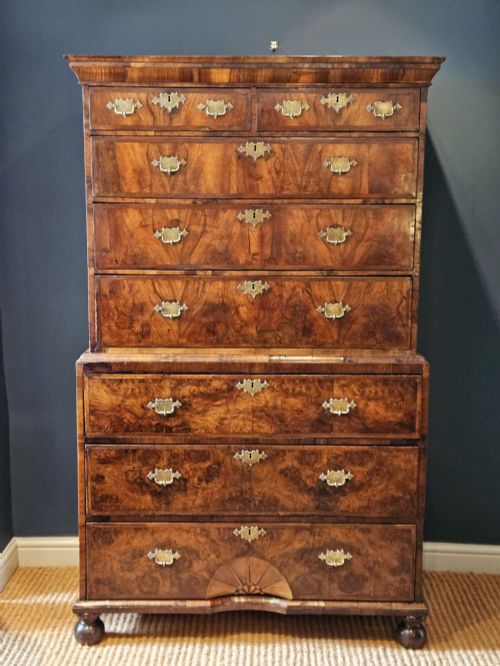
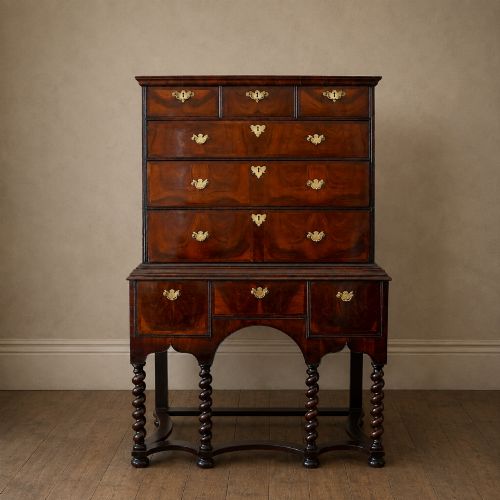
An 18th century highboy chest typically combines a lower stand or table base with an upper chest of drawers, or stacks one large chest directly upon another to create a tall vertical silhouette. These pieces appear across periods such as Queen Anne, George I, George II, and George III, utilising formats often called tallboys, chests on stands, or chests on chests.
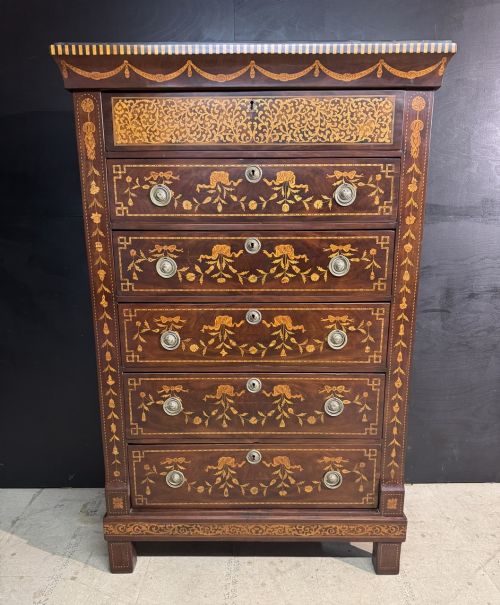
The objects seen span multiple centuries and stylistic revivals, though the core of the selection remains anchored in Georgian and 18th century craftsmanship. Alongside tall stacked forms, buyers encounter specialised variations including secretaire models fitted with writing drawers and Dutch marquetry designs decorated with detailed inlay.
Design and Finish
Quality rests heavily on the choice of timber figure, such as highly patterned burr walnut or rich figured elm, paired with the preservation of original patination. Pieces retaining their original brass handles and distinct proportions stand apart from altered examples.
The listings combine walnut, mahogany, oak, elm, and fruitwood across Georgian and Queen Anne periods.
The 18th Century Highboy Chest Glossary
- Highboy chest
- A tall chest of drawers consisting of an upper section mounted on a lower stand or a second larger chest. This configuration maximises vertical storage capacity while maintaining a raised profile.
- Tallboy
- An alternative term for a chest on chest or a tall chest of drawers. The design provides deep storage across multiple tiers.
- Chest on stand
- A chest of drawers elevated on a separate frame or table base, often featuring longer legs and shaped aprons. This form is characteristic of late 17th and early 18th century cabinetmaking.
- Walnut veneer
- A thin layer of figured walnut timber applied to a secondary wood carcass to create decorative patterned surfaces. It is frequently associated with Queen Anne and early Georgian furniture.
- Marquetry
- Inlaid patterns formed from different woods, metals, or other materials applied to the surface of a carcase. Dutch examples often display floral and pictorial designs.
18th Century Highboy Chest: Frequently Asked Questions
What is the difference between a highboy and a tallboy?
A highboy specifically refers to a chest of drawers sitting on a high separate stand with legs, whereas a tallboy generally describes one large chest stacked directly on top of another.
Both forms serve the same primary function of providing extensive vertical drawer storage within a compact floor footprint.
How do I identify a Queen Anne period chest?
Queen Anne pieces frequently feature walnut or burr walnut veneers, subtle crossbanding, and elevated stands with shaped aprons. The proportions tend to emphasise graceful curves rather than the stricter classical lines found later in the century.
Cabinetmakers of this era focused on figured wood grains and retained characteristic elements like brass drop handles on small backplates.
Were these chests made in oak as well as mahogany?
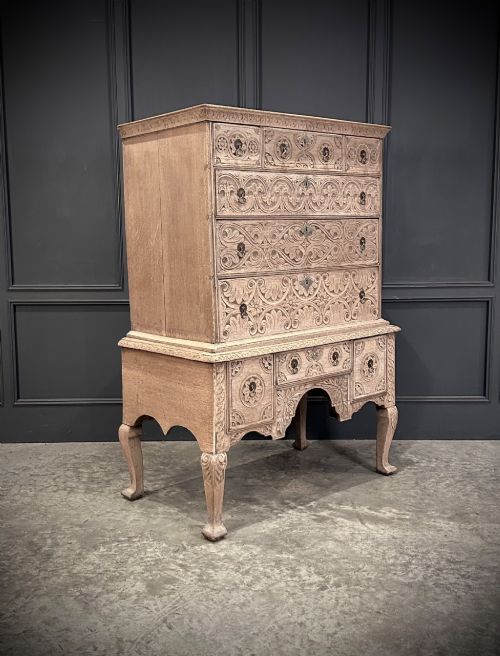
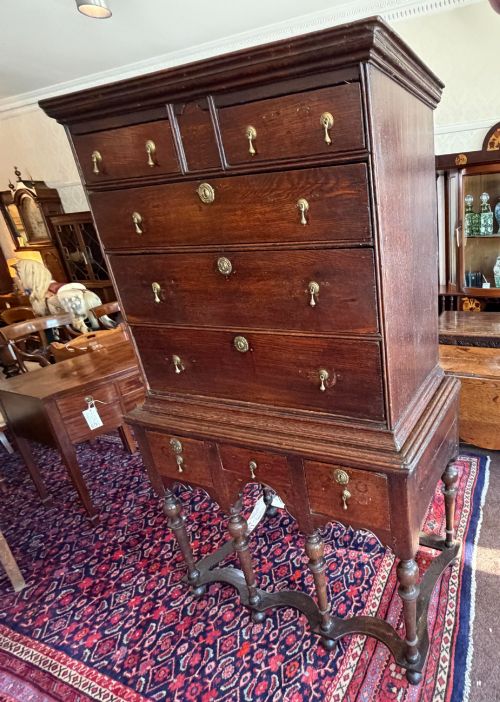
Oak was utilised extensively for both the structural carcases of walnut pieces and as the primary visible timber for regional or earlier tall chests. Bleached oak examples also appear within the selection.
Mahogany largely superseded oak and walnut as the preferred primary wood during the middle and later decades of the eighteenth century.
How should I care for a walnut veneer surface?
Walnut veneer requires stable indoor humidity levels away from direct sunlight and heat sources to prevent timber movement or lifting. Regular dusting with a dry, soft cloth preserves the polished finish without introducing moisture.
Harsh chemical polishes should be avoided in favour of traditional soft waxes applied sparingly when the wood appears dry.