
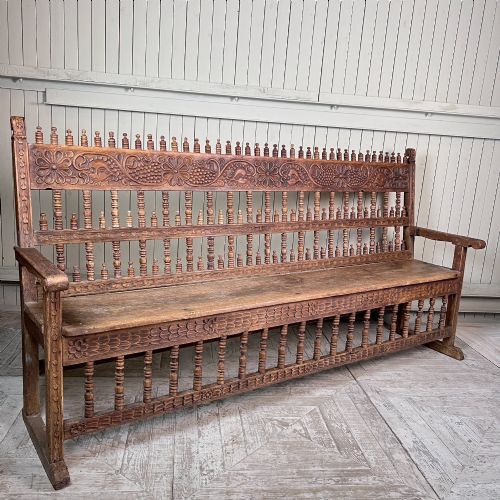
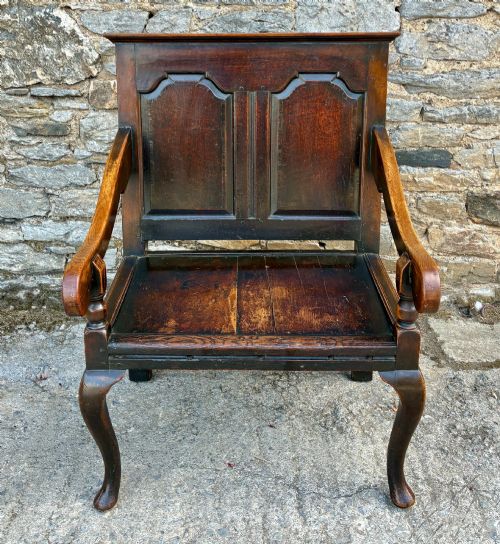
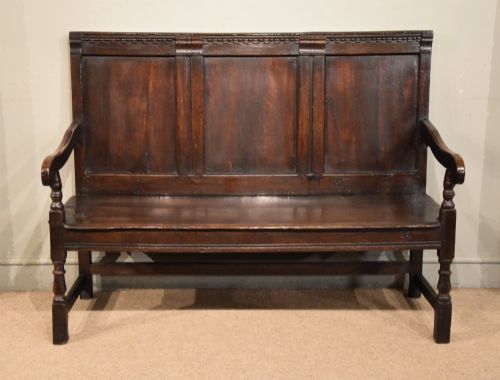
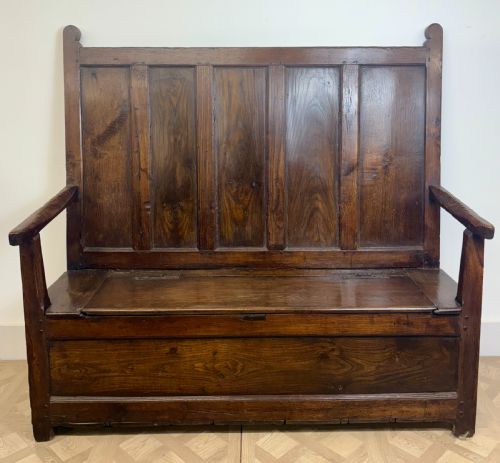




18th Century Hall Bench
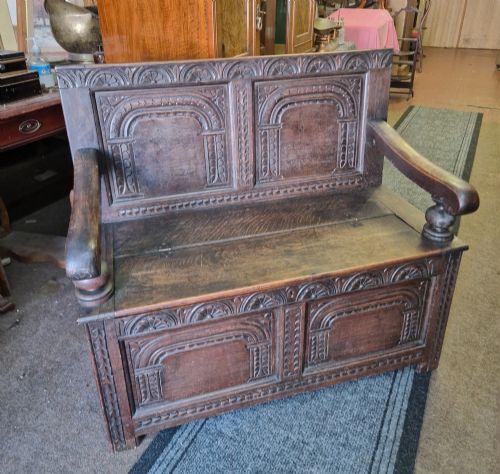
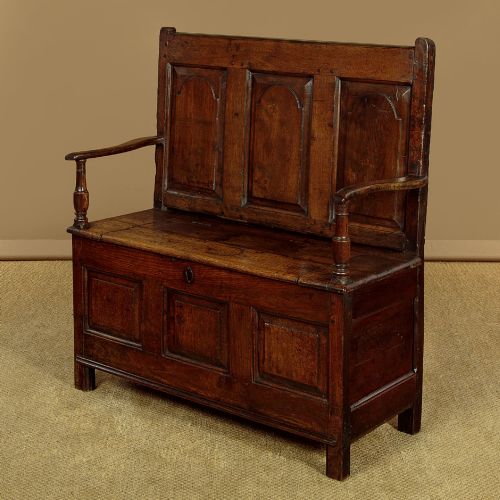
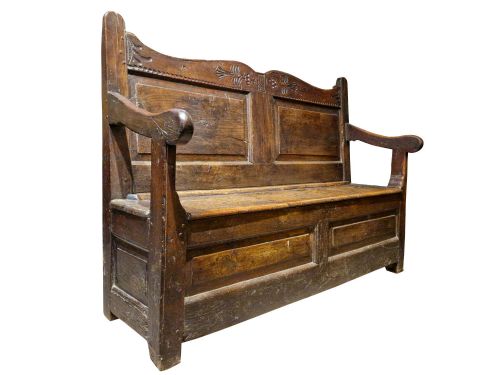
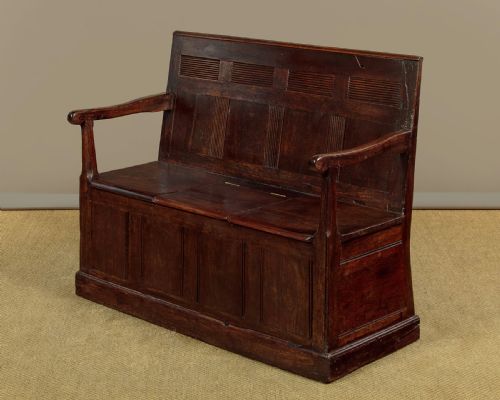
An 18th century hall bench grounds an entrance with heavy timber and centuries of utilitarian domestic use.
18th Century Hall Bench
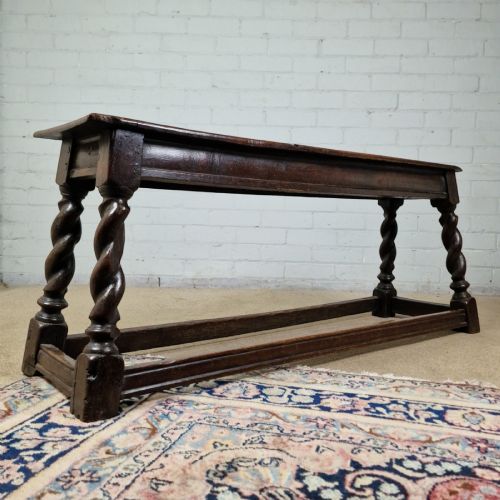
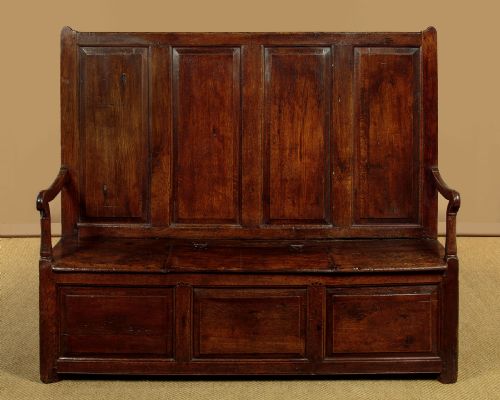
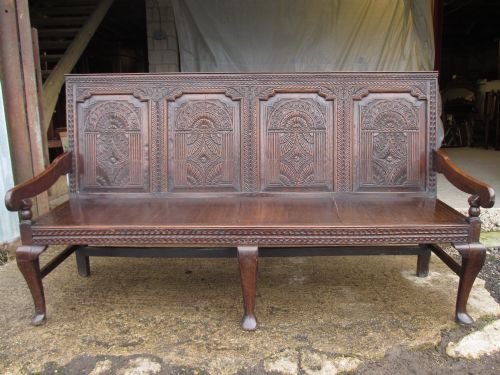
When searching for an 18th century hall bench, a buyer encounters robust oak seating designed to withstand draughty corridors and communal spaces. The pieces appearing most frequently across these records are high-backed wooden settles and long benches originating from English, Welsh, and European provincial workshops.
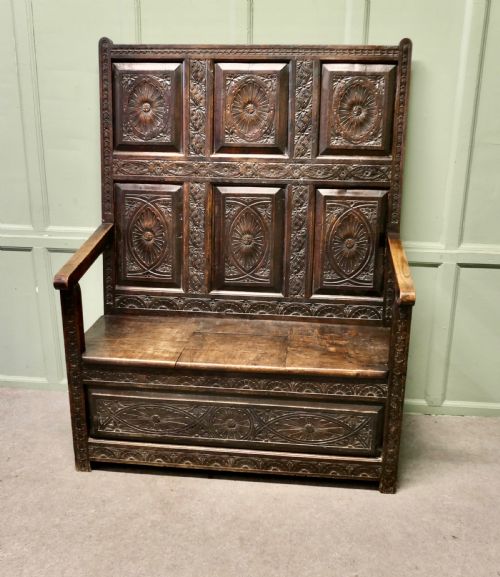
Many examples incorporate a hinged seat forming a storage box beneath, historically used for blankets and provisions in domestic settings. Regional variations emerge clearly in the vernacular framing, ranging from tall panelled wingbacks to simpler open benches.
The selection extends from modest two-seater settles to large panelled hall benches salvaged from historic institutional buildings. Each piece reflects the functional requirements of domestic architecture before the era of fitted hallway furniture.
Assessing quality and proportion
The distinction between standard domestic seating and superior examples lies in the depth of carving, the integrity of the original timber framing, and the survival of the integral box seat. Pieces retaining their original height, unmodified feet, and unaltered back panels command greater architectural presence.
Proportion and scale dictate the visual weight of the bench within a modern interior, where balanced arm supports and clean panel geometry distinguish provincial utility from accomplished vernacular craftsmanship.
The documented forms span simple long benches, high-backed wingback settlers, and boarded box seats dating between seventeen-fifty and eighteen-ninety.
The 18th Century Hall Bench Glossary
- Settle
- A wooden bench with a high solid back, solid arms, and frequently a box seat beneath the cushion area. This form provided essential draught protection near open hearths.
- Box settle
- A specific settle variant featuring a hinged seat lid opening onto a deep storage compartment. It combined seating with functional household chest storage.
- Vernacular
- Architecture and furniture rooted in local traditions, utilising regional materials and unpretentious designs without academic architectural pretension.
- Wingback
- A high wooden back extended at the sides to shield the sitter from cold draughts. These extensions often curve forward in a barrel form.
- Panelled back
- Construction method where individual thin wooden panels are fitted within grooved stiles and rails. This technique prevents warping across large expansive surfaces.
18th Century Hall Bench: Frequently Asked Questions
How were settle benches used?
These benches were placed near fireplaces or in entryways to seat household members while blocking cold draughts from stone floors.
The under-seat box compartment served as practical storage for heavy textiles, firewood, or daily provisions.
Where did these benches originate?
Surviving examples originate primarily from domestic houses, farmhouses, and regional institutions across England, Wales, and continental Europe.
Local timber availability and distinct regional joinery traditions shaped the specific characteristics of each piece.
How do I care for antique oak?
Maintain stable indoor humidity levels and keep wooden surfaces away from direct heat sources to prevent timber splitting.
Apply traditional wax polish sparingly to nourish the dry grain and preserve the historic surface patina.
How to tell periods apart?
Early pieces from the first half of the century often display heavier proportions, robust pegged joinery, and simpler panel layouts.
Later examples incorporate refined mouldings, lighter framing, and occasional decorative marquetry or shaped crest rails.