


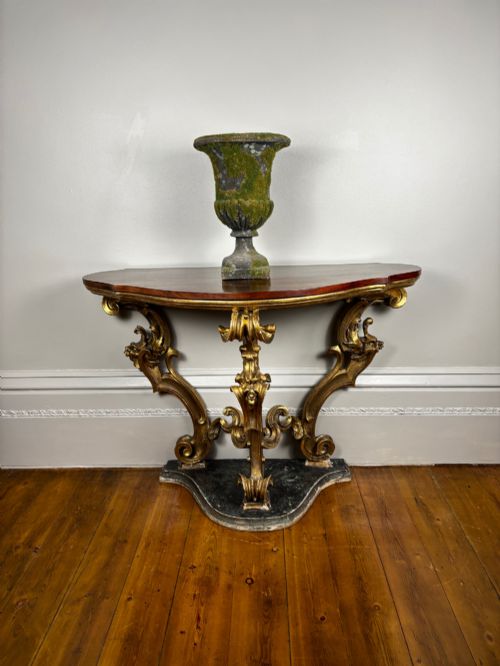


18th Century Giltwood Console
An 18th century giltwood console brings architectural grandeur and lustrous warmth to a room, functioning as a striking table designed to anchor a wall.
18th Century Giltwood Console
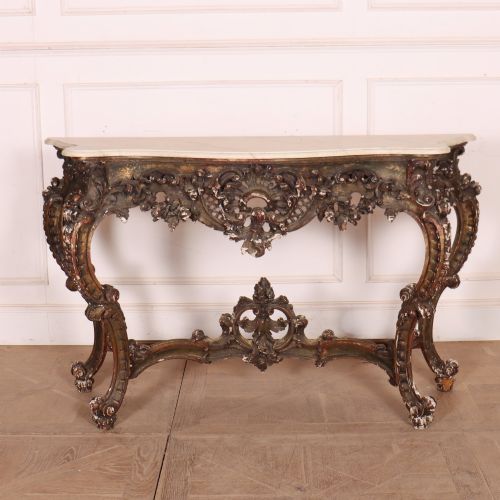
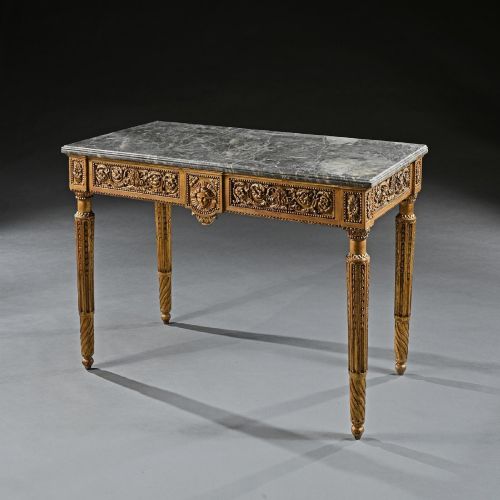
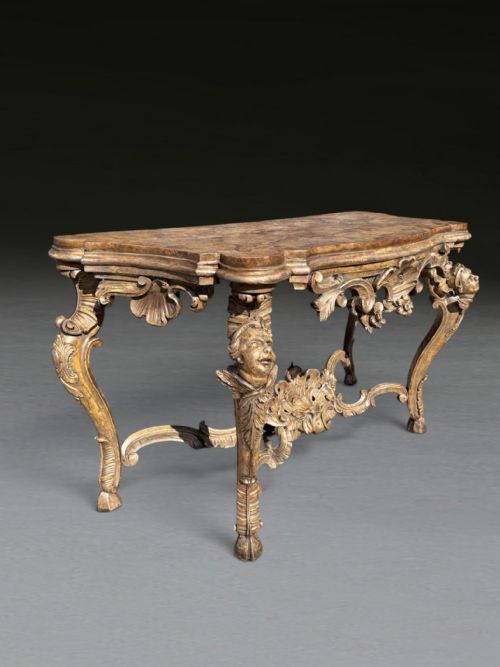
When you search for an 18th century giltwood console, you are looking at substantial decorative tables designed to stand against a wall, frequently topped with marble. The examples you are most likely to meet on this page originate from Italy and France, spanning Italian Rococo, Venetian Rococo, and French Rococo styles.
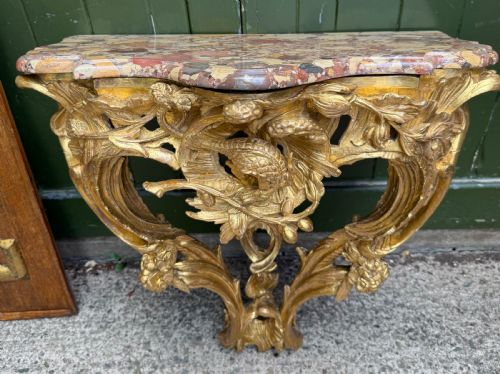
The form encompasses console tables, side tables, and occasional wall brackets or centre tables. Many pieces feature carved wooden frames finished with gold leaf or gesso, often paired with shaped marble tops in various figured stones.
How They Were Made
These pieces rely on carved wood foundations, frequently enhanced with gesso layers to prepare the surface for gilding. Craftsmen applied gold leaf over the prepared ground to achieve the characteristic reflective metallic finish.
Marble slabs, including figured varieties like breche d'alep, were shaped to fit the serpentine or demi-lune contours of the wooden bases. Secondary materials such as satinwood, paint, and composition ornaments also appear on specific George III and continental examples.
Several tables retain the ghosts of ancient gilding repairs where gilders long ago patched bare wood with whatever gold leaf came to hand.
What Varies in Quality
The depth and fluidity of the wood carving separate standard items from superior works, particularly in the rendering of asymmetric scrolls and foliage. Crisp definition in the carved details indicates a more skilled hand at the bench.
The integration between the marble top and the supporting wooden frame reveals the original ambition of the piece. Superior examples display harmonious proportions where the weight of the stone is balanced by substantial, well-balanced underframes.
The 18th Century Giltwood Console Glossary
- Giltwood
- Wood that has been coated with gold leaf or gold paint. This finish provides the characteristic metallic sheen seen on period furniture frames.
- Console
- A table designed to be fixed against a wall, often supported by ornate brackets or legs rather than standing independently. They frequently carry heavy marble slabs.
- Gesso
- A plaster mixture applied to wood surfaces as a base for gilding or painting. It creates a smooth ground that holds intricate carved details.
- Demi-lune
- Half-moon shape. This term describes tables with a semicircular top and a flat edge that sits flush against the wall.
- Serpentine
- Having a wave-like, curving outline. The term describes table fronts and marble tops that curve inward and outward.
18th Century Giltwood Console: Frequently Asked Questions
Where should I place a console table?
These tables traditionally sit against a wall in a hallway, drawing room, or beneath a large wall mirror. Their flat back allows them to occupy minimal floor space while making a strong visual impact.
Because they were originally designed as architectural focal points, they work effectively in entryways or formal reception rooms where surface display space is desired.
How do I identify Italian Rococo pieces?
Italian Rococo consoles generally display flamboyant, asymmetrical carved motifs with C-scrolls and floral elements. The carving tends to be deeply undercut and dynamic.
They frequently feature heavily figured marble tops and substantial giltwood frames that reflect Venetian or broader Italian aesthetic preferences of the period.
What is the difference between a console and a side table?
A console table is structurally designed to rely on a wall for complete stability, often utilising wall brackets or front legs only. Side tables are free-standing items with four legs.
In historical listings, however, the terms sometimes overlap depending on the exact form of the base and how the piece was utilised in period interiors.
How do I care for antique giltwood?
Giltwood requires gentle maintenance to protect the delicate gold leaf layer. Dusting should be done lightly with a dry, soft cloth without applying liquid cleaners.
Keeping the piece away from direct sunlight and excessive moisture prevents the underlying gesso and wood from shifting or cracking over time.