



18th Century Gallery Tray
These 18th century gallery tray pieces are timber serving and display surfaces designed with raised borders, offering both utility and Georgian design heritage.
18th Century Gallery Tray
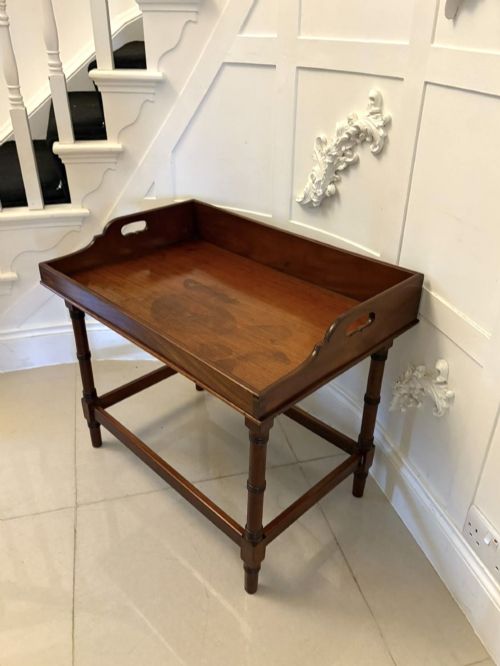
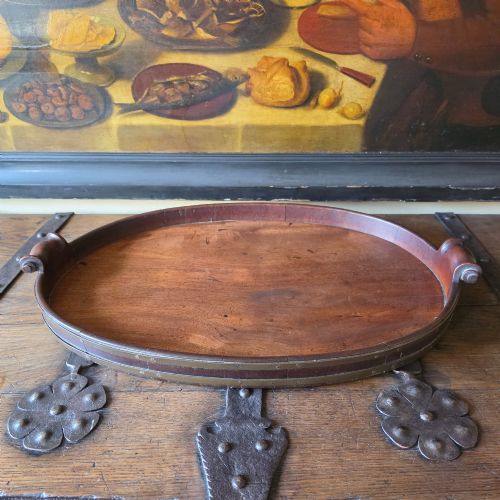
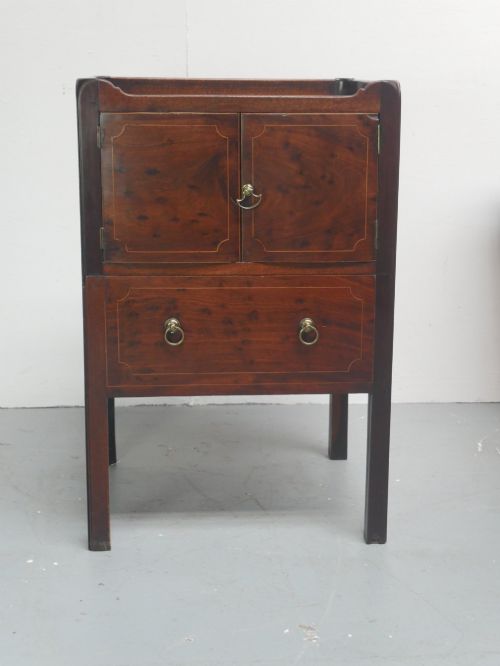
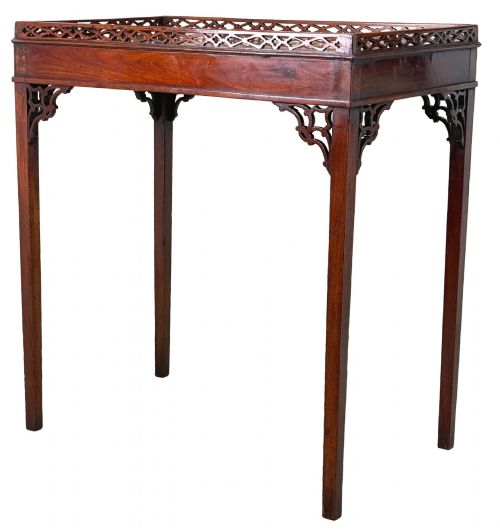
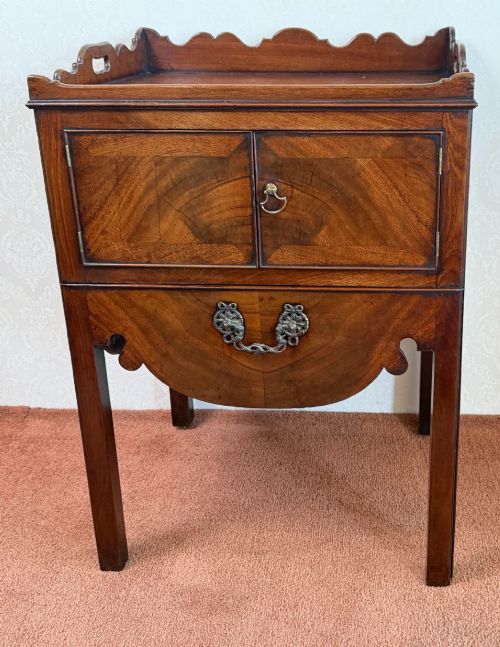
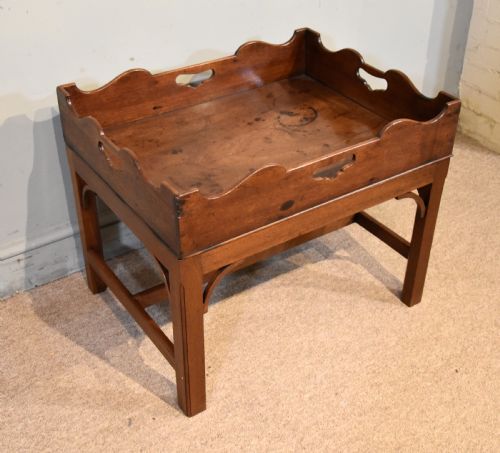
An 18th century gallery tray encompasses both portable serving trays and the distinct tray top tables found in Georgian and later periods. The listings here primarily feature mahogany furniture with raised surrounds, including bedside cabinets, silver tables, and occasional tables with tray tops.
Makers of this era produced forms ranging from oval serving trays to night tables and commodes, frequently associated with the Chippendale and George III styles. Walnut and black lacquered surfaces also appear alongside the dominant mahogany constructions.
Buyers seeking an 18th century gallery tray encounter both standalone serving pieces and fitted tables where the tray forms the main upper surface. These items reflect the domestic interior requirements of the Georgian period.
Materials and construction methods
Joinery relied heavily on solid mahogany and walnut, frequently combined with boxwood inlay for decorative contrast on tray surfaces. Timber selection governed both the structural integrity of the raised gallery edges and the finish of the top.
Cabinet makers utilised traditional framing techniques to secure the raised galleries to the table tops or standalone tray bases. Surface finishes included polished wood and black lacquer depending on the stylistic period.
Even the tea service needed a fence to stop the silver from sliding off during an enthusiastic Georgian house party.
Distinctions in standard and execution
The sophistication of the boxwood inlay and the crispness of the carved mahogany gallery rails define the upper tier of these pieces. Cabinet work on bedside commodes and silver tables demonstrates varying degrees of refinement in the joinery.
Proportion and timber figure dictate the visual strength of the piece, particularly where George III and Chippendale stylistic influences govern the design.
The 18th Century Gallery Tray Glossary
- Gallery tray
- A serving tray or table top featuring a raised pierced or solid border designed to prevent items from sliding off. This feature defines the primary visual characteristic of these items.
- Silver table
- A specific form of occasional table from the Georgian period designed for displaying silver tea services. These tables frequently incorporate tray tops or raised galleries.
- Commode
- A piece of enclosed furniture with cupboard doors or drawers, often constructed with a tray top during the Georgian era. They served functional storage roles in bedrooms.
- Chippendale
- A style of British furniture originating in the mid 18th century associated with Thomas Chippendale designs. It manifests in the carved details and proportions of tray top tables.
- Dumb waiter
- A tiered serving structure with multiple circular or tray-like shelves rotating on a central pillar. These appear in mahogany across the 18th and 19th centuries.
18th Century Gallery Tray: Frequently Asked Questions
How were these tray tables used originally?
Wealthy households utilised tray top tables and silver tables for serving tea, coffee, or spirits in formal rooms.
Bedside variants held washing equipment, night utensils, or personal items within private quarters.
How do I distinguish Georgian from later styles?
Authentic Georgian pieces exhibit period joinery methods, timber ageing, and specific design proportions aligned with George III and Chippendale aesthetics.
Later 19th century interpretations reproduce these forms using similar mahogany or walnut materials but reflect nineteenth-century workshop practices.
Can I use an antique tray table daily?
These mahogany and walnut surfaces withstand normal domestic use when treated with appropriate care for antique timber.
Placing them away from direct heat sources preserves the polish and boxwood inlay.