



18th Century Candleholders
These 18th century candleholders bring period illumination and tactile weight to a room, offering genuine historical substance through brass, wood, and iron.
18th Century Candleholders
When searching for 18th century candleholders, buyers encounter items designed to burn tallow, wax, or rushes in domestic and ecclesiastical settings. The selections span candlesticks, chambersticks, rushlight holders, wall sconces, and candelabra originating across England, Europe, and Britain.
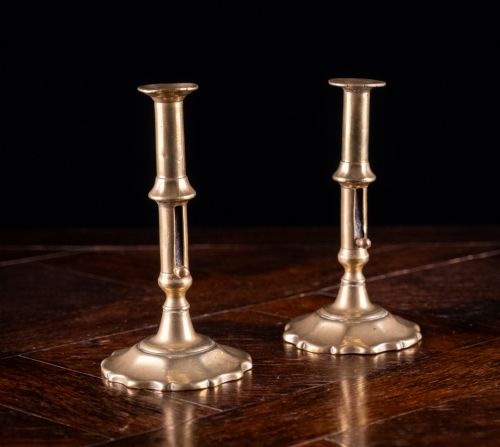
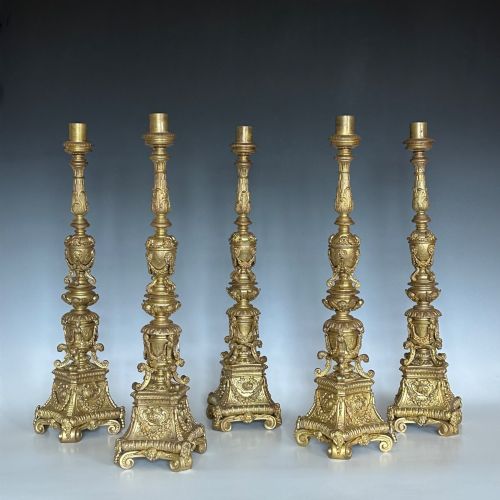
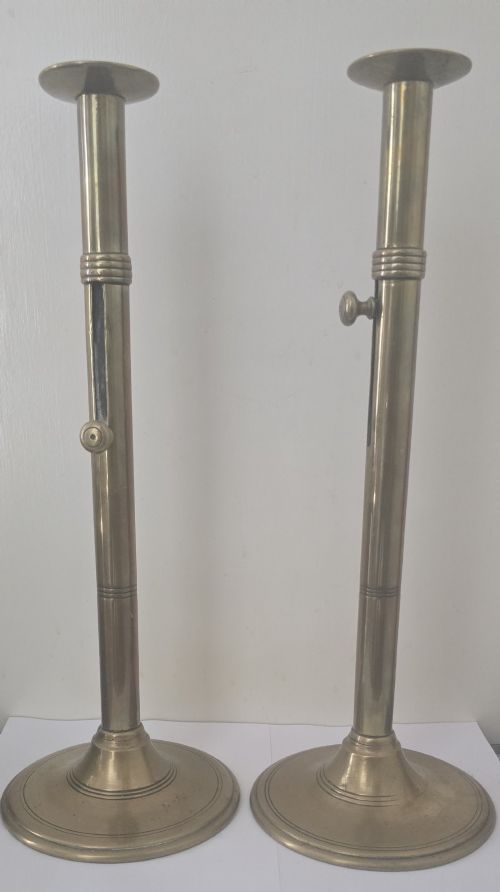
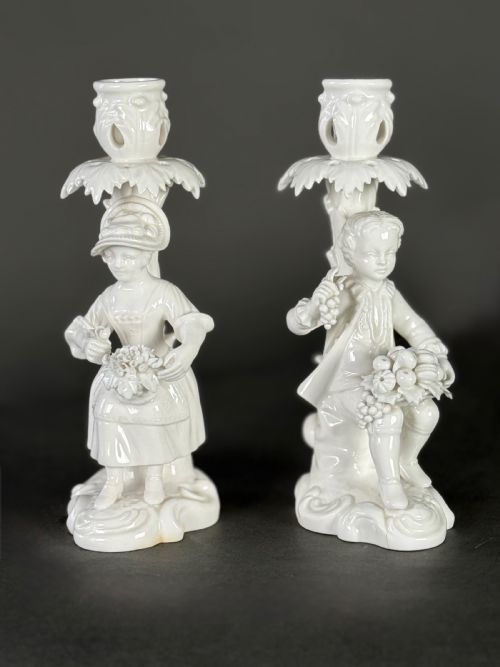
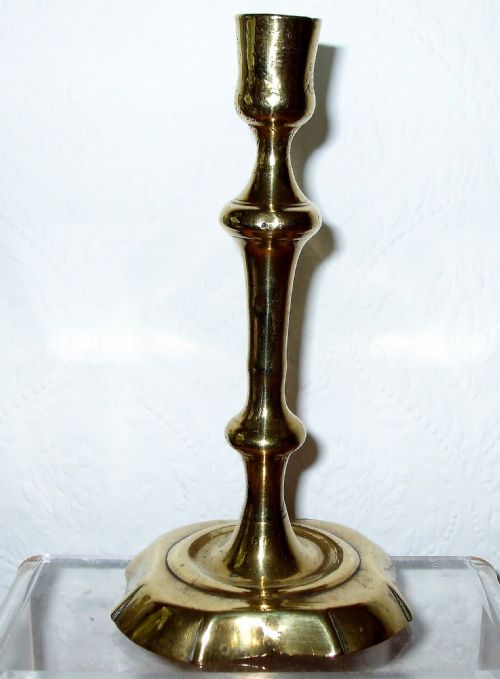
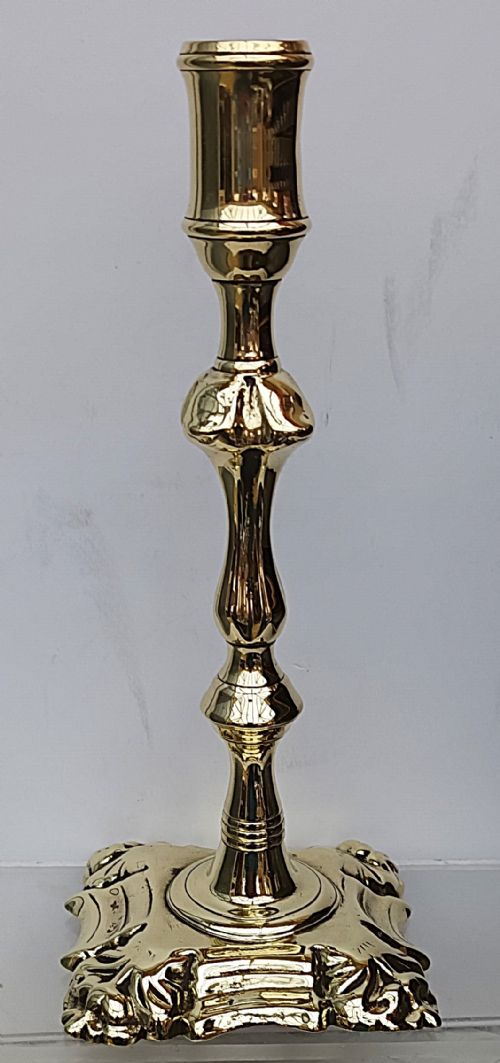
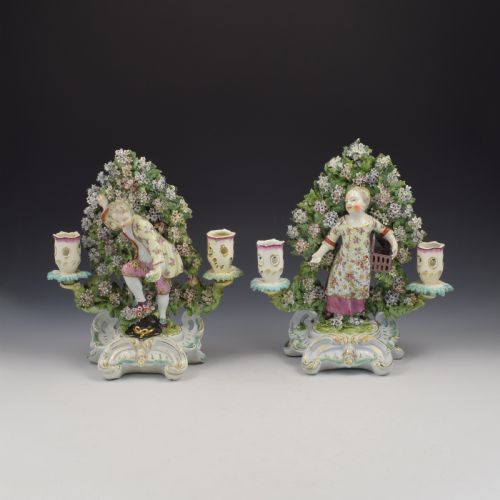
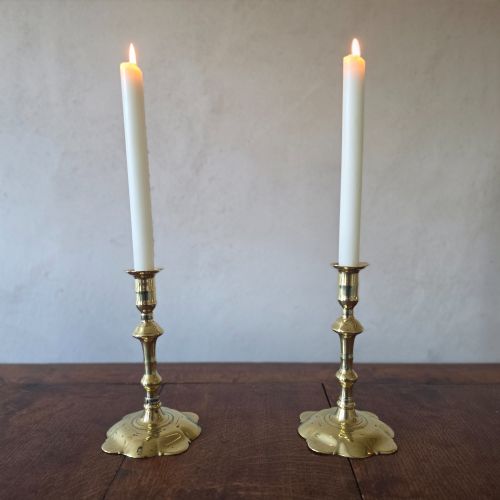
The version most commonly met on this page is the brass candlestick, frequently cast in pairs during the Georgian era, alongside wrought iron rushlight holders and porcelain figures. These objects range from simple utilitarian designs to ornate neoclassical and rococo forms.
Periods represented stretch from the late 17th century through the Georgian years into the early 19th century, capturing shifts in domestic lighting before the advent of gas and electric power.
Materials and construction methods
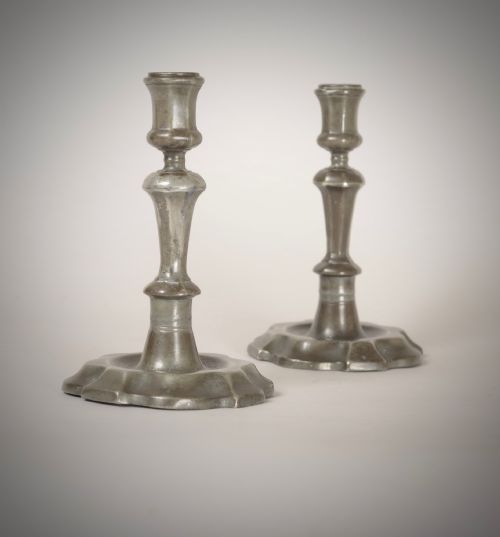
Metals form the backbone of these pieces, utilising brass, cast brass, bell metal, pewter, copper, and Old Sheffield Plate. Makers employed techniques such as casting in sections and seaming, visible in the joints of heavier candlesticks.
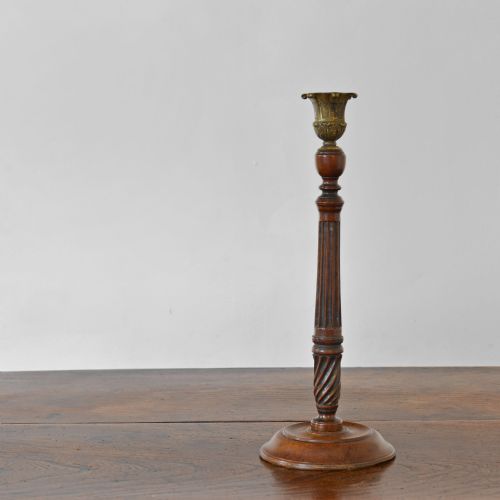
Wooden examples rely on mahogany, gesso, and carved giltwood, sometimes combined with silvering or polychrome decoration. Wrought iron appears in rushlight holders, forged by hand into functional, articulated mechanisms.
Ceramic items incorporate hard paste porcelain and Delft earthenware, featuring painted surfaces or moulded figures like bocage work and glazed figurines.
Distinctions in execution
Quality rests in the crispness of the casting and the proportional harmony of the column, base, and sconce. Pieces by recorded makers or workshops demonstrate superior metal distribution and cleaner finishing on turned surfaces.
Subtleties in design, such as petal bases, tear drop columns, or integrated side ejectors, elevate an ordinary utility item into a refined example of period metalwork. Wear patterns and patination tell the story of genuine age without obscuring the original form.
J. Miller·John Cafe
The 18th Century Candleholders Glossary
- Ejector
- A concealed internal mechanism with a small side lever used to push a depleted wax stub out of the socket. This device kept fingers clean and allowed easy removal of remaining wax.
- Rushlight holder
- A spring-loaded iron clip mounted on a stand, designed to grip a dried rush dipped in animal fat for cheap illumination. They represent a simpler, rural counterpart to wax or tallow candles.
- Bocage
- Applied ceramic foliage and floral background work common on porcelain figures and candlesticks from the period. It creates a leafy arbor effect around the central figures.
- Bell metal
- An alloy of copper and tin traditionally used for bells, possessing a bright tone and heavy density. It was utilised for durable, high-quality cast candlesticks.
- Old Sheffield Plate
- A fused composite material made of a thin layer of silver fused to a copper base, developed in the eighteenth century. It preceded electroplating and shows characteristic copper bleed at high-wear edges.
18th Century Candleholders: Frequently Asked Questions
How do I clean old brass candleholders?
Maintenance should be minimal to preserve the historic surface and darker patination accumulated over centuries. Dust gently with a dry cloth and avoid harsh chemical polishes that strip away age.
Active cleaning can remove the desirable dark oxidation in recessed areas. Gentle dusting keeps the metal safe while retaining its character.
Were these items always sold in pairs?
Many surviving pieces were originally produced and purchased as matching pairs to flank a fireplace mantelpiece or dining table. Single examples also appear, reflecting losses over centuries of domestic use.
Pairs command greater interest from collectors seeking symmetrical arrangement. Single items often served specific portable functions like chambersticks.
How can I tell an 18th century piece from a later copy?
Examine the construction methods, tool marks, and weight distribution characteristic of period manufacturing techniques. Cast brass pieces from this era show specific casting flaws, seam lines, and hand-finished turning rather than uniform modern machine production.
Patina and wear patterns on the metal or wood offer further clues to authenticity. Genuine age presents natural rubbing on high points where handling occurred.