


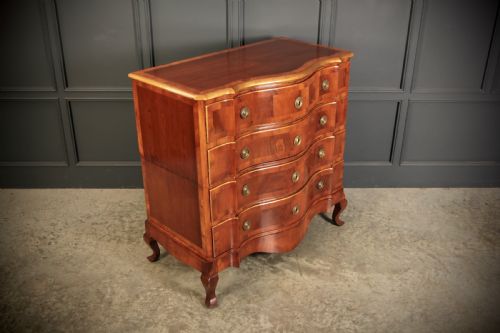


18th Century Cabriole Sideboard
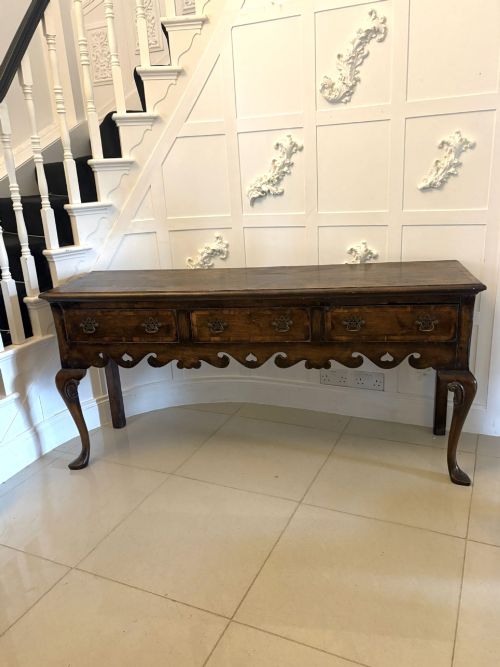
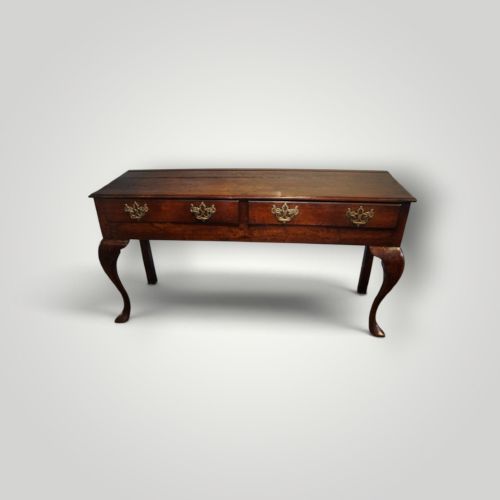
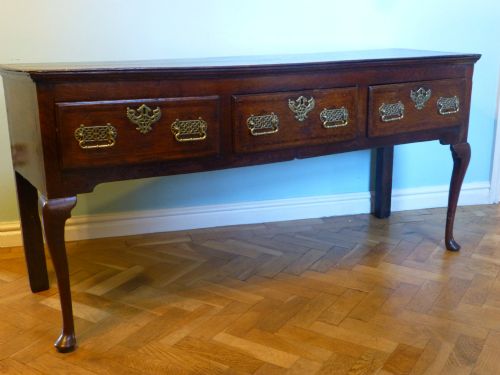
An 18th century cabriole sideboard brings substantial proportions and sculptural legwork to a room, offering both surface display and deep storage.
18th Century Cabriole Sideboard
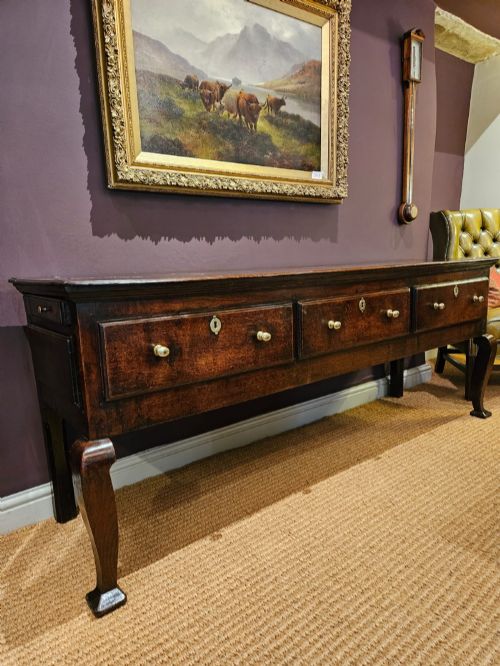
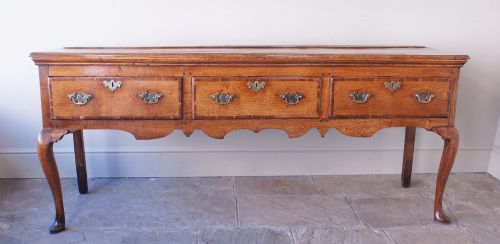
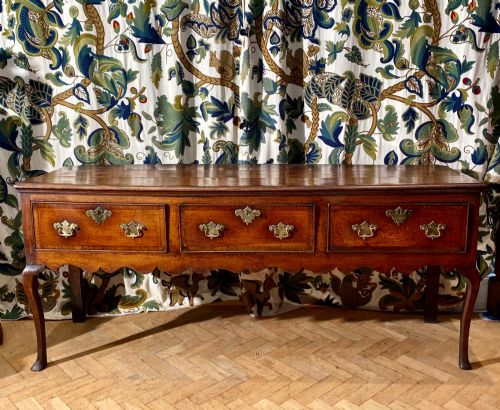
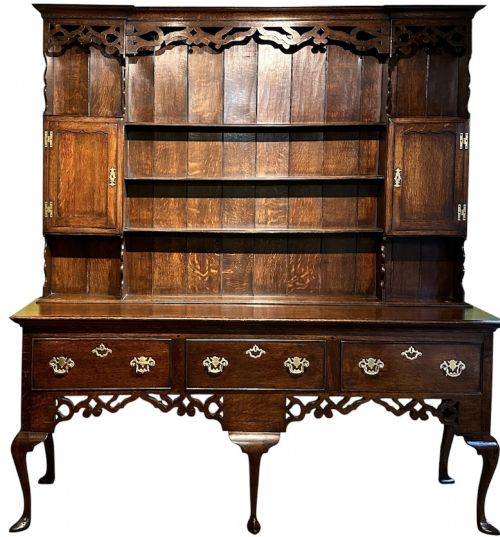
Makers of the period favoured practical serving surfaces paired with deep drawer configurations, supported by distinct curved legs that lift the heavy timber frame off the floor. These items served dining rooms and halls, functioning as functional furniture for food preparation and tableware storage.
Regional variations span from English country oak to Italian rococo and French provincial designs, each displaying distinct moulding details and hardware arrangements. The selection on this page reflects these diverse geographic origins while maintaining the core functionality of a heavy storage base.
Materials and Construction
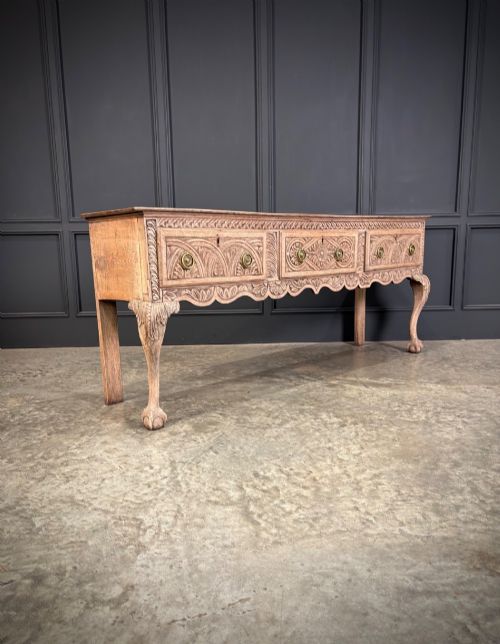
Cabinet makers relied predominantly on native timbers such as oak and walnut, often employing crossbanding and carving to enrich the primary facade. Joinery techniques involved pegged mortise and tenon joints for the structural frames, ensuring the heavy timber carcasses endured decades of daily domestic use.
Surface treatments range from polished natural grain and bleached walnut to painted finishes and intricate inlay work. Brass handles and escutcheons punctuate the drawer fronts, providing functional grip and contrast against the dark timber.
18th Century Cabriole Sideboard Retail Price Guide 2026
Typical asking prices for 18th century cabriole sideboard among the pieces listed under this phrase on Sellingantiques today, from the lower quarter to the upper quarter. They describe what is for sale here now, not the wider market.
Some provincial makers subtly mismatched the curves on front and back legs, proving that perfection took second place to getting supper on the table.
Assessing Craftsmanship
Quality rests in the fluidity of the leg curvature and the crispness of any carved details, distinguishing master craftsmanship from provincial workshop production. Superior examples maintain balanced proportions where the weight of the timber top harmonises with the slender sweep of the supports.
The integrity of the structural joinery and the survival of original drawer linings dictate the lasting value of a piece. Finer items exhibit precise dovetailing within the drawers and retain their original brass hardware rather than later replacements.
The 18th Century Cabriole Sideboard Glossary
- Cabriole leg
- A furniture leg that curves outward at the knee and tapers inward toward the ankle, finishing in a pad, claw, or hoof foot. This form derives from animal limbs and gained popularity during the early 18th century.
- Dresser base
- The lower section of a traditional kitchen or dining room dresser, featuring multiple drawers and sometimes cupboards beneath a flat top. These pieces functioned independently as serving tables in grander households.
- Crossbanding
- A narrow strip of veneer laid around the border of a larger surface so that the grain runs at right angles to the centre panel. Cabinet makers used this technique to frame drawer fronts and tabletops on walnut pieces.
- Commode
- A low chest of drawers or cabinet on legs, originating in France during the 18th century. These items frequently incorporated serpentine shapes and marble tops.
- Serpentine
- A curved line or shape featuring a convex centre flanked by two concave curves. This contour appears on the fronts of high-status commodes and serving tables to create visual movement.
18th Century Cabriole Sideboard: Frequently Asked Questions
Where should I place a dresser base?
These low cabinets suit dining rooms, hallways, or living spaces where their long tops provide a surface for lamps, books, or serving items while keeping storage hidden below.
Ensure you measure the depth of the room carefully, as these historic pieces often feature deep proportions that extend further into a walkway than modern sideboards.
How do I care for antique oak?
Feed dry timber occasionally with a quality beeswax and buff it gently with a soft cloth to maintain a protective barrier against moisture and atmospheric changes.
Keep the furniture away from direct heat sources such as radiators to prevent the old timbers from splitting or warping over time.
What is the difference between a commode and a dresser?
A commode typically refers to a continental European cabinet with drawers or doors, often featuring decorative veneers or painted surfaces suited to formal rooms. Dressers and dresser bases are more commonly associated with English country houses and feature robust oak construction intended for heavy daily service.
Both forms utilise the curved support leg, but their regional origins dictate the overall silhouette and choice of decorative detail.
Are painted finishes period accurate?
Painted surfaces do appear on continental and provincial pieces from the period, offering a decorative alternative to exposed timber grain. Many items also received later decorative paint layers during the 19th or 20th centuries as interior fashions shifted.
Examine the underlying timber texture and the wear around the edges to understand the age and application method of any decorative paint layer.