


18k Gold Virgin Mary
When you search for 18k gold virgin mary, you discover devotional pendants and medals cast in high-purity gold to wear close to the heart.
18k Gold Virgin Mary
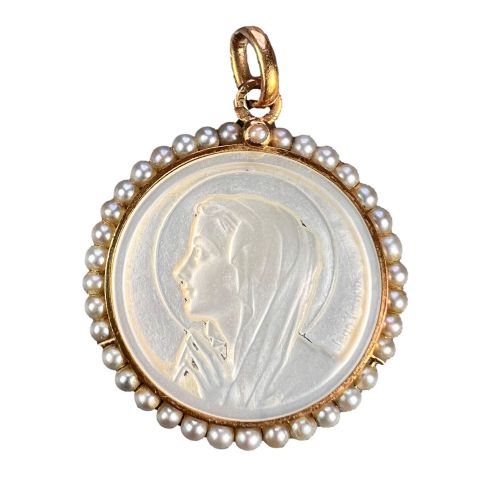
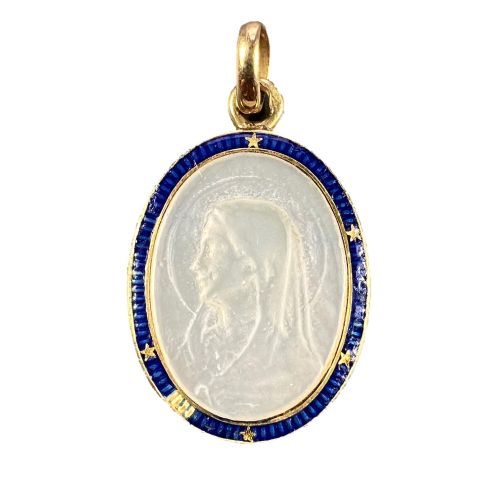
Pieces searched under 18k gold virgin mary comprise French religious pendants, charms, and devotional medals produced across the late nineteenth and first half of the twentieth centuries. The primary forms include oval medals, framed charms, and pendant necklaces depicting the Madonna and Child or the Virgin Mary alone.
Most examples originate from French workshops spanning the Art Nouveau, Art Deco, and mid-century periods. Buyers will frequently encounter pieces carrying specific iconography such as the Miraculous Medal, Notre Dame of Lourdes, or the Sacred Heart.
Objects range from simple stamped yellow and rose gold discs to complex devotional items combining multiple metals and natural materials. These jewels served personal, protective, and commemorative roles for their original owners.
Metals and Enamelling Techniques
Items rely on 18-carat yellow, rose, and white gold formed into thin sheet medals, cast charms, and intricate wirework frames. Goldsmiths utilised stamping, piercing, and hand-engraving to produce detailed surface decoration on the metal bodies.
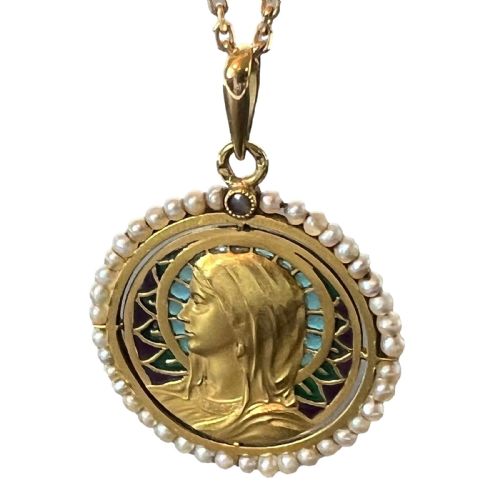
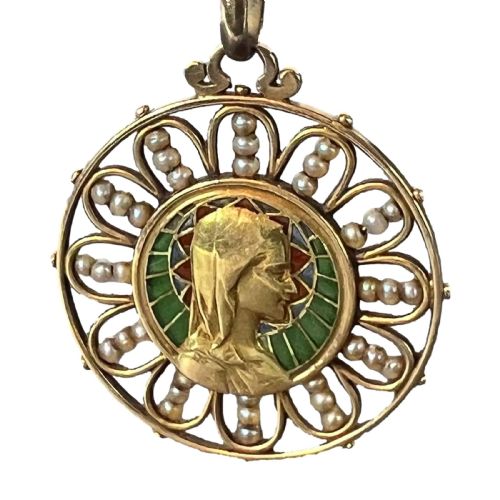
Specialist decorative techniques include plique-à-jour enamel, which creates translucent cell-like windows resembling stained glass, alongside solid enamel applications in various colours. Artisans also integrated organic elements such as mother-of-pearl plaques, seed pearls, and natural pearls into the gold mounts.
Several makers hid tiny signatures in the folds of the Virgin's robes, turning pious jewellery into signed canvases.
Craftsmanship and Material Complexity
Complexity of secondary materials defines the upper tier of pieces. Medals featuring intact plique-à-jour enamel panels, hand-carved mother-of-pearl backgrounds, or calibrated seed pearl borders demonstrate greater technical ambition than plain gold stampings.
Emile Monier·Emile Dropsy·Sellier·Mazzoni·Becker·Augis·Pageli Perriat
The 18k Gold Virgin Mary Glossary
- Plique-a-Jour
- An enamelling technique where enamel is applied in cells without a backing, allowing light to shine through the transparent material. It creates a stained-glass effect often seen in Art Nouveau jewellery.
- Mother of Pearl
- The iridescent internal layer of mollusc shells used as a backing plaque behind gold figures. It provides a shimmering background in many devotional pendants.
- Medal Pendant
- A flat or slightly domed metallic object struck or cast with religious imagery, fitted with a loop for suspension. These pieces combine devotional function with personal adornment.
- Seed Pearl
- Very small natural or cultured pearls used to edge frames or embellish halos and borders. They add delicate texture to the gold and enamel work.
18k Gold Virgin Mary: Frequently Asked Questions
What periods do these gold pendants come from?
The available pieces date primarily from the late nineteenth century through to the middle of the twentieth century, with a heavy concentration from the Edwardian era and the nineteen-tens.
Maker signatures and stylistic traits such as Art Nouveau curves help assign these devotional items to specific decades.
How were these religious medals worn originally?
Owners typically suspended these medals from fine gold chains to wear them as daily necklaces near the heart. Many examples also functioned as charms attached to bracelets or devotional chatelaines.
The suspension loops and jump rings on the pieces are designed for light daily wear.
What is the difference between rose and yellow gold versions?
Rose gold variants contain a higher proportion of copper in the alloy mixture, giving the metal a warm reddish hue that was particularly favoured during the late nineteenth century.
Yellow gold options utilise silver and copper alloys to achieve a traditional warm metallic colour across the Art Nouveau and Art Deco periods.
How can I identify the maker of a medal?
Makers and workshops often stamped tiny hallmark symbols, maker marks, or full signatures directly onto the edge or reverse of the gold medal. These tiny punch marks record the specific Parisian or regional silversmiths responsible for the piece.
Names like Dropsy or Monier frequently appear in the metalwork alongside standard gold purity hallmarks.