


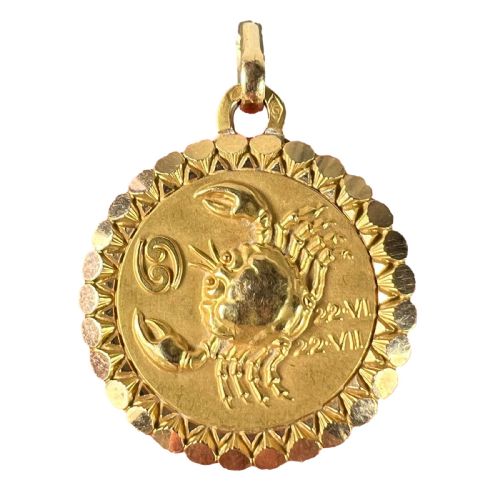


French 18ct Gold Pendant
When you search for a french 18ct gold pendant, you encounter miniature masterpieces of metalwork, devotion and personal expression.
French 18ct Gold Pendant
A french 18ct gold pendant encompasses a diverse range of wearable ornaments, most frequently encountered here as devotional medals, zodiac charms and photograph lockets. These pieces emerge primarily from the Victorian and Edwardian eras, extending through the Art Nouveau, Belle Epoque and mid-century periods.
The forms span simple circular medals, shield plaques, Maltese crosses and figurative representations of saints, Madonna and child, or celestial signs. Buyers typically find items taking the shape of lockets, charms or commemorative medals designed to be suspended from a chain.
Origins remain firmly rooted in French workshops and studios, utilising high-purity yellow gold, rose gold and occasionally white gold. The selection prioritizes pieces carrying distinct cultural narratives, from religious iconography to gambling luck charms.
How they were made
Goldsmiths utilised 18-carat yellow and rose gold as the primary structural medium, shaping the metal through casting, stamping and intricate hand-engraving. Surfaces frequently incorporate applied details like floral wreaths, sunbursts and pierced borders.
Colour and visual depth arrive through the integration of vitreous enamel, plique-a-jour, and painted miniatures set directly into the gold framework. Gemstones such as diamonds, rubies, sapphires, emeralds, turquoise, seed pearls and faceted glass are flush-set or mounted in bezels to accent the central design.
Listings feature periods spanning from the Victorian era through the 1950s, utilising 18-carat yellow, rose, and white gold.
What varies in quality
The distinction between standard items and superior examples rests in the crispness of the medallist's strike and the fineness of the hand-chased details. Maker-signed pieces demonstrate a higher tier of artistry, particularly where facial expressions on religious figures or anatomical proportions on zodiac signs remain sharp and legible.
Material complexity elevates certain pieces above others, notably when transparent plique-a-jour enamel lets light pass through the gold cell work or when natural diamonds and sapphires accompany the main body. The integrity of hinged locket closures and the retention of original coloured enamel surfaces heavily influence the overall standard.
Perroud·Monier·Pageli Perriat·Dropsy·Guilbert·Emile Dropsy·Sellier·Ovide Yencesse·Mazzoni·Becker
The French 18ct Gold Pendant Glossary
- Plique-a-jour
- An enamelling technique where the enamel is applied without a backing, producing a stained-glass effect that allows light to shine through the transparent or translucent material.
- Medal
- A flat piece of metal struck with a commemorative, religious or symbolic design, often fitted with a suspension loop to be worn around the neck.
- Locket
- A small ornamental case hinged to open and reveal space for holding a miniature portrait, lock of hair or photograph.
- Enamel
- A glassy substance fused to the surface of the gold through firing, used to introduce durable colour and decorative patterns.
- Bale
- The ring or loop attached to the top of the pendant through which a chain is threaded for suspension.
French 18ct Gold Pendant: Frequently Asked Questions
What is a french 18ct gold pendant?
These items are small, high-purity gold ornaments created in France, functioning as lockets, zodiac charms, or religious medals. They reflect distinct historical periods from the late nineteenth century through the mid-twentieth century.
Each piece combines precious metalwork with artistic techniques like enamelling, gemstone setting, or miniature painting to serve as personal jewellery.
How were these pendants worn historically?
Owners typically suspended these ornaments from gold chains around the neck, wearing them close to the heart as protective amulets, marks of faith, or keepsakes.
Lockets held private photographs or locks of hair, while zodiac charms and medals expressed personal identity and spiritual devotion.
How do I care for my pendant?
Protect the metal and delicate elements like enamel or glass by storing the piece individually in a soft pouch away from harder jewellery.
Clean the gold gently with a soft cloth and avoid harsh chemical dips that might damage sensitive stones, pearls, or enamelled surfaces.
How can I tell the period?
Examine the stylistic cues, such as the flowing organic lines typical of Art Nouveau or the symmetrical geometries found in later mid-century designs.
Maker signatures, hallmark stamps on the gold, and the specific subject matter often provide clear indicators of the era in which the piece was produced.