
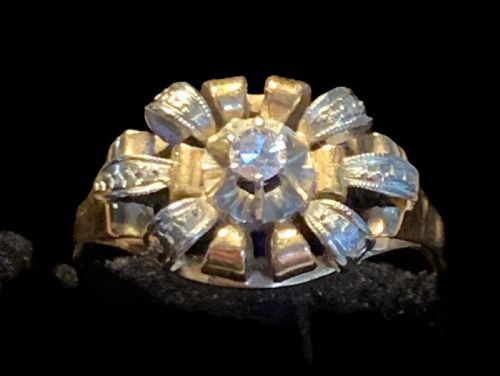
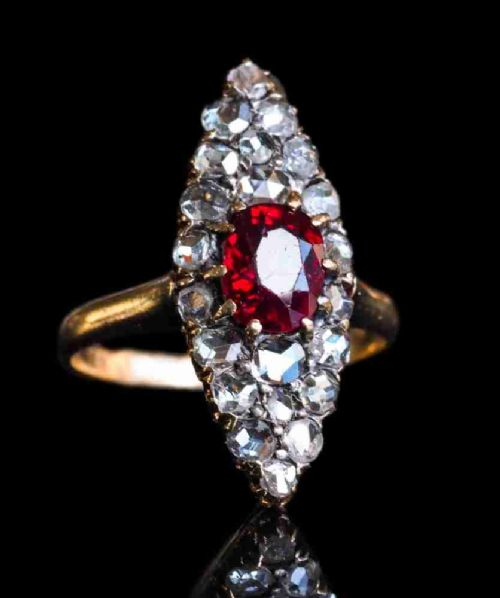


18k Gold Diamond Ring
An 18k gold diamond ring brings together enduring precious metal and bright stones in designs spanning the Victorian, Edwardian, and Art Deco periods.
18k Gold Diamond Ring
The selection frequently includes Victorian and Edwardian pieces set with old cut diamonds alongside coloured gems like rubies, sapphires, emeralds, and pearls. Yellow gold, white gold, and platinum combinations dominate the surviving forms, offering both traditional warmth and sharp geometric contrast.
How they were made
Goldsmiths utilised 18ct yellow and white gold alongside platinum to mount diamonds using claw, bezel, and flush techniques. Stones frequently display old European, old mine, or rose cuts shaped by hand before the widespread adoption of modern brilliant faceting.
Many cluster and navette rings incorporate secondary gemstones such as natural rubies, sapphires, and seed pearls secured within intricate milgrain or scrollwork mounts. The combination of durable 18k gold and precious stones ensured these rings survived daily wear across multiple eras.
Listings feature 18k yellow gold, 18k white gold, and platinum rings set with diamonds, rubies, sapphires, emeralds, and turquoise.
What varies in quality
The standard of an 18k gold diamond ring depends heavily on the precision of the stone cutting and the integrity of the original metalwork. Pieces featuring well-matched old cut diamonds and intact claw or bezel settings represent the upper tier of surviving examples.
Maker signatures, French control marks, and balanced gemstone proportions elevate certain rings above standard commercial output. The preservation of delicate gallery work and original stone surfaces further separates exceptional historical pieces from later modifications.
Piaget·Liberty And Co
The 18k Gold Diamond Ring Glossary
- Old European cut
- A predecessor to the modern round brilliant cut featuring a small table, high crown, and large culet facet. This vintage diamond cut creates a softer, deeper pattern of light reflection.
- Navette
- A boat-shaped or marquise ring setting featuring elongated pointed ends. The design displays multiple smaller diamonds or coloured gems arranged along the finger.
- Milgrain
- A decorative border of tiny raised metal beads along the edge of a setting. This technique defines antique platinum and white gold mountings from the Edwardian and Art Deco periods.
- Cluster ring
- A jewellery arrangement featuring a central gemstone surrounded by a border of smaller diamonds. This configuration maximises visual impact and combines contrasting gem colours.
- Trilogy ring
- A three-stone setting representing the past, present, and future. These pieces typically mount graduated diamonds in yellow gold or platinum.
18k Gold Diamond Ring: Frequently Asked Questions
How do I care for antique rings?
Clean these pieces gently using warm water and a soft brush to avoid disturbing delicate old cut stones or vintage settings. Regular professional inspection helps secure prongs that hold central diamonds and coloured gems.
Store each ring separately in a lined box to prevent metal friction and stone scratching. Avoid wearing antique jewellery during heavy manual work or swimming.
What periods do these rings represent?
The selections span Victorian, Edwardian, and Art Deco eras alongside mid-century and nineteenth-century examples. Each era introduces distinct mounting styles, from yellow gold bezels to white gold geometric designs.
Design motifs change noticeably across these decades, shifting from organic cluster patterns to sharp linear platinum arrangements. Hallmarks and metal combinations help confirm the specific historical period of creation.
Are coloured gemstones natural?
Many Victorian and Art Deco rings incorporate natural rubies, sapphires, and emeralds alongside diamonds. Certifications often accompany significant stones to document their geographical origin and treatment status.
Coloured gems were frequently paired with old European or rose cut diamonds in cluster and navette layouts. These combinations reflect the distinct aesthetic preferences of late nineteenth and early twentieth-century jewellers.
Can antique rings be resized?
Resizing depends on the band construction, particularly where ornate shoulders, engraving, or channel-set stones are present. Plain 18k gold shanks generally offer straightforward adjustment by a skilled jeweller.
Intricate Victorian and Edwardian bands require careful evaluation to preserve hallmarks and structural integrity. Consulting a specialist ensures the ring retains its historical balance after alteration.