


18ct Ruby Jewellery
These pieces of 18ct ruby jewellery bring together deep red corundum and high-carat gold in rings, brooches, and pins designed to endure.
18ct Ruby Jewellery
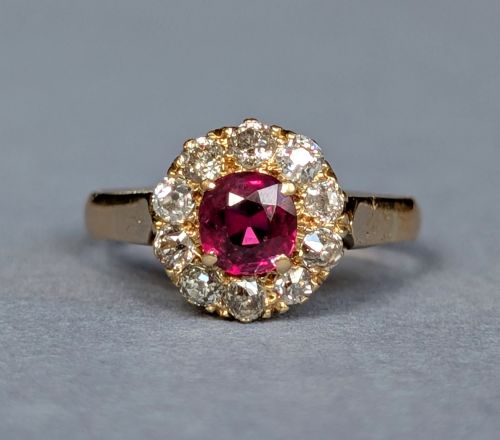
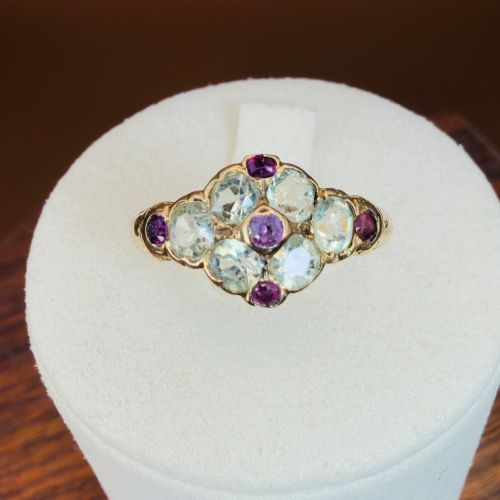
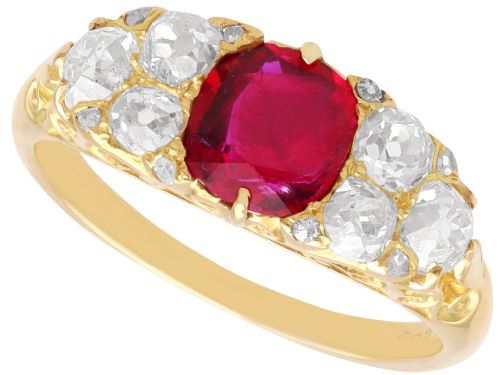
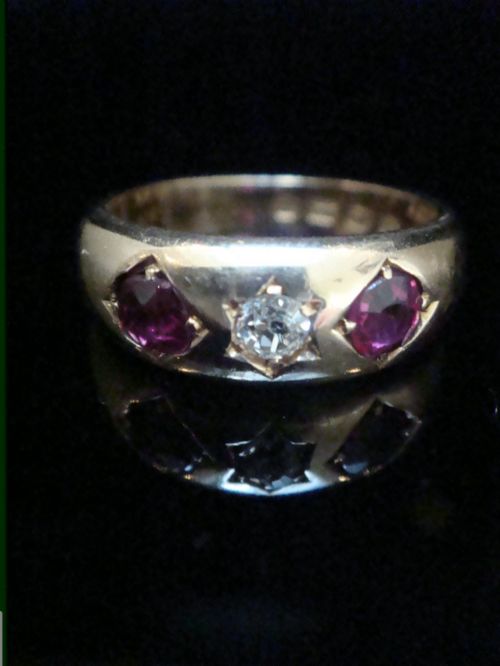
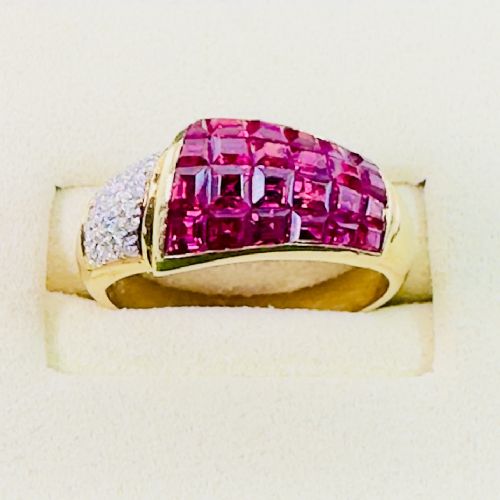
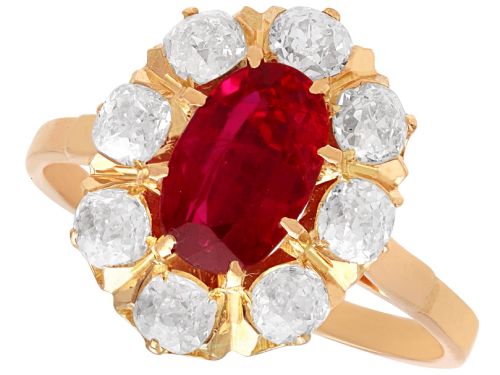
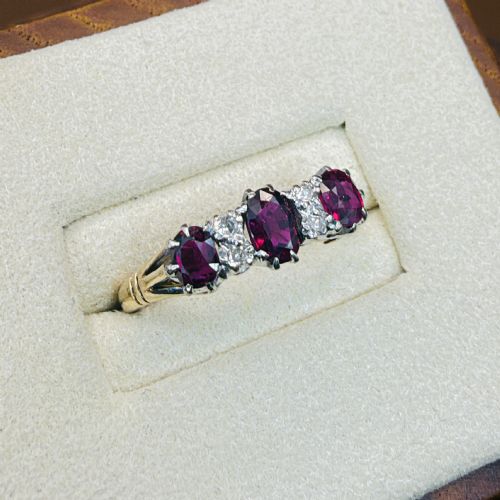
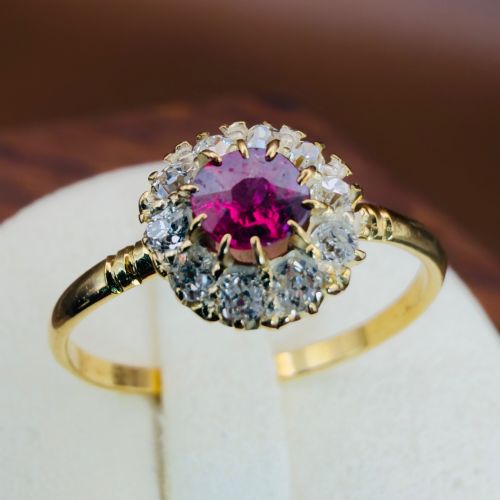
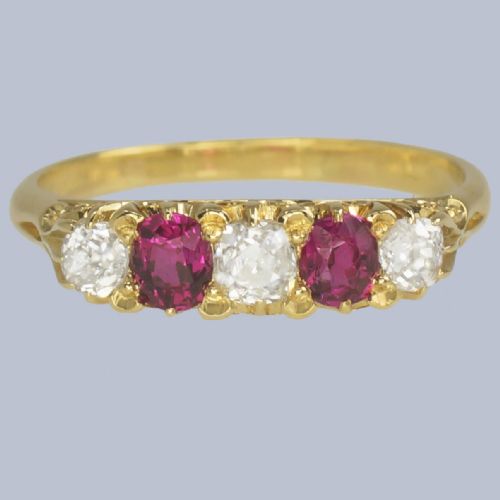
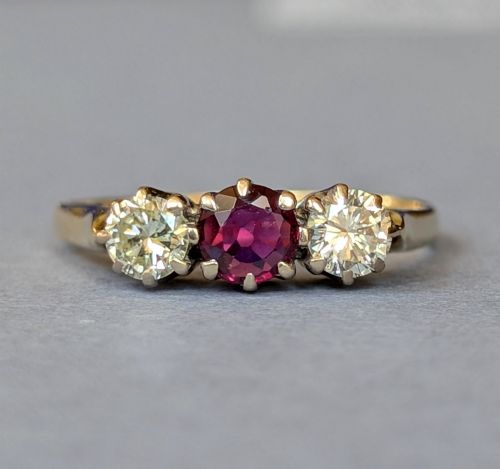
When you search for 18ct ruby jewellery, you encounter a selection spanning the Victorian, Edwardian, Art Deco, and Mid-Century periods. Rings dominate the selection, appearing as cluster settings, boat shapes, and multi-stone bands accompanied by older diamond cuts.
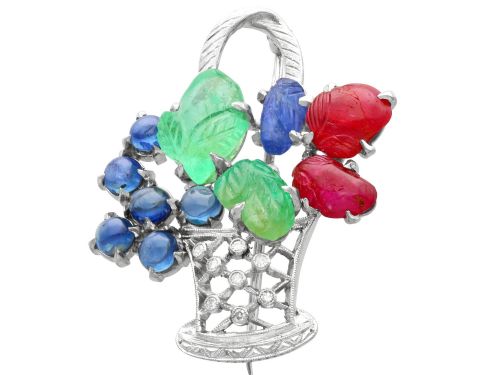
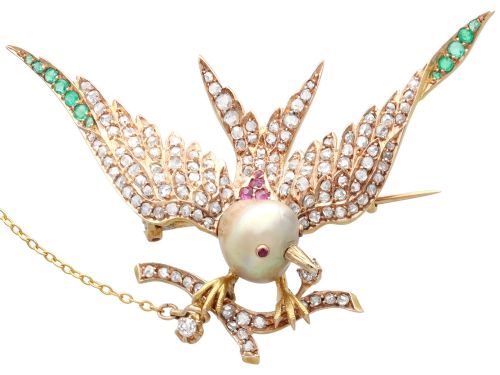
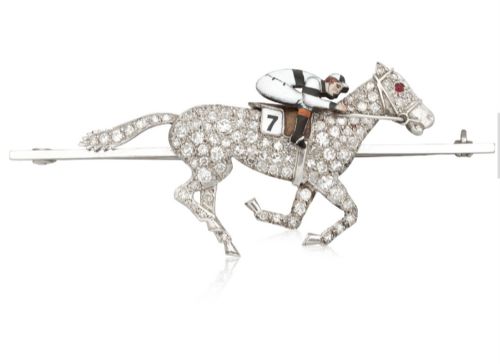
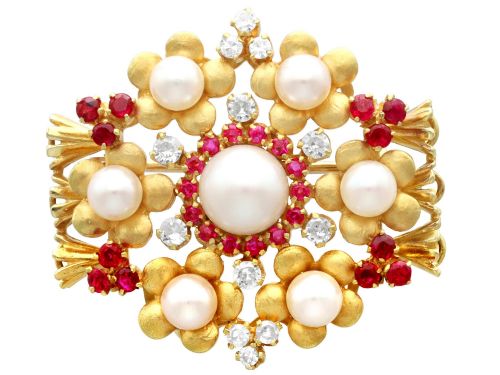
Brooches and pins also surface frequently, taking the form of birds, floral motifs, and novelty subjects incorporating pearls or emeralds alongside the central rubies. The work stretches from late nineteenth-century British guild halls to mid-twentieth-century London workshops.
Materials and construction methods
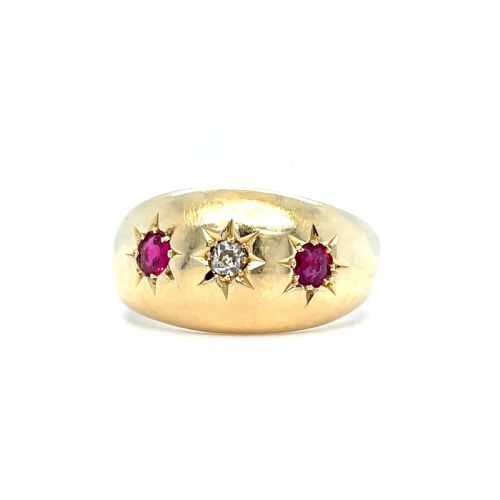
The foundation rests on 18ct yellow, white, and rose gold, occasionally paired with platinum sections to highlight bright diamond work. Stones are set securely into bezels, starburst gypsy settings, or delicate claw mounts designed to maximise light transmission through the ruby facets.
Makers utilised traditional casting and hand-working techniques, integrating chased bands, navette frames, and gallery wire. Gems such as natural Burmese rubies and old-mine cut diamonds were selected to sit flush or elevated within the heavy gold frames.
18ct Ruby Jewellery Retail Price Guide 2026
Typical asking prices for 18ct ruby jewellery among the pieces listed under this phrase on Sellingantiques today, from the lower quarter to the upper quarter. They describe what is for sale here now, not the wider market.
Listings span the Victorian, Edwardian, Art Deco, and Mid-Century periods, utilising yellow, white, and rose 18ct gold alongside platinum.
Quality factors in antique ruby work
Quality reveals itself in the saturation of the ruby crystal and the precision of the stone cutting, where sharper facets yield stronger optical depth. Metalwork execution also dictates the tier, seen in crisp starburst engravings and robust gallery construction that prevents claw wear over generations.
The integration of supporting diamonds, whether old-cut or baguette, and the presence of independent gemmological reports add authority to the piece. Balance in the overall design distinguishes standard workshop output from exceptional signed examples.
Garrard & Co·Kutchinsky
The 18ct Ruby Jewellery Glossary
- 18ct Gold
- An alloy containing seventy-five percent pure gold by weight, providing a durable yet rich metal standard for fine gemstone settings.
- Cluster Ring
- A setting style featuring a central ruby surrounded by a tight arrangement of smaller diamonds or secondary stones.
- Gypsy Ring
- A design where stones are flush-set directly into a thick, tapering band, frequently enhanced with starburst hand engraving.
- Navette
- A pointed, boat-shaped silhouette common in Georgian and Victorian jewellery that elongates the appearance of the finger or lapel.
- Old-Cut Diamond
- A hand-faceted diamond cut before modern machine standards, characterised by a smaller table, higher crown, and broad culet.
18ct Ruby Jewellery: Frequently Asked Questions
How do I care for 18ct ruby jewellery?
Clean these pieces gently using warm soapy water and a soft brush, avoiding harsh ultrasonic cleaners that might disturb older foil backs or fragile settings.
Store items separately in lined boxes to prevent the harder diamonds from scratching the gold shanks and softer gem surfaces.
Can these antique rings be resized?
Most 18ct gold rings can be adjusted by a skilled bench jeweller who understands how to preserve the structural integrity of older shoulders and hallmarks.
Intricate band designs featuring continuous engraving or gypsy settings require careful evaluation before any metal is added or removed.
What defines an Edwardian ruby ring?
Edwardian examples typically lean towards light, airy platinum-topped gold work, incorporating lace-like pierced galleries and soft floral cluster arrangements.
They rely heavily on old-cut diamonds to frame vibrant red rubies within balanced, feminine proportions distinct from heavier Victorian styles.
How are natural rubies verified?
Independent gemmological reports assess inclusions, crystal structures, and trace elements to confirm natural origin and identify any thermal enhancement treatments.
Microscopic examination reveals characteristic mineral needles and growth lines unique to earth-mined stones from sources like Burma.