


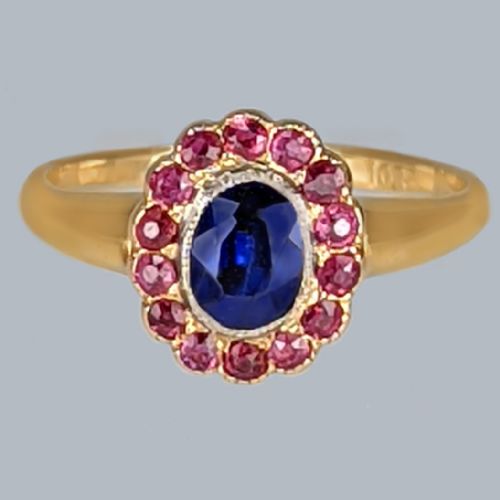

18ct Ruby Cluster Ring
An 18ct ruby cluster ring combines rich red stones and sparkling diamonds in a timeless design meant for daily wear.
18ct Ruby Cluster Ring
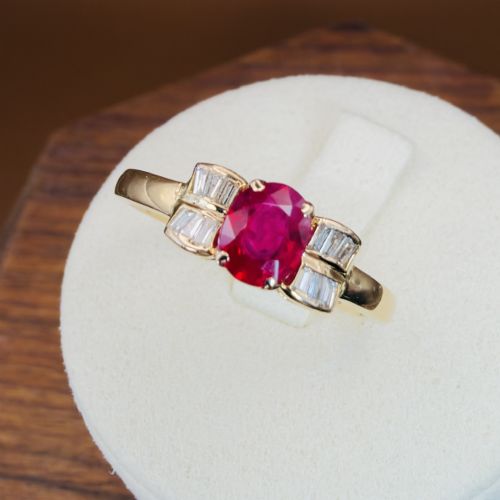
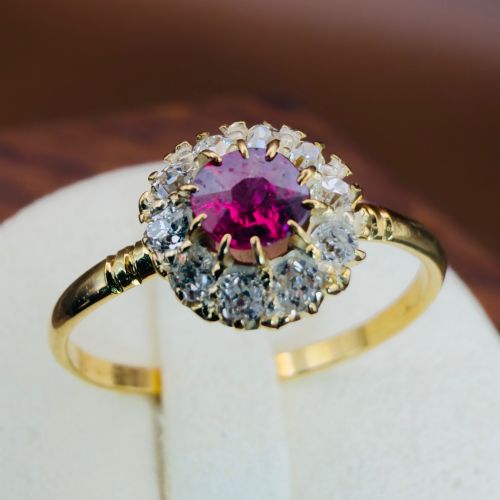
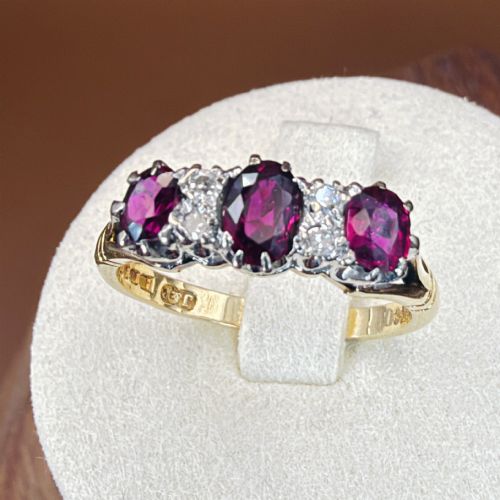
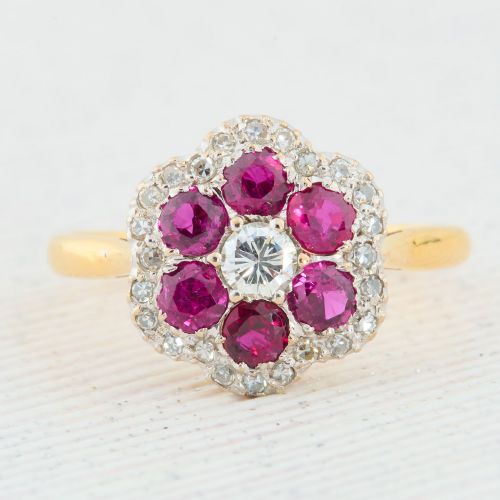
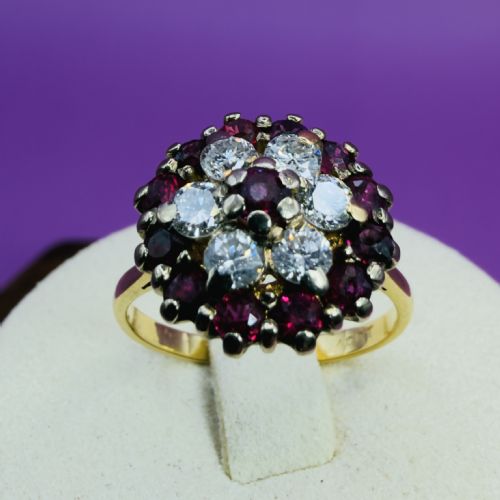
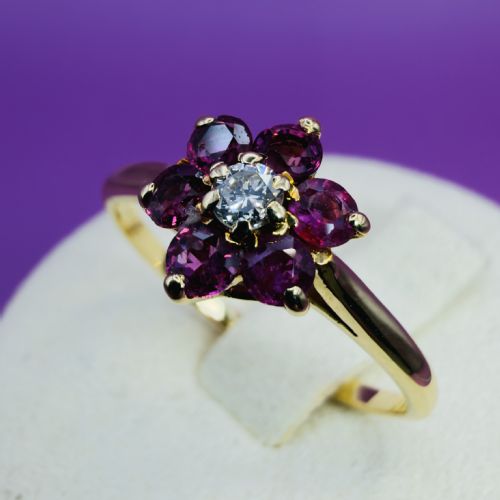
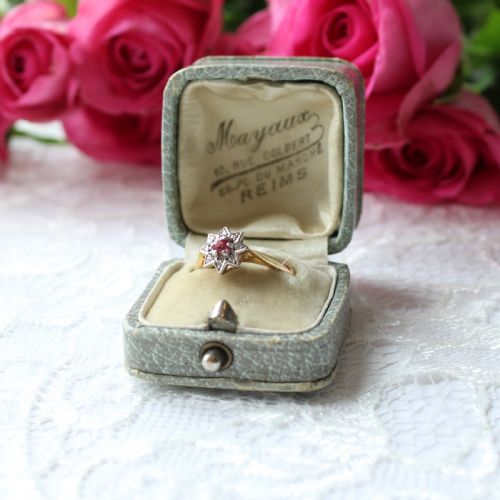
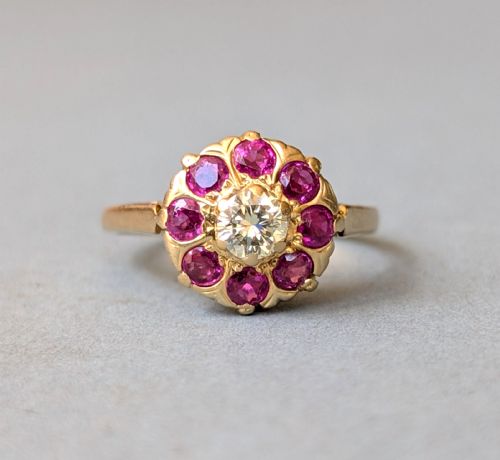
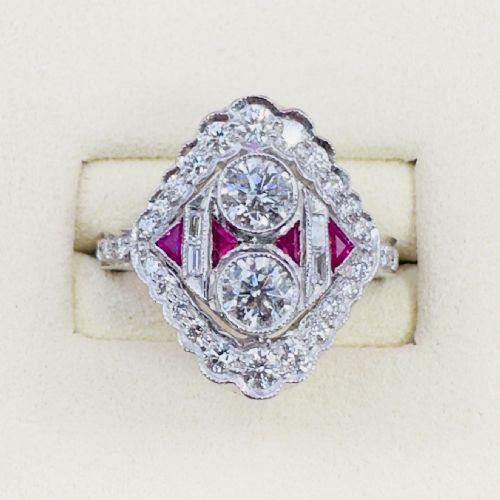
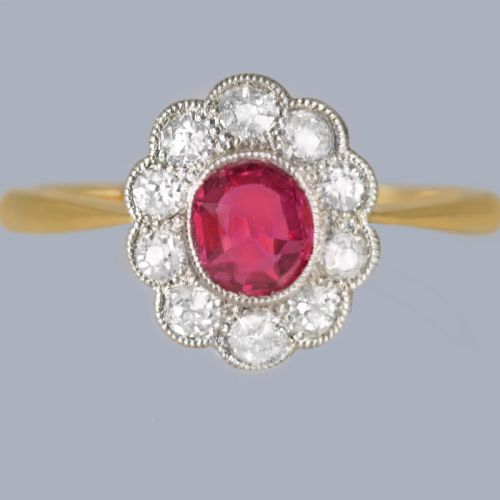
An 18ct ruby cluster ring centres on a vibrant red ruby surrounded by a halo of smaller diamonds or secondary gems. These dress rings take many forms, including floral motifs, daisy shapes, navette silhouettes, and geometric Art Deco layouts.
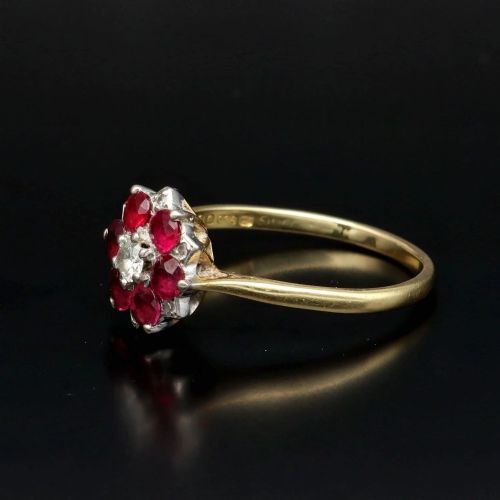
Makers across the Victorian, Edwardian, and mid-century periods fashioned these pieces in 18ct yellow and white gold, often pairing the precious metal with platinum settings. Buyers frequently encounter vintage mid-century iterations alongside antique Edwardian and Victorian examples.
The enduring appeal lies in the strong contrast between the deep red ruby and the surrounding colourless diamonds. These rings serve as striking conversation pieces and traditional milestones of fine jewellery.
How they were made
Goldsmiths utilised 18ct yellow gold and 18ct white gold to construct the foundational bands and settings, occasionally incorporating platinum for added strength in securing intricate stone arrangements. Stones were hand-set using claw, bezel, or channel techniques depending on the prevailing style of the decade.
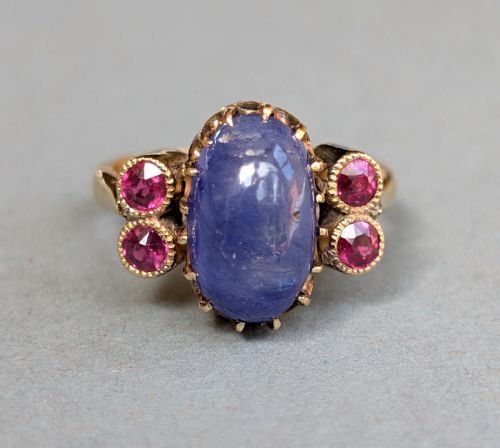
The diamonds utilised in these configurations range from old-cut and rose-cut stones found in older pieces to brilliant-cut, baguettes, and princess cuts seen in later mid-century examples. Natural rubies dominate, though synthetic sapphire and synthetic ruby appear alongside pearls and secondary coloured stones.
Listings feature 18ct yellow gold, 18ct white gold, and platinum mounted alongside rubies, diamonds, sapphires, pearls, and emeralds.
What varies in quality
The overall standard depends heavily on the origin, saturation, and clarity of the central ruby, with untreated stones or specific geographic origins commanding high regard. The matching quality, cut precision, and carat weight of the surrounding diamonds also elevate an individual piece.
Structural integrity, including the weight of the 18ct gold mount and the preservation of original claw work, distinguishes standard examples from masterworks. Gemmological reports provide formal documentation that substantiates stone characteristics and treatments.
Kutchinsky
The 18ct Ruby Cluster Ring Glossary
- Cluster ring
- A ring featuring a central stone framed by a group of smaller surrounding gemstones. This arrangement maximises visual impact on the hand.
- Navette
- A boat-shaped or marquise-like silhouette that tapers to points at both ends. It stretches horizontally across the finger for a distinctive profile.
- Old cut
- A hand-faceted diamond cut prevalent before modern brilliant-cutting techniques were standardised. These stones typically display smaller tables and higher crowns.
- Halo
- A concentric arrangement of smaller pavé or claw-set stones encircling a larger central gem. This design enhances the perceived size and brilliance of the primary stone.
- Bombé
- A rounded, dome-shaped ring style popular in mid-century jewellery design. It creates a bold, sculptural profile on the hand.
18ct Ruby Cluster Ring: Frequently Asked Questions
How do I care for my 18ct ruby cluster ring?
Clean your ring using warm soapy water and a soft brush to remove everyday oils and debris from beneath the settings. Avoid harsh ultrasonic cleaners, especially if the piece contains pearls or treated stones.
Store the ring separately in a fabric-lined box to prevent the diamonds from scratching softer gold or adjacent jewellery pieces. Periodic checks by a jeweller ensure the claws remain secure.
What periods do these rings come from?
The pieces span from the Victorian era through the Edwardian period, Art Deco, and mid-century modern decades. Each period brings distinct design characteristics, such as floral motifs or geometric lines.
Examining the metalwork, cutting styles, and hallmarks helps identify the specific era of manufacture. Many pieces carry historical assay office marks.
Can I wear an antique cluster ring daily?
These rings were built for regular wear using durable 18ct gold and hard gemstones like ruby and diamond. However, antique settings require mindful handling during physical tasks.
Removing the ring before heavy lifting or gardening protects the delicate claws and prongs from unnecessary strain. Regular professional inspections keep the stones firmly in place.
What is the difference between natural and synthetic rubies?
Natural rubies formed within the earth over millions of years, often displaying internal characteristics and specific geographic origins. Synthetic rubies share identical chemical and physical properties but were grown in a laboratory.
Gemmological reports provided with certain listings verify whether the stones are natural or synthetic. Both types have appeared in fine jewellery across different historical periods.