


Gemstone Flower Dress Ring
A gemstone flower dress ring brings together vibrant stones and precious metal to form a lasting floral or cluster motif on the hand.
Gemstone Flower Dress Ring
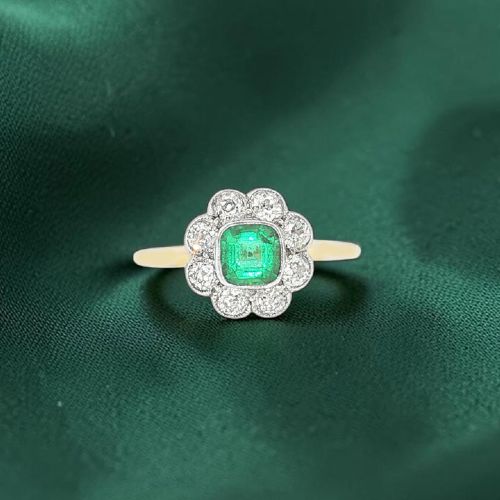
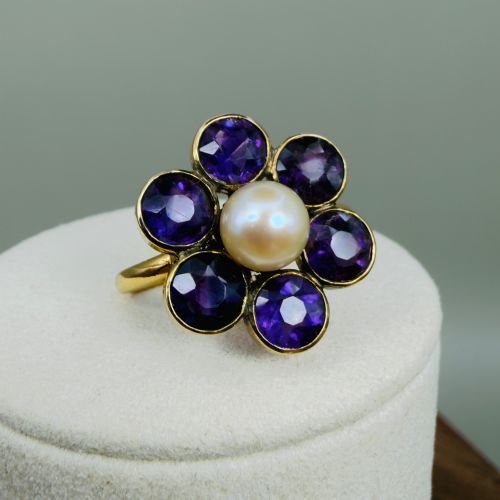
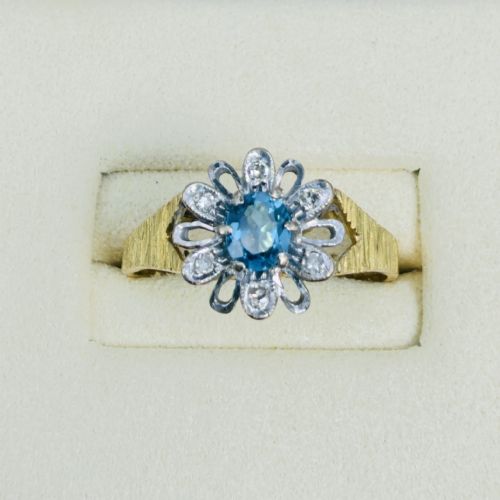
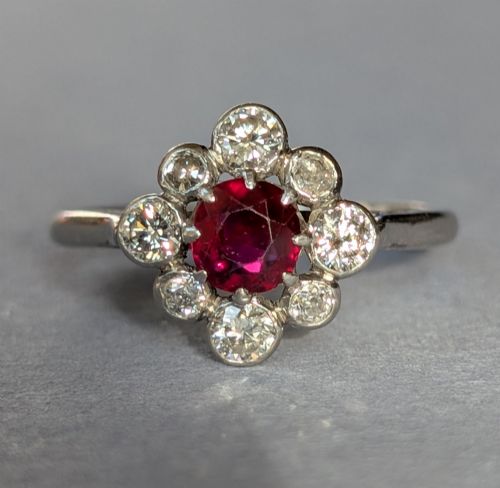
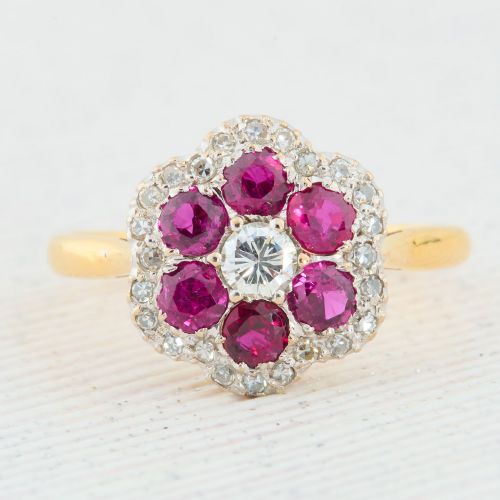
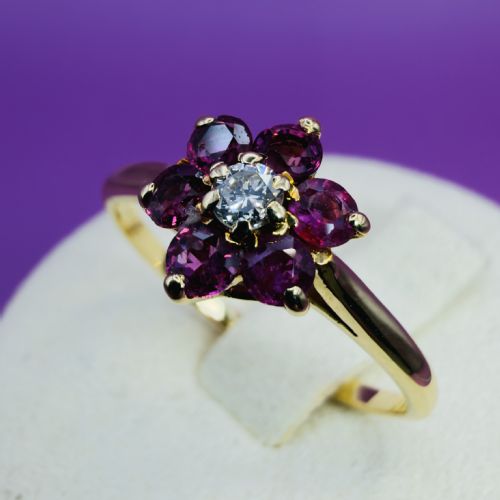
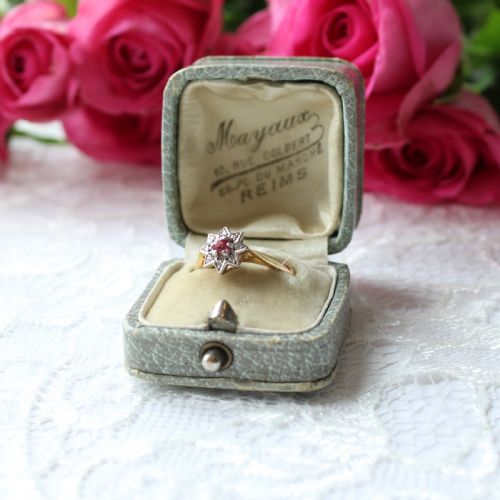
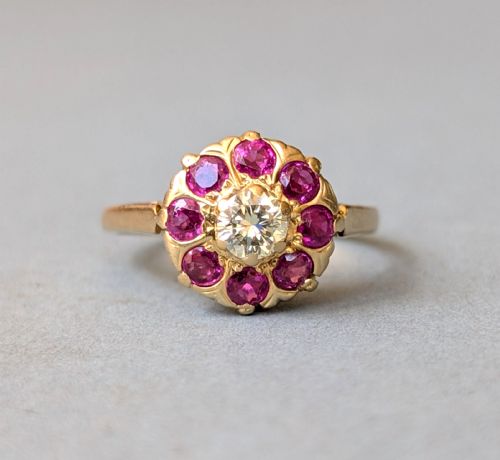
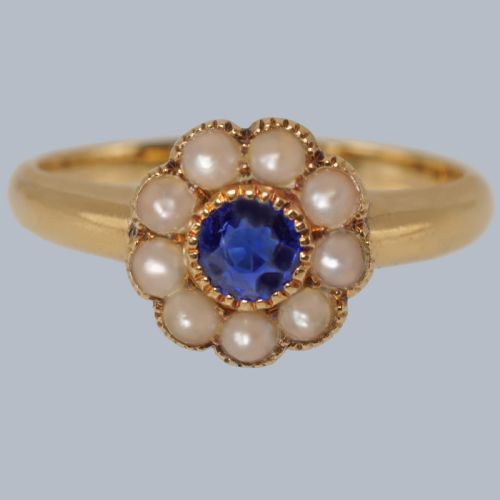
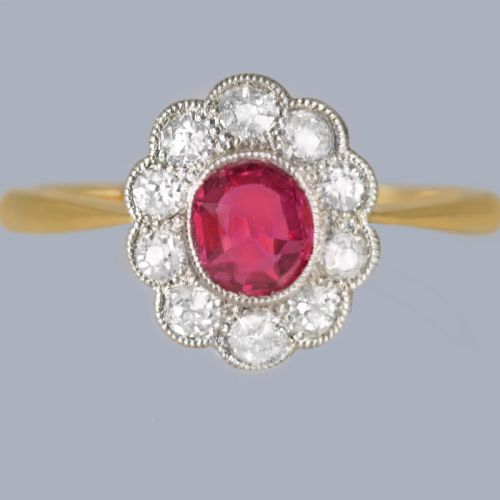
A gemstone flower dress ring typically takes the form of a floral or daisy cluster, arranging smaller stones around a central focal gem. These pieces span from the Georgian and Victorian eras through the Edwardian, Art Deco, and mid-century periods.
The most frequent examples found here combine 18ct gold or platinum with diamonds and coloured stones such as rubies, sapphires, and opals. Buyers encounter variations ranging from delicate clover motifs to bolder mid-century cocktail designs.
How they were made
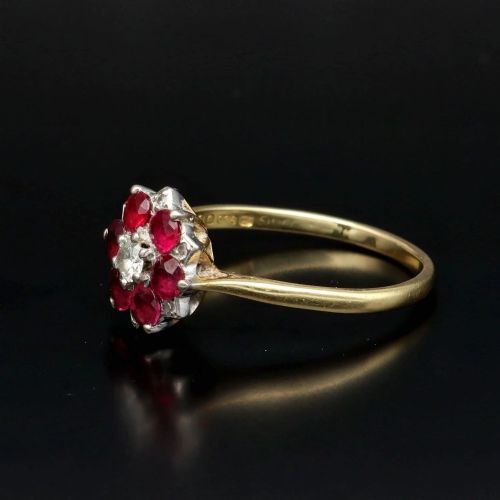
Goldsmiths constructed these mounts predominantly in 18ct yellow gold, 18ct white gold, or platinum, frequently combining yellow and white metals to highlight the stones. Gemstones including rubies, sapphires, emeralds, and opals were secured alongside diamonds using claw or cluster settings.
Early pieces from the Victorian and Edwardian periods often employ hand-cut stones and meticulous prong work to shape the petals. Later mid-century examples utilise clean lines and structured mountings to emphasise the geometry of the cluster.
The periods represented across these rings span from the 1800s Georgian era through Victorian, Edwardian, Art Deco, and 1950s to 1960s mid-century styles.
What varies in quality
The distinction between tiers rests upon the choice and saturation of the central and surrounding gemstones, alongside the precision of the metalwork. Pieces featuring natural stones with strong colour and well-matched diamond accents command greater attention.
Construction weight and the integrity of the setting also dictate overall standard. Heavier gold or platinum mounts with secure, balanced stone arrangements represent superior craftsmanship compared to lighter, less substantial alternatives.
The Gemstone Flower Dress Ring Glossary
- Cluster ring
- A ring featuring a central gemstone surrounded by a border of smaller stones. This arrangement forms the basis of most floral dress rings.
- Cabochon
- A gemstone shaped and polished with a smooth, convex surface rather than faceted. This cut appears frequently on opals and turquoise within these listings.
- Old rose cut
- An antique diamond cut featuring a flat base and a domed crown composed of triangular facets. It is commonly found in Edwardian and Georgian floral designs.
- Regard
- A Victorian sentimental jewellery arrangement spelling out a word through gemstone initials: Ruby, Emerald, Garnet, Amethyst, Ruby, Diamond.
Gemstone Flower Dress Ring: Frequently Asked Questions
How do I style a gemstone flower dress ring?
These rings work well worn alone on the hand as a distinct statement piece. Their floral geometry pairs easily with simple bands.
Because many feature elevated cluster settings, consider pairing them with straight wedding or plain stacking bands that sit flush against the finger.
What periods do these rings come from?
The selection includes pieces spanning from the Georgian and Victorian eras through Edwardian, Art Deco, and 1950s or 1960s mid-century designs.
Each era brings distinct metal choices and stone cuts, ranging from old rose-cut diamonds in early pieces to brighter white gold settings in later decades.
Are these rings suitable for daily wear?
Most pieces utilise durable metals like 18ct gold or platinum, making them robust enough for regular rotation. However, softer stones like opal require care to avoid impact.
Removal during manual tasks helps preserve the integrity of the claw settings and protects vulnerable stones from scratching.
How can I tell an Edwardian ring from a Victorian one?
Victorian examples often use heavier yellow gold mounts and feature deeply saturated coloured stones combined with pearls or turquoise. They lean towards romantic or sentimental motifs.
Edwardian pieces frequently incorporate platinum alongside yellow gold to create lighter, lace-like frames for diamonds and sapphires or rubies.