


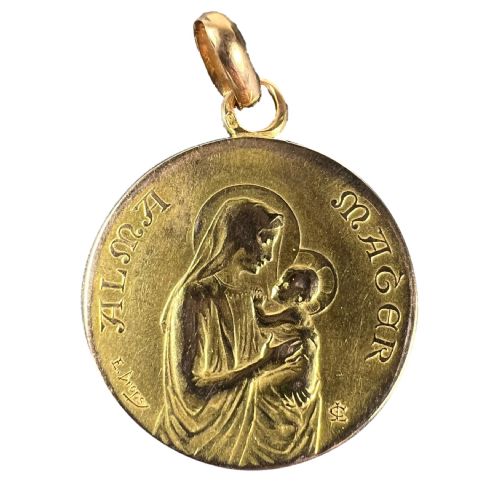


18ct Gold Virgin Mary
An 18ct gold virgin mary pendant carries the quiet devotion and exceptional metalwork of early twentieth-century French jewellers.
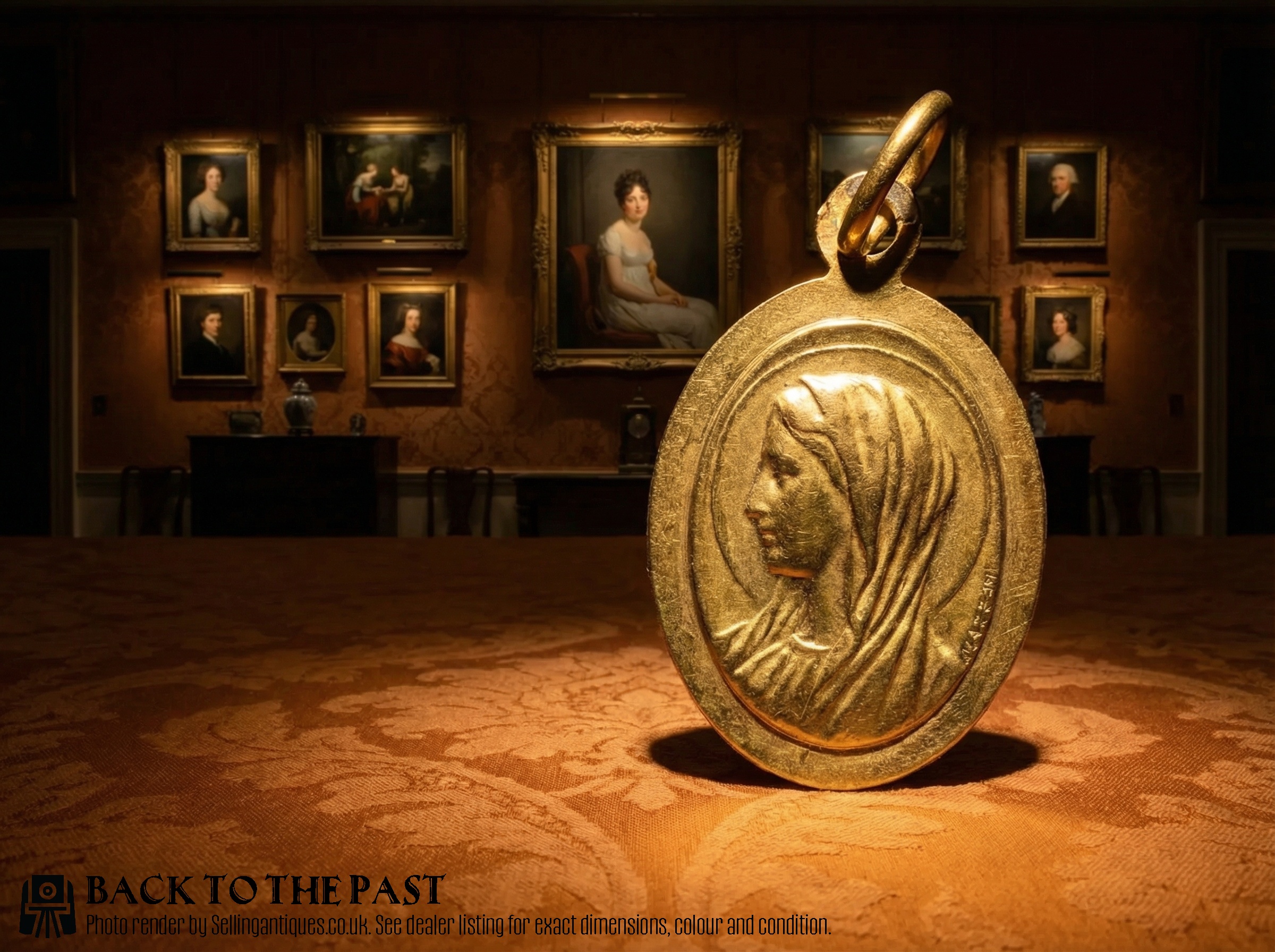
18ct Gold Virgin Mary
An 18ct gold virgin mary search brings up devotional medals and pendants originating largely from France during the early decades of the twentieth century. These pieces combine religious iconography with the refined aesthetics of periods such as Art Nouveau and Art Deco. Buyers encounter small, intricately worked charms and medallions designed to be worn close to the heart.
The selections on this page centre predominantly on French religious jewellery spanning from 1900 to 1930. The most frequent iteration is an oval or round pendant cast in 18ct yellow gold, frequently depicting the Madonna and Child or the Miraculous Medal. Makers often utilised contrasting white gold accents or delicate seed pearls to frame the central sacred figures.
How they were made
French workshops employed skilled medallists whose signatures occasionally mark the edge of the metal. Artisans set pearls by hand into bezels or threaded them onto tiny posts, securing delicate ornamentation around the primary gold subject. The marriage of traditional religious symbolism with contemporary decorative movements governed the construction of each medal.
Many of these holy figures spent a century tucked inside velvet boxes before finding their way out to shine again.
What varies in quality
The distinction between standard commercial pieces and finer examples rests on the crispness of the medallist's strike and the depth of the relief work. Superior medals exhibit sharp facial expressions, well-defined hands, and legible inscriptions that do not blur into the surrounding background. The integration of secondary materials such as seed pearls or mother-of-pearl panels requires precise setting work that elevates the overall composition.
Subtleties in finishing, such as hand-chased borders, pierced openwork galleries, and the quality of the 18ct gold alloy, dictate the upper tier of these items. Pieces bearing the documented marks of known French medallists demonstrate a higher level of artistic execution. The weight and gauge of the gold sheet or casting further separate simple stamped charms from substantial pendant medals.
Monier·Pageli Perriat·Dropsy·Sellier·Mazzoni·Becker·Arnault·Augis Grun·Serraz
The 18ct Gold Virgin Mary Glossary
- Madonna and Child
- An artistic representation of the Virgin Mary holding the infant Jesus. This motif appears frequently on French religious pendants from the early twentieth century.
- Seed Pearl
- A very small, naturally or cultured pearl, often half-drilled and glued or pegged onto a backing. These pearls provide delicate borders on devotional jewellery from the Art Nouveau and Art Deco periods.
- Medallion
- A large medal-like pendant worn as a piece of jewellery. These items often commemorate religious figures or events and carry maker marks on the reverse or rim.
- Art Nouveau
- A stylistic movement characterised by organic lines, flowing plant motifs, and asymmetric forms. This aesthetic influences the decorative borders of several medals on this page.
18ct Gold Virgin Mary: Frequently Asked Questions
What do these medals depict?
The pieces show religious iconography, most commonly the Virgin Mary, the Madonna and Child, or specific devotional scenes like the Miraculous Medal.
Inscriptions and Latin phrases frequently accompany the primary figure, adding layers of traditional spiritual meaning.
When were these pendants made?
The items originate primarily from the early twentieth century, specifically between 1900 and 1930.
This era encompasses the transition from Art Nouveau curves to the geometric lines of Art Deco.
How should I wear one?
These pendants suspend easily from a fine 18ct gold chain to sit close to the collarbone or lower on the chest.
Their moderate scale makes them suitable for daily wear either alone or layered with other gold charms.
Are these items French?
The vast majority of the listings originate from French workshops and feature typical French design characteristics of the period.
Medallists from Paris and provincial centres produced these devotional objects for a domestic and international clientele.